What's inside
As an Amazon Associate I earn from qualifying purchases. This post may contain affiliate links at no extra cost to you.
A storage bench gets more wear than a display shelf: people sit on it, shoes scuff the front, and lids or drawers rub against the frame. For a natural finish, choose a species whose color and grain you like before coating it. Clear finishes usually deepen wood color and highlight differences between boards; they do not make mismatched stock look uniform.
As an Amazon Associate we earn from qualifying purchases at no extra cost to you.

Our Top Picks
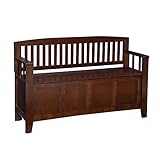
 Linon Home Dcor Linon Home Decor Cynthia Storage50"w x 17.25"d x 32"h17.25 x 50 x 32 inches51 poundsCheck on Amazon
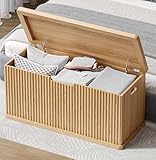
 Akxomel 37.4" Fluted Storage Chest Wooden Storage Trunk15.4" D x 37.4" W x 17.9" H15.4 x 39.4 x 17.9 Inches39.5 poundsCheck on Amazon
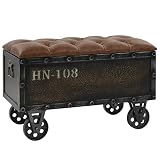
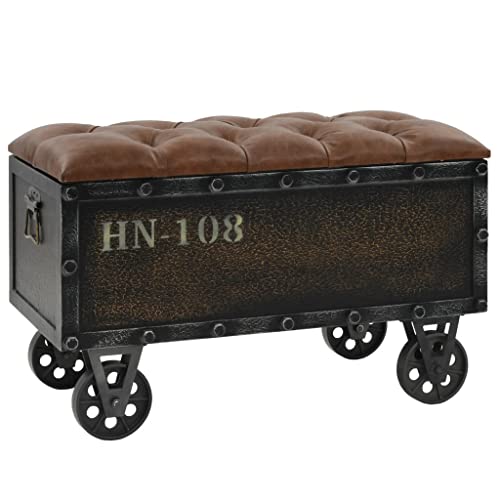 vidaXL Storage Bench with Castors 31.7" Solid Wood16.1"D x 31.7"W x 19.7"H16.1 x 31.7 x 19.7 inches30.42 PoundsCheck on Amazon
 Polyurethane Wood Finish Water Based Polyurethane Clear Gloss100 ml1.6 x 1.6 x 4.7 inchesCheck on Amazon

What matters in a bench
Prioritize dent resistance on the seat and front edge, stable, well-dried stock for the frame, and a grain pattern that suits the room. A bench seat made from softwood can work, but it will show dents sooner than oak or maple. For a painted or partly hidden interior, paying extra for premium appearance-grade wood is rarely worthwhile.
Wood hardness is only one factor. Joinery, board width, moisture content, and finish all affect durability. Buy lumber that is dry and reasonably straight; as a practical target for indoor furniture, look for roughly 6–9% moisture content. Let boards acclimate in the room for several days before cutting if they arrived from a different climate.
Species compared
| Species | Look under a clear finish | Durability and workability | Best fit |
|---|---|---|---|
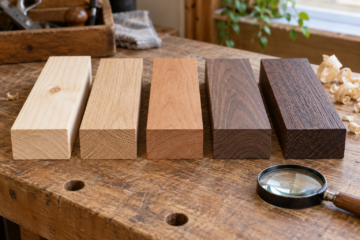
| White oak | Prominent grain, usually light tan to brown | Hard and durable; open pores need filling for a glass-smooth finish | Hard-wearing seat and traditional or modern furniture |
| Hard maple | Pale, subtle grain; can show mineral streaks | Hard, but difficult to stain evenly | Light, clean appearance with a clear finish |
| Cherry | Fine grain; starts pinkish and darkens with light | Moderately hard and easy to work; color changes over time | Warm, refined furniture with minimal staining |
| Walnut | Rich brown with varied grain | Stable and easy to machine; softer than maple and oak | Dark, distinctive benches where cost is acceptable |
| Pine | Strong knots and contrast between earlywood and latewood | Inexpensive and easy to cut; dents readily | Budget builds, rustic styles, or painted frames |
Best choices for most benches
White oak is the all-around choice for a bench that will see daily use. It resists dents better than pine and has a strong grain that looks good under oil or clear film finishes. Its large pores are a trade-off: they remain visible unless you use grain filler, and a perfectly smooth surface takes extra work. Quarter-sawn boards show distinctive ray fleck, while plain-sawn boards are often less expensive and have a more varied cathedral pattern.
Hard maple suits a pale, understated bench. It is hard enough for a busy seat, but its tight, sometimes blotchy grain can make stain look uneven. If you want to keep maple light, skip dark stain and use a clear water-based finish or a finish labeled non-yellowing. Test the full finishing schedule on an offcut: even clear coatings can shift pale wood toward amber.
Cherry is a good choice if you welcome color change. Fresh cherry can look light and pink, then deepen to a warm reddish brown with exposure to light. That change is natural, but objects left on the seat can temporarily create uneven light exposure. A clear finish protects the surface but cannot stop the wood from maturing in color.
Walnut makes a striking bench, but costs more and is not the hardest option. It is a sensible choice when its dark color is the point, rather than when maximum dent resistance is the priority. Avoid sanding through thin dark surfaces or combining boards with sharply different sapwood and heartwood unless you like the contrast.
When pine is fine
Pine is a reasonable budget choice for a rustic bench, a lightly used bedroom bench, or a frame that will be painted. It is widely available and easy to cut with basic tools. The downside is practical: a dropped shoe, belt buckle, or heavy load can leave a dent in the seat. Knots may also bleed resin or discolor some finishes, and stain often exaggerates the difference between soft and hard growth rings.
For a natural pine finish, choose clear, knot-free boards if the clean look matters, or embrace knots rather than trying to hide them. A conditioner can reduce blotching, but it will not make pine look like oak. If you plan to stain, compare samples made on the actual lumber before buying enough for the whole project.
Buying and matching boards
At the lumber rack, sight down each board and reject pieces with a pronounced twist, deep cracks, or damage at the edges. Check both faces for color and grain, then lay likely seat boards side by side under similar light. For a natural finish, grain and color consistency matter more than small defects that will be hidden inside the bench.
Solid wood moves across its width as humidity changes. Avoid gluing a wide panel directly to a rigid frame; use tabletop fasteners, slotted screw holes, or another method that allows movement. For a broad seat, edge-glue several narrower boards with their growth rings arranged to reduce cupping, and keep the panel flat while the glue cures.
Preparation and finishing
Sand evenly through the grits rather than jumping straight to a fine abrasive. For most furniture, start around 120 grit and finish at 180 or 220 grit, following the finish maker’s instructions. Sanding much finer can reduce absorption for some oil or stain systems. Break sharp edges lightly so the finish does not thin or chip at corners, but keep edges square enough for a sturdy appearance.
Vacuum the dust and wipe the surface with a clean, dry cloth. Avoid soaking bare wood with water before finishing; raised grain can be addressed with a light final sanding after the first coat if the product calls for it. Make a test board from offcuts, sanded and coated just like the bench. This catches surprises such as blotching, ambering, or a grain pattern that looks busier than expected.
For a natural look with straightforward maintenance, consider a clear hardwax oil finish; it leaves a low-sheen surface and small worn areas can often be refreshed locally, though it needs periodic care. A water-based polyurethane keeps pale woods closer to their original color and offers a more protective film, but scratches can be harder to blend invisibly. Follow the label for coat count and cure time. A finish that feels dry may still need several days—or longer—before it is ready for regular sitting and storage.

0 Comments