What's inside
As an Amazon Associate I earn from qualifying purchases. This post may contain affiliate links at no extra cost to you.
A folding screen puts unusual demands on wood. Its panels need to stay flat, its edges take knocks, and its hinges concentrate movement at narrow points. A natural finish leaves the grain visible, so species choice matters: some woods look good with only oil or clear coat, while others blotch or turn much darker than expected.
For most projects, poplar, alder, maple, oak, and walnut are practical choices, but they suit different budgets and looks. Before buying, check whether the screen will sit in direct sun, how much weight you can manage, and whether you are using solid boards or veneer-faced panels. Thin, stable panels are usually a better starting point than wide solid-wood planks.
As an Amazon Associate we earn from qualifying purchases at no extra cost to you.



Our Top Picks
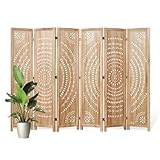
 Room Divider Folding Privacy Screens4 Panel-67''Hx70.8''W0.01 x 70.8 x 67 inches21.6 PoundsCheck on Amazon
 Varathane Water-Based Ultimate Satin PolyurethaneHalf Pint (Pack of 1)3 x 3 x 3 inches0.64 poundsCheck on Amazon


What matters in a folding-screen wood
Look for straight, dry stock with consistent thickness. For solid lumber, moisture content around 6–9% is a useful target for a typical heated home; wood that is much wetter can shrink after assembly and stress joints or hinges. Avoid boards with checks, loose knots, or grain that runs sharply out of the edge near a hinge screw.
Weight is important because a screen pivots and is moved by hand. Dense hardwoods such as maple and walnut are durable but heavier than poplar or alder. If you are making broad panels, consider a stable plywood core with a matching veneer. It is less prone to seasonal movement than a wide solid panel, though exposed edges need careful edging or solid-wood trim.
Also consider how the species accepts clear finish. “Natural” does not mean colorless: oil usually deepens color, while water-based clear coats tend to preserve a paler appearance. Test the full finishing schedule on an offcut, including sanding and the number of coats you plan to apply.
Wood species compared
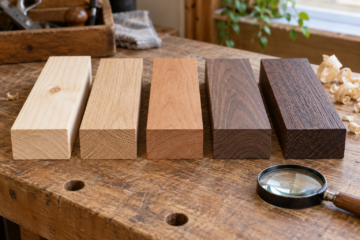
| Species | Appearance and finish behavior | Weight and workability | Best fit |
|---|---|---|---|
| Poplar | Subtle grain; green or brown streaks may show through clear finish | Light, easy to cut; dents readily | Budget screens or painted parts; clear finish only if color variation is acceptable |
| Alder | Fine, quiet grain; warms noticeably with oil | Light to medium; easy to sand and machine | Warm, understated natural look |
| Hard maple | Pale, tight grain; can look clean with a clear coat | Heavy and hard; can burn or show sanding marks | Light-colored, durable panels when weight is manageable |
| Red or white oak | Strong open grain; rays are prominent in quarter-sawn stock | Medium-heavy; straightforward to work, but pores need attention | Traditional grain pattern and a robust frame |
| Black walnut | Rich brown color and visible grain; oil deepens it | Medium-heavy; generally pleasant to work | Premium screens where the wood itself is the feature |
Choosing by look and budget
Alder is a good middle ground for a warm, natural screen. Its grain is less dominant than oak’s, and it is generally easier to sand than hard maple. Alder is still soft enough to dent, so use felt pads when moving a finished screen and avoid placing it where chair backs will strike it.
Maple suits a pale, clean finish and resists everyday wear better than poplar or alder. Its hardness is a trade-off: dull cutters can leave burn marks, and uneven sanding can show under a clear coat. Sand through 120, 150, and 180 grit, then inspect under raking light. Going much finer can reduce finish adhesion on some products, so follow the finish label.
Oak gives the clearest grain pattern. Its open pores can look attractive under oil, but a smooth, glass-like surface may require a pore filler. Oak is also heavy enough that a wide, multi-panel screen can become awkward to move. Use lighter panels or a thinner frame if mobility matters.
Walnut makes a high-end screen without stain. Its natural color is usually the point, so a clear coat is often preferable to adding color. It costs more than poplar or alder, and sunlight can shift its color over time. Keep the screen out of strong direct sun if matching its original color matters.
Poplar is the economical choice when the screen will be painted, but it can disappoint under a transparent finish because green or gray streaks may remain visible. A clear coat will not hide those colors. If you already have straight poplar and like its mixed, muted appearance, it is perfectly serviceable; otherwise, spend more for alder, maple, or oak.
Buying panels and lumber
For frames, select clear, straight-grained boards, especially where hinges will be screwed in. For panels, stable veneer-core plywood can reduce warping compared with solid boards. A 1/4-inch panel is light but may feel flimsy unless captured in a frame; 1/2-inch stock is sturdier but adds weight. Check the screen’s proportions and hinge capacity rather than choosing thickness by appearance alone.
Compare local hardwood dealers with hardwood boards in your chosen species, but inspect wood in person when possible. Online listings may not show color variation, grain direction, or small defects. If buying plywood, check that the face veneer is suitable for a clear finish and that the panel is flat.
Prepare and finish for a natural look
Dry-fit the screen before finishing. Sand panel faces and frame parts before assembly where access will be limited, but keep glue surfaces bare: oil, wax, or finish on a joint can weaken the bond. Use a glue suited to the joint and follow its clamping time; do not rely on glue alone for hinges or other hardware.
Start at 120 grit if the surface is rough, then progress to 150 and 180. Remove dust between grits and before coating. On oak, decide whether you want open pores or a filled surface before applying finish. On maple, test a water-based product if keeping the wood pale is important; oil-based products commonly add a warmer amber cast.
For a simple clear finish, compare water-based clear wood finishes and hardwax oils for wood. Follow the manufacturer’s directions for coverage and recoat times; many film finishes need more than one coat and light sanding between coats. Hardwax oil is easier to spot-repair but may need periodic maintenance. Any finish can look uneven if the wood is dusty, oily, or poorly sanded.
Make a sample using the same species, sanding sequence, and finish. Check it after it dries, not just while wet. That small test can reveal darkening, blotching, pore texture, or an unwanted sheen before those problems are spread across every panel.

0 Comments