What's inside
As an Amazon Associate I earn from qualifying purchases. This post may contain affiliate links at no extra cost to you.
Our Top Picks
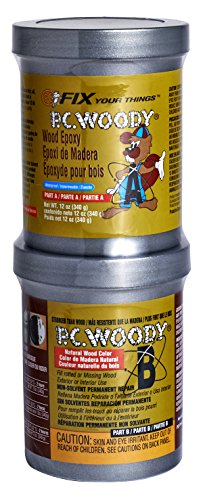 PC Products PC-Woody Wood Repair Epoxy Paste12 oz2.75 x 2.75 x 5.75 inches0.75 poundsCheck on Amazon


Choosing Glue for End-Grain Repairs
End grain is the exposed end of wood fibers, where the straws of the grain point directly at the repair. That structure makes it unusually absorbent and often weaker than long-grain wood. A split cutting board, chipped table leg, cracked stair tread, or missing corner can therefore need a different adhesive strategy than an ordinary edge-to-edge joint.
For most tight-fitting repairs, PVA wood glue is the sensible first choice. PVA is inexpensive, easy to sand, and strong enough for many household repairs. Epoxy earns its place when the damaged area has gaps, crumbling fibers, contamination, or missing wood. It also works when you need to rebuild a shape rather than simply glue two sound surfaces together.
As an Amazon Associate we earn from qualifying purchases at no extra cost to you.


PVA Glue vs. Epoxy
| Factor | PVA wood glue | Two-part epoxy |
|---|---|---|
| Best use | Tight cracks and clean wood-to-wood joints | Gaps, voids, loose fibers, and reconstruction |
| Typical working time | 5–10 minutes | 5–30 minutes, depending on formula |
| Clamp or handling time | 30–60 minutes; full strength commonly about 24 hours | Several hours; full cure commonly 24 hours or longer |
| Gap filling | Poor; shrinks and remains weak in thick gaps | Good, if mixed and supported correctly |
| Cleanup | Water while wet | Solvent or scraping while uncured; sanding after cure |
| Finishing | Usually sands and stains similarly to surrounding wood | Usually does not accept stain like wood |
When PVA Is the Right Choice
Use PVA when the crack closes tightly under light hand pressure and both sides are solid. A good example is a split along the end of a board where the pieces still register accurately. A quality PVA wood glue is also appropriate for a clean, broken wooden part that can be pulled back into its original position.
PVA bonds by penetrating the surface and then forming a polymer film as water leaves the adhesive. End grain absorbs that water quickly. On a very thirsty repair, the first coat may disappear into the fibers, leaving too little adhesive at the joint. The practical fix is to apply a thin “size” coat, wait about 5 to 10 minutes, then apply the normal glue coat and assemble the pieces.
Do not fill a 1/8-inch void with PVA and expect a durable repair. PVA is not a structural filler. It can shrink as it dries, leaving a soft or hollow seam. Even a smaller gap is a warning that the surfaces should be trimmed, packed with matching wood, or repaired with epoxy.
Clamp pressure matters, but excessive pressure can squeeze nearly all of the glue out of an end-grain joint. Use enough pressure to close the crack without crushing the wood. Remove visible squeeze-out with a damp cloth before it dries, especially on oak, walnut, and other porous species where dried glue can interfere with stain absorption.
When Epoxy Is Better
Epoxy is the better choice when the end grain is ragged, partly missing, or contaminated with old finish or oil. It is also useful for knots, deep checks, chipped corners, and screw holes that need rebuilding. A filled epoxy can bridge a gap that PVA cannot, provided the surrounding wood is strong enough to support the repair.
Choose a two-part wood epoxy repair product for larger voids and irregular damage. Liquid epoxy is useful when it needs to flow into a narrow crack; thicker epoxy or epoxy putty stays in place on vertical or overhead repairs. Read the package carefully because “5-minute” usually describes working time, not full strength. Many products need 12 to 24 hours before sanding, and longer in a cold shop.
Epoxy has two important drawbacks. First, it is a poor match for a visible stained surface. It may accept paint after suitable preparation, but it generally remains a different color under clear finish. Second, cured epoxy is harder than most woods. Sanding can leave a low spot in soft wood while the epoxy remains high, so use a sharp chisel or block plane to remove proud material before sanding.
Preparing the End Grain
Preparation determines more repairs than adhesive choice. Remove loose fibers with a sharp chisel, knife, or small rotary tool. Cut back to sound wood rather than trapping dust and splinters beneath the adhesive. If possible, square a broken edge or create a shallow, clean-sided recess for a wood patch.
Keep the wood dry and close to the moisture content it will have in service. Wood that is visibly damp can produce a weak PVA bond, while movement during drying may reopen the crack. For furniture and indoor projects, roughly 6% to 10% moisture content is typical, although local conditions vary. Do not glue freshly wet outdoor wood and expect a stable repair.
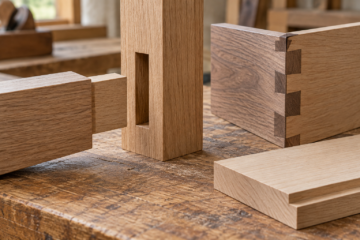
Dry-fit everything before opening the glue. Check that the pieces close completely, clamps can reach the joint, and masking tape will protect nearby finished surfaces. For a repair that must carry load, add mechanical reinforcement when practical: a hardwood spline, dowel, or loose tenon provides long-grain bonding area that is much stronger than relying on end grain alone.
Application and Finishing
For PVA, spread a continuous thin film over both surfaces if the end grain is especially absorbent. Assemble promptly, clamp for at least 30 minutes, and leave the repair undisturbed for 24 hours. For epoxy, measure the resin and hardener accurately, mix until the color and consistency are uniform, and scrape the container sides during mixing. Wear gloves and provide ventilation; uncured epoxy can irritate skin.
After curing, level the repair with a sharp tool or sharp wood chisels, then sand through about 120, 150, and 180 grit. Stop at 180 or 220 grit when staining; polishing end grain much finer than the surrounding face can make it absorb less stain and appear lighter.
If the repair will be painted, epoxy is less of a color problem. Seal porous end grain first with a suitable primer. If it will receive clear finish, PVA on a tight joint is usually the cheaper and less visible option. Use epoxy only where its gap-filling and rebuilding ability solves a problem that PVA cannot.
0 Comments