What's inside
As an Amazon Associate I earn from qualifying purchases. This post may contain affiliate links at no extra cost to you.
Our Top Picks
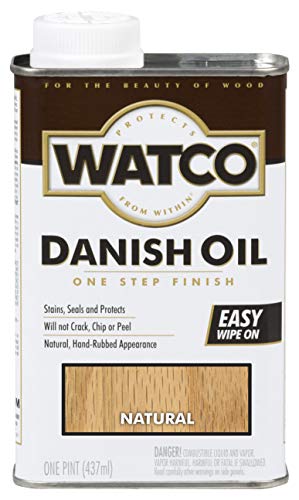 Watco Natural Oil Finish One Step Protection1 Pint (Pack of 1)3.75 x 1.8 x 7 inches0.9 poundsCheck on Amazon
 Aqua Coat Water-Based Clear Wood Grain Filler GelPint3.55 x 3.55 x 4.2 inches1.14 PoundsCheck on Amazon
 1/2 pt Minwax 13407 Clear Pre-Stain Wood Conditioner1/2 Pint3 x 3.25 x 3 inches0 PoundsCheck on Amazon


Choosing the right wood
A bedside table is small enough that a good board can make the whole piece, but its top still has to handle water rings, skin oils and the occasional dropped phone. For a natural finish, choose wood whose color and grain you like before applying anything. Clear finish will deepen and slightly warm most species; it will not make pale sapwood disappear or give mismatched boards a uniform color.
For a first build, favor stable, readily available boards with straight grain. Quarter-sawn or rift-sawn stock moves less visibly across its width than plain-sawn stock, though it usually costs more. Whatever species you choose, buy dry, furniture-grade lumber and let it acclimate in the room for several days before milling. Avoid boards with large knots, checks or end splits near the parts you need.
As an Amazon Associate we earn from qualifying purchases at no extra cost to you.


Species compared
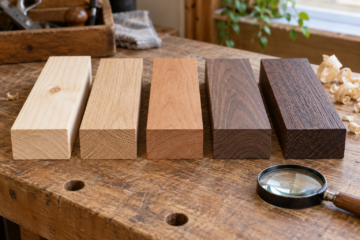
| Species | Look under clear finish | Workability and risks | Good choice when |
|---|---|---|---|
| White oak | Light tan to medium brown, prominent grain | Hard and durable; open pores need filling for a glass-smooth surface. Can react with iron and darken around steel dust or fasteners. | You want a sturdy table with visible grain and a classic look. |
| Black walnut | Rich brown, often with varied light and dark areas | Machines and finishes well, but costs more than many alternatives. Sapwood can be pale and conspicuous. | You want a darker table without stain. |
| Cherry | Pale pink-brown that deepens with light exposure | Easy to work, but blotching and glue marks can show. Color changes over time, especially where exposed to sunlight. | You like a smooth, fine grain and gradual color change. |
| Hard maple | Very pale, fine and understated | Dense and wear-resistant; clear finish can look slightly amber. Stain often turns blotchy without careful preparation. | You want a light, clean look and plan to leave it natural. |
| White ash | Pale cream to light brown, bold grain | Strong and fairly easy to machine; availability varies by region. Its open pores show under a thin finish. | You want a light wood with more grain contrast than maple. |
| Poplar | Often pale, greenish or brown-streaked | Inexpensive and easy to work, but soft and prone to dents. Color variation can look muddy under clear finish. | The table will be painted, or budget matters more than a refined natural appearance. |
Best all-around choice: white oak
White oak is a dependable pick for a bedside table that will see regular use. Its hardness helps the top resist dents, and the grain remains attractive with a clear finish. The trade-off is its open pore structure: a simple wipe-on finish protects the surface but leaves the pores visible. That is a look, not a defect. If you want a level, smooth surface, use a grain filler compatible with your topcoat and allow the extra sanding and finishing time.
Keep steel wool and iron filings away from wet oak. Iron can react with tannins in the wood and leave dark marks that are difficult to remove. Use clean abrasives and stainless or coated fasteners where appropriate. A search for water-based grain filler can help you compare options for filling its pores.
When to choose walnut or cherry
Black walnut is the straightforward choice if you want a dark natural finish: a clear topcoat usually brings out its color without stain. Check the board for sapwood before buying. A narrow pale strip can be a pleasing contrast, but on a small table it may look accidental if it lands on the top or front edge. Walnut is also a poor place to economize by buying a board with defects and hoping finish will disguise them.
Cherry suits a less dramatic, fine-grained piece. It is pleasant to work and takes a clear finish well, but its color will shift toward deeper reddish brown with exposure to light. A lamp or object sitting on the top can temporarily create uneven exposure. If consistent color matters, avoid leaving the finished table in strong sunlight and move objects occasionally during the first few months.
Light wood: maple, ash or poplar
Hard maple gives the palest, most restrained grain in this group. It is hard enough for a useful top, but staining it evenly is difficult: pigment can collect unevenly and leave dark patches. If you want maple, a clear finish is usually the safer route. Sand evenly and remove glue squeeze-out; glue spots repel finish and show as pale, dull patches.
Ash has a bolder grain and is easier to distinguish from maple at a glance. It works well with clear finishes, though its open pores stay visible unless filled. Poplar is much cheaper and perfectly reasonable for a painted table, drawer parts or a first project. For a natural-finish tabletop, its softness and often uneven green-brown color are real compromises, not problems a clear coat solves.
Prepare and finish the surface
Mill parts flat and square before sanding. Work through grits such as 80, 120 and 150, then stop at 180 for most clear finishes. Sanding much finer can reduce absorption of some penetrating finishes, while skipping grits leaves scratches that become obvious after the finish darkens the grain. Remove dust with a vacuum and a clean, lint-free cloth; avoid pressing oily or waxy tack cloth residue into the surface.
Before committing to stain, make a sample from offcuts of the same board. Apply the same sanding and finish schedule you plan to use on the table. If you do stain, a pre-stain wood conditioner may reduce blotching on cherry or maple, but it can also make the result lighter or less vivid. Test it rather than assuming it will fix every uneven patch.
For a bedside table, a durable clear film finish is a practical choice for the top because it offers better resistance to spills than oil alone. Follow the product label for coats, drying time and ventilation; temperature and humidity affect curing. Sand lightly between coats only if the instructions call for it. A common failure is setting a glass down before the finish has fully cured: dry to the touch does not necessarily mean ready for use.
Check the board before buying
Look at the actual lumber under good light, especially if the table has a wide top made from multiple boards. Match grain and color where you can, and decide whether knots or contrasting sapwood are part of the design. For a natural finish, species choice matters, but clean joinery, careful sanding and a tested finish schedule matter just as much. Buy poplar if you plan to paint; spend more on oak, walnut, cherry, maple or ash when the wood itself is meant to be the feature.

0 Comments