What's inside
As an Amazon Associate I earn from qualifying purchases. This post may contain affiliate links at no extra cost to you.
A clear finish makes the wood itself the main feature, so a picture frame benefits from quiet, even grain rather than dramatic cathedral patterns or strong color shifts. For most frames, hard maple is the safest choice for a pale, fine-grained look. Cherry is a good warmer alternative, while walnut suits a darker frame. The best choice depends on the finish you want and how carefully you can select matching stock.
As an Amazon Associate we earn from qualifying purchases at no extra cost to you.


Our Top Picks
 THE HARDWOOD EDGE Cherry Craft Boards 1/4 x1/4" x 6 1/2" x 15"15 x 0.1 x 6.5 inches0.3 PoundsCheck on Amazon
 Polyurethane Wood Finish Water Based Polyurethane Clear Gloss100 ml1.6 x 1.6 x 4.7 inchesCheck on Amazon


What “fine grain” means in a frame
Fine grain describes small, closely spaced pores and a restrained visual pattern. It does not mean the wood has no grain: maple can show subtle waves, and cherry often has darker streaks. For a frame, consistency matters as much as pore size. Four rails cut from boards with very different color or figure can look mismatched once joined.
Look for straight-grained stock and plan the rails so their grain runs consistently around the frame. Avoid knots, mineral streaks, and abrupt grain changes near miters, where they draw the eye and can make a narrow profile look busy. If possible, buy enough wood to cut all four sides from the same board.
Good species for a clear-finished frame
| Species | Appearance and grain | Workability | Best fit |
|---|---|---|---|
| Hard maple | Pale cream to light tan; generally fine, subtle grain | Hard and durable; can burn during routing and show sanding scratches | A clean, light frame with a low-color clear coat |
| Cherry | Warm pink-brown that darkens with light; fine, usually calm grain | Machines and sands well; can blotch if stained | A warmer frame where gradual color change is welcome |
| Walnut | Medium to dark brown; fine pores, but stronger color variation | Generally pleasant to work; open pores may need filling for a glass-smooth finish | A dark frame with visible natural color |
| Birch | Light cream to yellow; fine grain, sometimes with noticeable color variation | Easy to cut, but stain can turn patchy | A budget-friendly light frame finished clear |
| Poplar | Usually smooth and fine-grained, but often greenish or streaked | Easy to machine and inexpensive; dents more readily than maple | A painted frame or an inexpensive clear-finished project where color flaws are acceptable |
Choose by the color you want
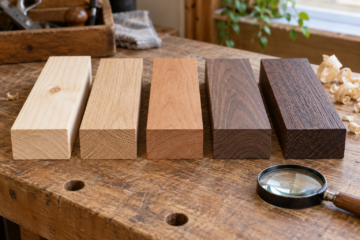
For the palest result, choose hard maple. It keeps a restrained grain under a clear finish and holds up well at thin frame edges. Its hardness makes it less forgiving to shape: a dull cutter or a slow feed can leave burn marks, especially in tight profile details. Sand those marks out rather than relying on finish to hide them.
For warmth, choose cherry. Cherry is usually easier to work than maple and has a fine, attractive grain. It darkens with exposure to light, so a frame may become richer over time. That change is natural, but it can be uneven if one side is regularly shaded. A clear coat also adds warmth, so test the finish on an offcut before cutting all four rails.
For dark wood, choose walnut. Walnut has a naturally deep color and does not need stain to look finished. Its pores are more visible than maple’s, though still relatively small. If you want a dead-smooth surface, use a pore filler compatible with your finish; otherwise, a few visible pores are normal and often suit a frame.
Birch can be a sensible low-cost clear-finish option if you select boards for even color. Poplar is usually a better paint-grade choice: its green and brown streaks can remain obvious beneath clear finish, even after sanding. Do not buy poplar expecting stain to make it look like cherry or walnut.
Select and prepare the stock
Choose straight, dry boards without twists or checks. A moisture content around 6–8% is typical for indoor furniture and frame work, though local conditions vary. Let recently delivered wood acclimate in the work area for several days, then check it if you have a moisture meter. Moving wood can change length or twist after you cut precise miters.
Make a small test cut and test your finish on the same stock. For a conventional mitered frame, aim for a clean 45-degree cut; even a small angle error can leave a visible gap at the front edge. Use a sharp blade and support narrow rails so they do not vibrate. Dry-fit the corners before applying glue, and keep squeeze-out off the show face because dried glue can resist finish and appear as a pale patch.
Sand and finish without muddying the grain
Sand through a consistent progression, such as 120, 150, and 180 grit. On a well-machined surface, starting at 150 may be enough; lingering at a coarse grit creates scratches that show under clear coat. Sand with the grain on visible faces, ease sharp edges lightly, and remove dust before finishing. Going much finer than 220 grit can reduce adhesion for some coatings without improving the look much.
A clear water-based finish usually preserves maple’s light color better than an oil-based finish, which tends to amber pale woods. Oil-based finishes add warmth to cherry and walnut. Neither choice is automatically better: the actual result depends on the product and wood, so use an offcut. A water-based clear wood finish is a practical starting point for keeping maple pale; follow its label for application and recoating times.
Apply thin coats rather than one heavy coat. A first coat may raise the grain on maple or birch; let it dry, then lightly scuff with 320-grit paper before the next coat, taking care not to cut through at the edges. For a frame that will be handled, two or three coats are a reasonable starting point, subject to the finish maker’s directions.
A practical buying decision
If you want a pale, quiet frame and can pay a little more, buy straight-grained hard maple. Choose cherry when you prefer warmth, and walnut when dark color is the point. If cost matters most, clear-finished birch is acceptable after careful board selection. Save poplar for paint, or use it clear only when its color variation does not bother you.
When shopping, compare actual boards rather than relying on species labels alone. A calm, well-matched board in a modest species often makes a better frame than a figured or streaky board in a more expensive one. For small projects, hard maple boards for woodworking may be easier to source than frame-ready moulding, but check thickness and straightness before buying.

0 Comments