What's inside
As an Amazon Associate I earn from qualifying purchases. This post may contain affiliate links at no extra cost to you.
Clear finish puts the wood itself on display, so species choice matters more than it does under paint. For most frames, poplar is a practical choice when you plan to stain it dark, while maple, cherry, and walnut are better bets when you want the finished frame to show an even, attractive grain. Also consider the frame’s profile: a clear finish makes glue joints, end grain, and sanding scratches easier to spot.
As an Amazon Associate we earn from qualifying purchases at no extra cost to you.

Our Top Picks
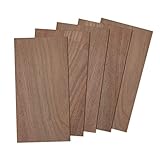
 Walnut Lumber Sheets Unfinished Walnut Wood Sheets Thick17x4x7/8 Inch - 1PCS3.93 x 7.87 x 0.8 inches1.4 PoundsCheck on Amazon
 Barrington Hardwoods Walnut Lumber 3/4 in x 43/4" x 4" x 12"0.75 x 4 x 12 inches2 poundsCheck on Amazon
 Minwax 233334444 Polycrylic Protective Wood Finish8 fl oz2.9 x 2.9 x 3 inches0.66 poundsCheck on Amazon
Choose wood to suit the finish
“Clear finish” can mean anything from a nearly invisible water-based coating to ambering oil or varnish. Test the finish on an offcut from the same board before buying a large quantity. Even nominally clear products change wood color, and boards from one species can vary considerably.
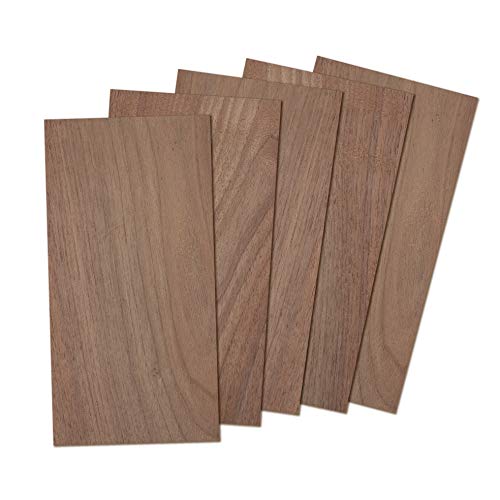
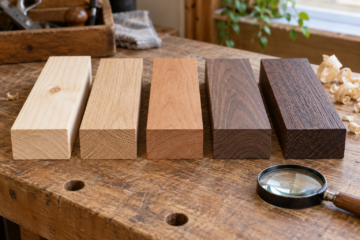
For a pale, clean look, hard maple is a strong choice. Its fine, subtle grain suits simple profiles, but its density makes it less forgiving to sand unevenly. Cherry has a warmer, more noticeable grain and deepens in color with light exposure. Walnut is naturally dark, so it needs no stain for a rich brown frame; its price and color variation are the trade-offs. Oak has prominent grain that can look bold on a frame, especially when the profile is narrow.
Poplar is inexpensive and easy to machine, but it often has green, gray, or purple streaks. Clear finish usually makes those colors more obvious. Use it for a dark-stained frame only after testing: poplar can take stain unevenly, so a conditioner or a dye-based colorant may improve consistency.
Wood species at a glance
| Species | Typical clear-finish look | Cost and working trade-offs | Best use |
|---|---|---|---|
| Maple | Pale, fine, restrained grain | Moderate to high; hard, can show sanding marks | Light, modern frames |
| Cherry | Warm reddish brown; darkens over time | Moderate to high; machines cleanly | Traditional or warm-toned frames |
| Walnut | Dark brown with visible grain | High; naturally dark, but board color varies | Dark frames without stain |
| Oak | Strong, open grain | Moderate; bold texture can dominate a small profile | Rustic or prominent-grain designs |
| Poplar | Uneven color under clear finish | Low; easy to work, but stain may blotch | Paint, or tested dark stain |
| Alder | Generally warm with mild grain | Often less expensive than cherry; can blotch | Warm-toned frames when carefully finished |
Prices depend on grade, thickness, and local supply. If the frame will be viewed close up, buy clear, straight stock and inspect it in good light. Knots, mineral streaks, and color shifts that seem minor on a long board can become conspicuous when four short lengths meet at the corners.
Buy stock that will make clean corners
Look for kiln-dried lumber that is straight and free of twists. A frame rail needs enough width and thickness for the profile, rabbeting, and glazing clearance; allow extra material for milling and test cuts. Avoid relying on nominal dimensions: a board sold as 1 inch thick is usually thinner after milling. If you do not have a planer or jointer, buy surfaced stock close to the dimensions your frame needs, or have a lumber supplier mill it.
For a first frame, maple or cherry is generally easier to predict than poplar under a clear coat. Walnut is worth the extra cost if its dark color is the goal, but inspect several boards because sapwood can create pale bands. A cheaper softwood can work for a painted or rustic frame; for clear finish, knots and uneven grain may look out of place rather than charming.
Prepare the surface before assembly
Mill the rails square and consistent, then cut miters with a sharp blade and check the corners dry before applying glue. A gap at a miter is difficult to hide with clear finish. Use a frame clamp or a reliable miter-clamping method, and remove glue squeeze-out while it is still manageable. Dried glue blocks finish and can leave a pale patch, especially around the joint.
Sand progressively rather than skipping grits. For most hardwood frame stock, start at 120 grit if milling marks need removal, then use 150 and 180; finish at 220 only if the chosen coating calls for it. Sand evenly across the face and soften sharp edges lightly. Over-sanding a miter can round the corner and open a visible hairline. Before finishing, remove dust with a vacuum and clean cloth; avoid pressing tack cloth residue into the grain.
Stain is optional. If using it, test on an offcut that has been sanded to the same grit as the frame. A clear coat over stain may deepen the color and reveal uneven absorption. For blotch-prone woods such as poplar or alder, test a conditioner or a water-based dye on scraps first; either can change the final color and may reduce contrast.
Choose a clear coat and test it
Water-based clear finishes usually keep pale woods closer to their raw color and dry quickly, but they can raise grain and leave brush marks if applied heavily. Oil-based polyurethane and many wiping varnishes add an amber cast, which can flatter cherry and walnut but turn maple more yellow. Oil finish can look natural and is easy to refresh, though it generally offers less protection from spills and abrasion than a film finish.
Apply thin coats according to the product label. Let each coat dry fully, then sand lightly with fine paper—often 320 grit—if the label permits and the surface feels rough. Do not sand through a thin stain layer at corners or edges. For products you are comparing, browse water-based clear wood finishes and wiping varnishes, then check the stated dry time, sheen, and cleanup method rather than choosing by the word “clear” alone.
A practical buying decision
Choose maple for a pale, understated frame; cherry for a warm frame that will darken naturally; or walnut when you want a dark finish without stain. Choose oak when its strong grain suits the design. Poplar is the budget option for paint, and can be acceptable under dark stain if a sample confirms the color is even. Whatever the species, buy one extra offcut for finish tests. That small check can prevent a whole frame from ending up too yellow, blotchy, or glossy for the room.

0 Comments