What's inside
As an Amazon Associate I earn from qualifying purchases. This post may contain affiliate links at no extra cost to you.
A dark espresso finish can make a kitchen feel calmer and more finished, but the wood underneath still matters. Species differ in pore size, grain contrast, hardness and how evenly they take stain. Those differences show through a dark color: one board may look nearly black while the next turns reddish or striped.
For most cabinets, choose the species based on the look you want and how much preparation you’re willing to do. Cherry and maple can produce a refined, relatively even result with the right process. Oak gives a bold, open-grain look. Birch is a budget-friendly option, but it needs care to avoid blotches.
As an Amazon Associate we earn from qualifying purchases at no extra cost to you.
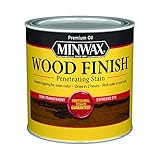
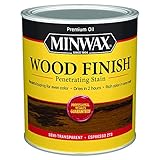


Our Top Picks
 Minwax 1 qt Minwax 70050 Espresso Wood Finish0.25 Gallon4.25 x 4.25 x 4.88 inches2 PoundsCheck on Amazon
 1/2 pt Minwax 13407 Clear Pre-Stain Wood Conditioner1/2 Pint3 x 3.25 x 3 inches0 PoundsCheck on Amazon


What “espresso” means in practice
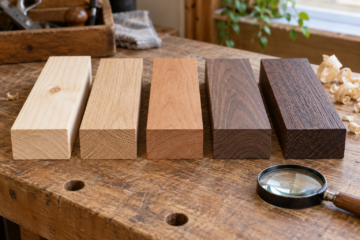
Espresso is a color range, not one standard stain color. It usually means a deep brown with little orange or red showing. A stain labeled espresso may look nearly black on one wood and warm brown on another. Clear topcoat can also deepen the color and add amber warmth, especially with oil-based finishes.
Test the complete finishing schedule on offcuts from the actual cabinet stock. Sand them to the same grit as the doors, apply any conditioner or sealer, then stain and topcoat. Check samples in the kitchen’s lighting; a dark finish can look almost black in a shaded corner but brown beside a window.
Compare the common cabinet woods
| Species | Espresso appearance | Prep and staining concerns | Best fit |
|---|---|---|---|
| Cherry | Rich brown; grain stays visible | Dark stain can mute its natural color; sapwood may differ | A warm, fine-grained look |
| Maple | Smooth, fairly uniform when prepared well | Can blotch; sanding and stain application must be consistent | A cleaner, less grainy appearance |
| Red oak | Strong grain, often dramatic and open | Large pores can look darker; red undertones may remain | A pronounced traditional grain pattern |
| White oak | Brown-black with distinct grain | Open pores need a deliberate choice: show them or fill them | A darker, less reddish oak look |
| Birch | Can look smooth, but color may vary | Blotching is common; test conditioner or a washcoat | Cost-conscious projects with careful prep |
| Poplar | Often uneven under dark stain | Green or gray areas can show through; paint is more forgiving | Painted cabinets or hidden parts |
Best choices by the look you want
For a smooth, restrained finish, consider maple. Its tight grain avoids the strong cathedral pattern of oak, but maple is not automatically easy to stain. Uneven sanding or a heavy, wet stain coat can leave cloudy patches. Use a consistent sanding sequence, commonly ending around 180 grit for stain, and test a conditioner or thin washcoat before committing. Too much sealer can prevent the stain from reaching the wood and make the color weak.
For a warm, refined espresso, consider cherry. Cherry has a fine grain and can develop a rich brown tone without burying its character. Its natural color deepens with light exposure, so freshly finished samples may not match the cabinet’s appearance months later. If you want a neutral, very dark brown, test for red undertones before buying all the doors. Matching boards matters: cherry sapwood and heartwood can take color differently.
For visible grain, choose oak. Red oak tends to retain a warmer, sometimes pinkish cast under dark stain. White oak is generally a better starting point for a less reddish brown, though its pore pattern remains prominent. Decide whether you like the open pores as dark lines. If you want a flatter surface, pore filler can even them out, but it adds labor and can change the color. Oak is a poor choice if your goal is a nearly featureless, uniform surface.
For a tighter budget, birch can work. It is often used for cabinet doors and plywood, but dark stain can reveal uneven absorption. A gel stain or controlled washcoat may help, yet neither makes every board identical. Birch plywood, solid birch edging and birch doors can also vary in color. Buy enough material from one batch and make full-size samples before staining the whole project.
Solid wood or veneer?
Many cabinet doors and panels use veneer over a stable core rather than solid wood throughout. A quality wood veneer can give the desired species and grain while reducing seasonal movement. The trade-off is a thin face: aggressive sanding can cut through it, especially at edges. Use light pressure and avoid repeatedly sanding one spot. For wide cabinet sides, veneered plywood is often more stable than a wide solid panel.
Poplar is commonly cheaper for painted parts, but dark stain is less forgiving: greenish or gray patches can remain visible. It is a sensible choice for frames or interiors that will be painted or hidden, not the first pick for a clear espresso finish.
Prep and application that prevent common failures
Sand evenly and inspect the surface under raking light. Scratches that are hard to see in bare wood may become obvious once stain settles in them. Remove dust without leaving oily residue. On blotch-prone woods, test a pre-stain conditioner, washcoat or gel stain on scraps; follow the product’s timing, since applying stain too soon or too late can change the result.
Apply stain in manageable sections and wipe off excess before it becomes tacky. Leaving a thick layer on the surface can create a muddy, slow-drying finish rather than a darker, more durable one. Stain colors the wood; it does not protect it. Once fully dry, use a compatible clear topcoat. A water-based topcoat generally adds less ambering than an oil-based one, but test for color shift and adhesion rather than assuming compatibility.
For easier color control, compare a gel wood stain in an espresso shade with a penetrating stain on the same offcut. If blotching is the main risk, a pre-stain wood conditioner is worth testing, but it is not a guarantee of uniform color. For oak, use a grain filler only if you want to reduce the open-pore texture.
What to buy
Choose cherry for warmth, maple for a quieter grain, and white oak for a bold, less reddish pattern. Buy birch when price matters and you can test carefully. Avoid choosing by a stain sample on a different species: the sample tells you the color family, not how your cabinets will look. Before ordering doors or lumber, finish at least one representative offcut from each material and judge it after the clear coat has dried.

0 Comments