What's inside
As an Amazon Associate I earn from qualifying purchases. This post may contain affiliate links at no extra cost to you.
For a clear-finished kitchen drawer front, choose a stable, straight-grained hardwood with a surface you can sand smooth and a color you’ll still like after finish adds warmth. Hard maple is the safest all-around choice: it is durable, widely available, and pale enough for a light, natural look. Cherry is a good pick if you want a warmer color that deepens with age. Birch can save money, but its color and blotchiness are less predictable. The right choice depends on the look, construction, and finish—not just hardness.
As an Amazon Associate we earn from qualifying purchases at no extra cost to you.


Our Top Picks
 Minwax 233334444 Polycrylic Protective Wood Finish8 fl oz2.9 x 2.9 x 3 inches0.66 poundsCheck on Amazon
 Polyurethane Wood Finish Water Based Polyurethane Clear Gloss100 ml1.6 x 1.6 x 4.7 inchesCheck on Amazon


Choose by look and use
Drawer fronts get frequent handling, but the cabinet box and drawer slide carry the load. You do not need the hardest wood available. Prioritize a flat, stable front and a finish that can tolerate fingerprints and routine cleaning. For a solid-wood front, buy dry, straight stock without twists, cracks, or knots near the edges. For a wide or flat front, a well-made veneer panel is often more stable than a single wide board.
Wood color changes under clear finish. A water-based clear coat usually keeps pale woods closer to their raw color; oil-based finishes add more amber. Make sample boards from the actual wood and finish before buying enough material for the whole kitchen.
Wood comparison
| Wood | Appearance under clear finish | Practical trade-off | Best fit |
|---|---|---|---|
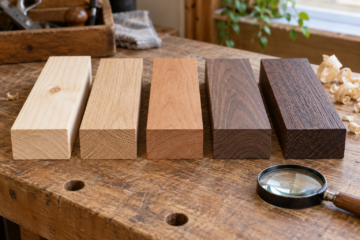
| Hard maple | Pale cream to light tan, with subtle grain | Hard and durable, but can show sanding scratches and blotch with some finishes | Clean, light fronts with understated grain |
| Cherry | Warm reddish-brown; darkens with light exposure | Easy to work and finish, but color shifts over time and boards can vary | Warm, traditional fronts where gradual darkening is welcome |
| Birch | Light, sometimes with noticeable color variation | Often less expensive than maple; can develop uneven color under oil or stain | Budget projects and painted fronts; test carefully for clear finish |
| White oak | Tan to medium brown, with strong open grain | Hard and attractive, but its pronounced grain is not a subtle look | Fronts where visible grain is part of the design |
| Poplar | Pale with green or gray streaks | Inexpensive and easy to machine, but color can look uneven clear-coated | Paint, or a hidden component—not usually a clear-finished show face |
Solid wood or veneer?
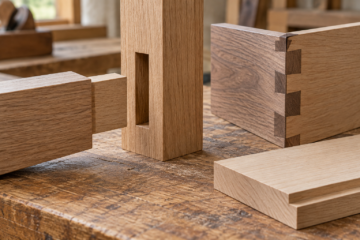
Solid wood suits framed fronts, narrow rails and stiles, and small drawer faces. It can move across its grain as humidity changes, so do not glue a broad solid panel rigidly into a frame. Use a panel groove or another construction method that allows seasonal movement. A solid face also makes small dents easier to sand out later.
For a large, flat slab-style front, consider a quality hardwood-veneered plywood panel with solid-wood edging. The plywood’s cross-laminated core resists cupping better than a wide solid board. The trade-off is a thin face veneer: aggressive sanding can cut through it, and deep damage is harder to repair. Check the panel’s face quality and edge construction before purchase; inexpensive plywood may have patches or an uneven veneer.
For a matched set, buy enough material at once and inspect every face. Grain and color variation are natural, especially in cherry and birch. Lay the pieces out in order before cutting so a noticeably darker board does not land beside a pale one by accident.
Buying and preparing the wood
Look for stock described as kiln-dried and suitable for interior furniture. Moisture content around 6–8% is a useful target for a typical heated home, though local conditions vary. A board that is damp when installed can shrink later, exposing joints or leaving uneven gaps between fronts. Sight along each board and check for bow, cup, twist, and end checks. Reject a face with defects that will fall in the visible area.
Cut parts slightly oversized, then bring them to final dimensions after milling if your tools allow. Sand through the grits rather than skipping steps: 120 grit to remove machining marks, then 150 and 180 for a typical clear finish. On maple, stop at the finish maker’s recommended grit; sanding very fine can reduce absorption and contribute to an uneven look with some finishes. Use a raking light to find scratches before applying anything—clear finish makes missed scratches easier to see.
For maple or birch, test the intended finish on offcuts from the same board. If the result looks blotchy, a compatible washcoat or prefinish conditioner may help, but follow the finish manufacturer’s directions and test the full sequence. These products can also make color lighter or less even, so they are not an automatic fix. For a simpler, pale appearance, a clear water-based topcoat is a sensible category to compare; browse water-based clear wood finishes and verify that the label allows furniture or cabinet use.
Finishing for a kitchen
Apply finish to the front, back, and edges of a solid-wood piece to reduce uneven moisture exchange. Pay special attention to end grain, which absorbs finish differently and can look darker. Do not flood the finish into joints or hardware holes. Follow the can’s temperature, recoat, and cure instructions; dry-to-touch is not the same as fully cured. Avoid reinstalling fronts or cleaning them with household sprays until the coating has cured as directed.
Water-based polyurethane is useful when you want to preserve a pale color, while oil-based polyurethane gives a warmer amber cast. Either can work for drawer fronts if the product is rated for furniture or interior woodwork and is applied correctly. Compare water-based polyurethane with oil-based polyurethane by color, application method, and recoat time, not by claims of a single “best” finish.
A practical buying choice
Choose hard maple for a predictable, light, durable front; cherry for warmth and a natural color change; or white oak when you want prominent grain. Birch is a reasonable cheaper option if you can inspect the boards and accept some variation. Poplar makes more sense under paint than clear finish. For broad slab fronts, a good veneer panel with solid edging is often the more stable construction. In every case, a finish sample on the actual wood is the best way to avoid a color surprise.

0 Comments