What's inside
- Quick comparison
- What boiled linseed oil does
- What pure tung oil does
- Raw, boiled, polymerized, and “finish” products: know what is in the can
- Prepare the hardwood correctly
- Application method and coat schedule
- Which one should you buy?
- Outdoor wood, food contact, and mixing the two oils
- Safety and maintenance
- Frequently Asked Questions
- Related Guides
- Quick comparison
- What boiled linseed oil does
- What pure tung oil does
- Raw, boiled, polymerized, and “finish” products: know what is in the can
- Prepare the hardwood correctly
- Application method and coat schedule
- Which one should you buy?
- Outdoor wood, food contact, and mixing the two oils
- Safety and maintenance
- Frequently Asked Questions
- Related Guides
As an Amazon Associate I earn from qualifying purchases. This post may contain affiliate links at no extra cost to you.
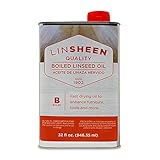
Boiled linseed oil (BLO) and pure tung oil are penetrating finishes, not film finishes like polyurethane or varnish. Both leave hardwood with a low-sheen, hand-rubbed appearance, but they differ in drying speed, water resistance, color, cost, and maintenance. The cheaper option is often perfectly adequate for indoor furniture, while tung oil has a clearer advantage where moisture and regular handling are concerns.
As an Amazon Associate we earn from qualifying purchases at no extra cost to you.



Our Top Picks

Quick comparison
| Property | Boiled linseed oil | Pure tung oil |
|---|---|---|
| Typical color | Warm amber to orange | Light amber, usually less yellow over time |
| Drying time | About 12–24 hours per coat | About 24–48 hours per coat, sometimes longer |
| Water resistance | Limited | Better, especially after several fully cured coats |
| Application | Easy and forgiving | Easy, but slower and more demanding |
| Durability | Moderate for dry indoor use | Moderate to good for indoor use and light moisture exposure |
| Cost | Low | Higher |
| Best use | Decorative furniture, tool handles, trim | Countertops, tables, doors, and pieces exposed to occasional moisture |
What boiled linseed oil does
BLO is linseed oil treated with drying agents so it hardens faster than raw linseed oil. Despite the name, most modern “boiled” linseed oil has not simply been heated. It usually contains metallic driers, so check the product label if you are concerned about additives or indoor air quality.
On hardwood, BLO penetrates readily and produces a rich amber color that makes plain maple, oak, ash, and walnut look deeper and more contrasted. It is inexpensive, widely available, and simple to apply. A boiled linseed oil wood finish is a reasonable choice for a dry-use bookshelf, decorative box, picture frame, or wooden handle.
Its weaknesses are equally clear. BLO offers limited protection against standing water, wet glasses, food spills, and abrasion. It also darkens and yellows with age. On light hardwoods, that warm color may be desirable; on pale maple or ash, it can look noticeably orange. BLO does not build a substantial protective film, so repeated wiping and occasional reapplication are normal.
What pure tung oil does
Pure tung oil comes from tung tree seeds. It cures by reacting with oxygen and generally provides better water resistance than linseed oil. It also tends to leave a slightly clearer, less yellow appearance, although every wood species and product will look different on a test board.
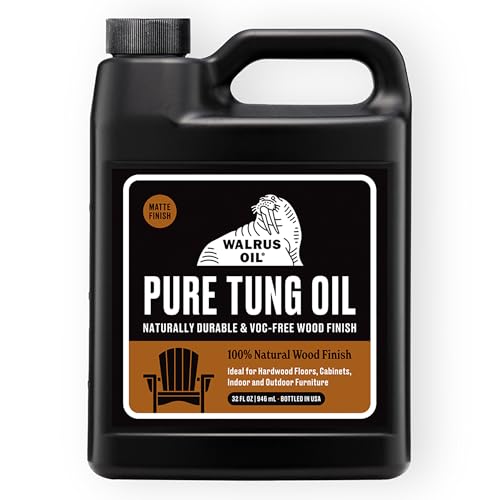
Pure tung oil is not the same as “tung oil finish.” That label can describe a wiping varnish containing little or no tung oil. If you want the traditional product, look for a label that clearly says 100% pure tung oil. A 100% pure tung oil finish is usually sold as a thick liquid that may need thinning for the first coat.
Pure tung oil is slower. Depending on temperature, humidity, wood porosity, and the amount applied, a coat may remain tacky for 24 to 48 hours. Dense hardwoods can take longer. It may require three to five thin coats, with light sanding or abrasive-pad work between coats if the surface feels rough. The result is attractive and reasonably moisture-resistant, but it is not equivalent to a two-part countertop coating or a quality polyurethane.
Raw, boiled, polymerized, and “finish” products: know what is in the can
Much of the confusion between these two oils comes from the labels rather than the oils themselves. Linseed oil is pressed from flax seed; tung oil is pressed from the nuts of the tung tree, native to China and grown commercially in parts of South America and Asia. Both are drying oils, meaning they harden by reacting with oxygen, but each is sold in several forms that behave very differently on hardwood.
| Product on the label | What it usually is | How it behaves |
|---|---|---|
| Raw linseed oil | Pressed flax oil with no driers | Can stay soft for weeks per coat; poorly suited to furniture |
| Boiled linseed oil | Linseed oil with metallic drying agents added | Dries overnight in a warm room; the common choice for woodworking |
| Polymerized linseed oil | Linseed oil heat-treated without oxygen so it partly cures before use | Dries faster than raw oil, often without metallic driers, with a slightly higher sheen |
| 100% pure tung oil | Unmodified tung oil | Slow drying and thick; cures to a more water-resistant, less yellow finish inside the wood |
| Polymerized tung oil | Heat-treated tung oil, sometimes thinned | Dries faster and builds a little more sheen than raw tung oil |
| “Tung oil finish” or “Danish oil” | Usually a thinned oil and varnish blend; may contain little or no tung oil | Dries quickly and builds sheen faster, but it is a different product from pure tung oil |
When a comparison says tung oil dries in a few hours, it is almost always describing a blended “tung oil finish,” not the pure oil. If your goal is the traditional look and the water resistance pure tung oil is known for, read the ingredient line rather than the front label. A product sold as 100% pure tung oil, with food-safe status once cured stated on the label, is the right starting point for a true side-by-side comparison with BLO.
As an Amazon Associate we earn from qualifying purchases at no extra cost to you.

What does a tung oil finish look like compared with linseed?
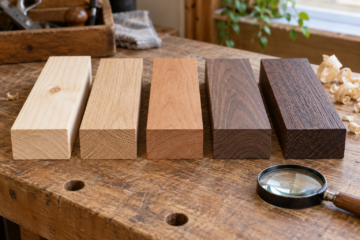
Pure tung oil leaves a low, satin-to-matte sheen once cured, with a faint honey tint that stays fairly stable over time. BLO starts out similar but warmer, and it continues to amber as it ages, especially in sunlight. On walnut and cherry the difference is subtle; on maple, birch, ash, and white oak it becomes easy to see after a few months. Neither oil produces a high-gloss look on its own. If you want more sheen, add extra thin coats and buff between them with a fine abrasive pad, or switch to a wiping varnish over the cured oil.
Prepare the hardwood correctly
Preparation has more effect on the final appearance than the choice between these two oils. Sand through at least 150 grit, and use 180 grit on furniture where a smoother feel matters. Going much finer than 220 grit can reduce absorption, especially on dense species such as maple, cherry, and beech.
Remove all sanding dust with a vacuum and a clean, dry cloth. Do not flood the surface with water before oiling unless you deliberately want to raise the grain and sand it back. Test the finish on an offcut or hidden area. Oil can dramatically darken end grain, sapwood, and unevenly sanded patches.
Some hardwoods have oily or resinous surfaces. Teak, rosewood, and certain exotic species may need wiping with an appropriate solvent and thorough drying before finishing. Follow the finish manufacturer’s directions rather than assuming every wood accepts oil in the same way.
Application method and coat schedule
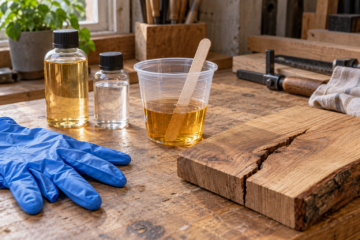
Apply either oil generously with a lint-free cloth or brush, keeping the surface wet for roughly 10 to 20 minutes. Add oil to dry spots, then wipe off every trace of liquid standing on the surface. Puddles and thick areas are the main cause of sticky patches, wrinkles, and uneven sheen.
For BLO, allow the first coat to penetrate for 15 to 30 minutes, then wipe it dry. Wait at least overnight before another coat. Two or three coats are common, with 24 hours between coats in a warm, ventilated shop. A final coat that remains glossy or tacky after a day was probably applied too heavily.
For pure tung oil, thin the first coat if the product instructions allow it. Mineral spirits are commonly used, but use the thinner specified by the manufacturer and provide strong ventilation. Apply several thin coats rather than trying to build coverage in one pass. Allow 24 to 48 hours between coats, and longer if the surface still feels soft or smells strongly of solvent.
After the final coat, let the piece cure before regular use. “Dry to the touch” is not fully cured. Give BLO several days for light use and up to a couple of weeks before hard wear. Pure tung oil may need one to three weeks, depending on conditions and coat thickness.
Which one should you buy?
Choose BLO when the project is indoors, the budget is tight, a warm amber color is welcome, and occasional maintenance is acceptable. It is the sensible low-cost finish for many low-wear hardwood projects. The lint-free finishing cloths used to apply it often cost more than the oil itself.
Choose pure tung oil when water resistance matters more, you prefer a less yellow appearance, or you are willing to wait through a slower curing schedule. It is a better fit for dining tables, bathroom woodwork, doors, and surfaces that will receive occasional damp wiping. For a frequently used kitchen countertop or desk, consider a film-forming finish instead; neither oil provides strong resistance to standing water, heat, stains, and abrasion.
Outdoor wood, food contact, and mixing the two oils
Outdoor and wet-area use
Neither oil is a true exterior finish. Both lack UV blockers, so sunlight breaks down the cured oil and grays the wood beneath it. Pure tung oil holds up better on outdoor benches, doors, and garden tools because it resists water more effectively, but expect to clean and re-oil exposed surfaces once or twice a year. Linseed oil outdoors can also support mildew growth, which is one reason it often turns blotchy and dark on shaded exterior wood. For decks, siding, and furniture that sits in the weather, a penetrating exterior oil with mildewcide and UV protection, or a spar or marine varnish, is a more practical choice.
Cutting boards, bowls, and food surfaces
Pure tung oil and additive-free linseed oil (often sold as flaxseed oil or polymerized linseed oil) are generally considered safe for food contact once fully cured. Most hardware-store BLO contains metallic driers, so many woodworkers avoid it on surfaces that touch food. Tung oil comes from a nut; cured oil is widely regarded as inert, but some households with nut allergies still prefer to avoid it on kitchenware. For a cutting board you plan to re-oil often, food-grade mineral oil or a mineral oil and beeswax blend is the simpler maintenance option.
Can you put tung oil over boiled linseed oil?
Yes, as long as the BLO has fully cured and the surface is clean. Wait at least a week after the last BLO coat, wipe the piece with mineral spirits, scuff lightly with a fine abrasive pad, then apply thin coats of tung oil. Both oils cure by oxidation, so they bond well to each other. Going the other way, BLO over cured tung oil, also works but gives up much of the color advantage of the tung oil. Some finishers deliberately use one coat of BLO to warm the grain, then switch to tung oil for the remaining coats.
Which oil makes the grain stand out more?
Both oils deepen color and add depth to figured hardwoods such as curly maple, quartersawn oak, and walnut. BLO tends to give slightly stronger first-coat contrast because of its warmer tone. Tung oil gives a cleaner, more neutral look that keeps pale woods closer to their natural color. On figured maple, a single coat of BLO followed by a clearer topcoat is a common way to bring out the figure without heavy yellowing.
Safety and maintenance
Oil-soaked rags can self-heat and catch fire. Spread them flat outdoors to dry, or store them submerged in water inside a sealed metal container until disposal. Never leave a crumpled BLO or tung-oil rag in a bin or on a workbench.
Maintain an oil finish by cleaning with a damp cloth and mild soap, then drying the surface. When it looks dry or uneven, clean it, scuff lightly with a fine abrasive pad, and apply a very thin maintenance coat. If the wood is badly worn, sanding back to sound material may be necessary. Neither finish eliminates the need for coasters, prompt spill cleanup, and sensible expectations about hardwood protection.
Frequently Asked Questions
Is tung oil or linseed oil better for hardwood furniture?
For tables, chairs, and anything that gets wiped or handled daily, pure tung oil is usually the better choice because it resists water marks and stays less yellow. For bookshelves, frames, decorative boxes, and trim, boiled linseed oil is cheaper, dries faster, and looks just as good. Either way, the result depends more on careful sanding and thin coats than on the oil itself.
How many coats of tung oil vs boiled linseed oil do you need?
Plan on two to three thin coats of BLO, roughly a day apart, and three to five thin coats of pure tung oil, often two to three days apart. Dense hardwoods such as maple absorb less and may only need the lower number. Stop adding coats once the surface looks evenly satin and no longer soaks up oil in dry-looking patches.
Why is my tung oil finish still sticky?
Stickiness almost always means too much oil was left on the surface, or the room is too cold or humid. Wipe the area firmly with a cloth dampened with mineral spirits to remove the excess, move the piece to a warm, ventilated room, and give it several more days. Next time, wipe every coat until the surface feels dry to a clean hand within the first hour.
Does boiled linseed oil darken wood over time?
Yes. BLO adds an immediate amber tone and keeps yellowing and darkening with age and light exposure. On walnut and mahogany this is often welcome, but on maple, birch, and ash the color can drift toward orange within a year or two. Pure tung oil darkens as well, but noticeably less.
Can you use tung oil or linseed oil on outdoor furniture?
You can, but treat both as short-lived outdoor finishes. Pure tung oil handles rain better than BLO, yet neither blocks UV, so exposed wood will gray and need re-oiling once or twice a year. For furniture left outside year-round, a dedicated exterior oil with UV and mildew protection, or a spar or marine varnish, will last considerably longer.
How do you remove an old oil finish before switching products?
Wipe the surface with mineral spirits to lift wax and grime, then sand lightly with 180 to 220 grit. Because oils soak into the fibers rather than forming a thick film, you rarely need chemical stripper. If the old finish has turned gummy, a stripper followed by a mineral spirits wipe will clean it up before you start the new oil.
0 Comments