What's inside
As an Amazon Associate I earn from qualifying purchases. This post may contain affiliate links at no extra cost to you.
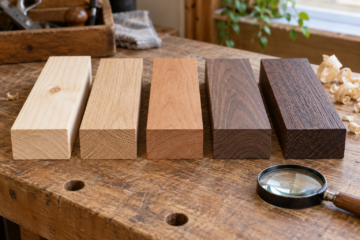
Rubio-style hardwax oil works best when the wood’s natural color and grain are part of the design. Unlike film finishes, it does not build a thick plastic layer on top. It soaks slightly into the surface, bonds with the fibers, and leaves a thin, satin-like protective layer. That makes species selection important: dense woods, oily woods, porous woods, and pale woods each behave differently.
The safest choices are stable, relatively dry, sanded woods with a clean surface. Most furniture-grade hardwoods are suitable, but the finish will not hide uneven sanding, glue spots, mineral streaks, or blotchy absorption. Plan on testing the exact board, not just a sample of the species.
As an Amazon Associate we earn from qualifying purchases at no extra cost to you.


Our Top Picks
 Rubio Monocoat Wood Oil Accelerator & Hardener3.38 Fl Oz (Pack of 1)1.75 x 1.75 x 4 inches0.3 poundsCheck on Amazon

Best overall wood species
White oak is one of the most reliable choices. Its open grain accepts hardwax oil evenly, and the finish emphasizes the cathedral and ray fleck without making the surface look heavily coated. Natural oil will make white oak warmer and slightly darker. A lightly pigmented white or natural-toned product can reduce the amber effect, but test first because it may collect in the pores.
Walnut also responds well. It usually absorbs evenly and gains a richer, slightly darker appearance. Hardwax oil will not prevent walnut from fading gradually in strong sunlight, however. For a walnut tabletop near a bright window, use window protection and expect some color change over time.
Cherry is easy to finish but changes color dramatically with age. Oil deepens its initial red-brown tone, while sunlight accelerates the transition toward a darker, warmer brown. If you want to judge the final color, expose an oiled sample and an unfinished sample to light for several days before committing.
Ash behaves much like oak because it has pronounced open pores. It is a good lower-cost option when you want a light-colored wood with visible grain. The downside is that its large pores can look uneven with strongly colored oil, especially on end grain.
How common species behave
| Wood species | Hardwax oil behavior | Best use | Main caution |
|---|---|---|---|
| White oak | Even absorption; strong grain contrast | Floors, tables, cabinets | Oil warms the color |
| Walnut | Usually even; deepens the brown | Furniture and countertops | Can fade in sunlight |
| Cherry | Easy to coat; becomes richer | Furniture and cabinetry | Rapid color change with light |
| Maple | Low absorption; can look uneven | Light furniture and trim | Shows lap marks and sanding defects |
| Pine | Highly variable absorption | Rustic projects and low-cost work | Blotching and soft dents |
| Teak or ipe | Slow or poor wetting | Specialty furniture and outdoor-adjacent work | Natural oils can interfere with bonding |
Light-colored and porous woods
Hard maple, birch, beech, and sycamore are usable, but they are less forgiving than oak or walnut. Their tight grain limits absorption, so a colored oil can produce a cloudy or streaky appearance. On these woods, a natural or very lightly pigmented finish is usually safer. Sand uniformly to about 120 or 150 grit unless the product label specifies otherwise. Sanding much finer than 180 grit can reduce absorption and make the finish look patchy.
Pine, fir, and spruce are inexpensive options, and hardwax oil is perfectly reasonable for rustic furniture or shelving. The cheap option is fine when variation is acceptable. Do not expect a uniform stained appearance: soft earlywood absorbs more finish than dense latewood, creating stripes and dark patches. On pine, a clear or lightly tinted oil generally looks better than a dark color. A sample board is essential.
End grain on all of these species absorbs heavily. It may turn darker than the surrounding face grain. Sand end grain one or two grits finer, then apply a thin coat rather than flooding it.
Oily and difficult woods
Teak, ipe, rosewood, cocobolo, and some reclaimed tropical woods contain natural oils or extractives that can interfere with adhesion and drying. They are not automatically unsuitable, but preparation matters more. Wipe the surface with the solvent recommended by the finish manufacturer, allow it to evaporate completely, and apply a test coat. If the oil remains tacky after the stated drying period, the wood or environment is a poor match.
Do not use a hardwax oil intended for indoor furniture as a substitute for an exterior coating. Some products tolerate occasional moisture, but outdoor exposure, standing water, and ultraviolet light require a finish specifically rated for those conditions.
For these species, buy a hardwax oil sample size rather than committing to a large container. The small additional cost is cheaper than refinishing a tabletop.
Preparation and application
Bring the wood indoors until its moisture content is stable. For interior furniture, roughly 6% to 8% moisture content is a useful target in many heated homes, though local conditions vary. Repair dents before finishing; hardwax oil will not level them.
Sand through the grits without skipping. A typical sequence is 80, 120, and 150 grit, with 180 grit reserved for products that allow it or for very smooth species. Remove dust with a vacuum and clean, dry cloth. Avoid household cleaners, silicone-containing polishes, and oily tack cloths.
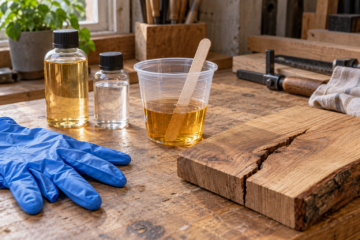
Apply an extremely thin coat with a white nonwoven pad, short-nap roller, or clean cloth, following the label. After several minutes, spread the finish across the surface and wipe off all visible excess. A glossy wet film left on the wood is a common failure mode: it dries slowly, remains sticky, and may show shiny patches. Large surfaces are easier if divided into manageable sections with a wet edge.
Most products need around 8 to 24 hours before light handling, depending on temperature, humidity, ventilation, and coat thickness. Full cure commonly takes about 5 to 14 days. Keep the piece dry and avoid rugs, heavy objects, and aggressive cleaning during that period. Use clean nonwoven finishing pads for a light de-nibbing pass only when the product instructions call for a second coat.
Choosing the finish and maintaining it
Clear or natural hardwax oil is the least risky choice for walnut, oak, cherry, and most medium-dark woods. White-pigmented products can keep maple, ash, and white oak from turning yellow, but they need thorough mixing and careful wiping. Dark colors magnify differences in porosity and sanding, especially on pine and maple.
For a dining table or countertop, choose a product specifically labeled for that use and follow its recoat and cure instructions. Maintenance is usually simple: remove grit, wipe spills promptly, and use a manufacturer-approved cleaner. When a high-wear area becomes dull, clean it, lightly abrade if instructed, and apply a very thin maintenance coat. Do not repeatedly add oil over dirt or wax buildup; it can create a soft, uneven surface.
If predictable color and easy application matter more than a natural feel, a waterborne film finish may be the better buy, particularly on maple or pine. Hardwax oil is a strong choice when you want repairable protection and visible wood texture, but the species and preparation still determine most of the final result.
0 Comments