What's inside
- Why Oily Wood Causes Glue and Finish Failures
- Which Woods Actually Need Degreasing
- What Degreasing Does and Doesn’t Do
- Choosing a Solvent: Trade-offs That Matter
- Step-by-Step: How to Degrease Without Ruining the Surface
- Gluing Oily Wood After Degreasing
- Finishing Oily Wood After Degreasing
- Common Mistakes That Cause Failures
- Related Guides
- Why Oily Wood Causes Glue and Finish Failures
- Which Woods Actually Need Degreasing
- What Degreasing Does and Doesn’t Do
- Choosing a Solvent: Trade-offs That Matter
- Step-by-Step: How to Degrease Without Ruining the Surface
- Gluing Oily Wood After Degreasing
- Finishing Oily Wood After Degreasing
- Common Mistakes That Cause Failures
- Related Guides
As an Amazon Associate I earn from qualifying purchases. This post may contain affiliate links at no extra cost to you.
Why Oily Wood Causes Glue and Finish Failures
Oily and resinous woods don’t just feel greasy. That surface oil actively blocks adhesion. The natural resins and extractives in species like teak, rosewood, and ipe migrate to the surface continuously, even after sanding. When you spread glue, the oil prevents the adhesive from wetting the wood fibers. The result is a starved, weak joint that can fail with light hand pressure even though the glue itself cured. With finishes, the same oil causes fisheyes, pinholes, and peeling. Polyurethane or lacquer will bead up or stay tacky for days because the oil interferes with curing. You can’t sand your way out of it — within 30 to 60 minutes of sanding, fresh oil has already wicked back to the surface on the oiliest species.
Which Woods Actually Need Degreasing
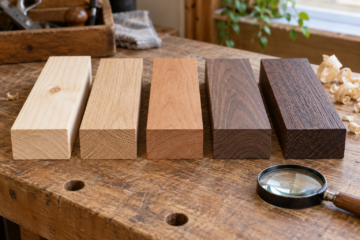
Not every hardwood needs this step. Maple, oak, walnut, and cherry have low surface oil and glue fine with just a clean, freshly sanded surface. Degreasing is mandatory for tropical hardwoods and other high-extractive species. The worst offenders are teak, cocobolo, rosewood (including East Indian and Brazilian), padauk, bubinga, wenge, ipe, and olive wood. Moderately oily woods like white oak, afrormosia, and some figured mahoganies benefit from a wipe if you want maximum glue strength, but they are more forgiving. A simple test: sand to 120-grit, then wipe the surface with a clean white paper towel. If you see a yellow, brown, or reddish translucent stain on the towel, or if the wood darkens your fingers when you touch it, degrease it before you glue or finish.
What Degreasing Does and Doesn’t Do
Degreasing is a temporary surface treatment, not a permanent extraction. A solvent wipe dissolves and lifts the thin film of oil sitting in the top 0.1-0.2mm of the wood so adhesive or finish can make direct contact with clean fibers. It does not pull oil from deep inside the board. That is why timing matters so much. You have a window of about 15 to 30 minutes after wiping on the oiliest woods before enough oil migrates back to compromise the bond. For less oily woods, the window is 1 to 2 hours. You also don’t want to flood the wood or soak it. You are not trying to strip the wood, just to leave a chemically clean surface for the next step.
Choosing a Solvent: Trade-offs That Matter
No single solvent is best for everything. Your choice comes down to evaporation speed, residue, odor, and how your glue or finish reacts to any leftover solvent trapped in the grain.
| Solvent | Best For | Evaporation / Dry Time | Residue Risk | Downsides |
|---|---|---|---|---|
| Acetone | Glue joints on very oily woods (teak, ipe, cocobolo) | Very fast: 10-15 minutes | None if pure | Strong fumes, dries skin quickly, can raise grain slightly on some species |
| Naphtha (VM&P) | Pre-finish wipe where you need longer working time | Fast: 15-20 minutes | Very low | More VOCs than acetone, flammable, slower to cut heavy resin |
| Denatured Alcohol | Shellac prep, light degreasing, shellac-friendly workflow | Fast: 15-25 minutes | None | Weak on heavy oils, not effective enough for rosewood/teak glue joints alone |
| Isopropyl Alcohol 99% | Light cleaning, quick wipe for moderately oily wood | Medium: 20-30 minutes | Can leave water if below 91% | Too weak for truly oily exotics, will not dissolve waxy resins well |
For gluing, pure acetone is the standard for a reason. It cuts the waxy oils faster than anything else in the shop and leaves zero residue. The cheaper hardware-store acetone in the metal quart can is perfectly fine — you don’t need lab grade. Avoid “acetone-free” nail polish removers or anything with oils or fragrances. For finishing work where you need to see the surface and have a bit more time to inspect for defects, VM&P naphtha is more forgiving because it flashes a little slower and doesn’t chill the surface as much, which helps you spot fisheyes before you commit.
Step-by-Step: How to Degrease Without Ruining the Surface
Do this after your final sanding and right before you glue or finish. Don’t degrease, then let the parts sit overnight.
1. Sand to final grit. For glue joints, stop at 80 to 120-grit. Finer than 150 polishes the surface and actually weakens the mechanical bond, even if it feels smoother. For finishing, sand to the grit your finish calls for, usually 150 to 220.
2. Vacuum thoroughly, then wipe once with a dry, lint-free cotton rag or blue shop towel to remove dust. Don’t use tack cloths with waxy binders before degreasing — they can add contamination.
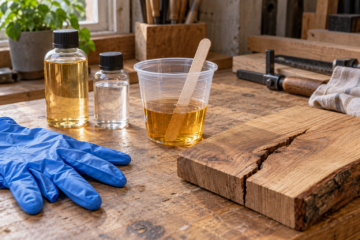
3. Put on nitrile gloves and work with ventilation. Fold a clean white cotton rag into a pad, dampen it (not dripping) with your solvent, and wipe in one direction along the grain. Apply moderate pressure. You will see color transfer — yellows from padauk, browns from teak, deep reds from cocobolo. That is the oil coming off.
4. Immediately follow with a second clean rag dampened with fresh solvent before the first wipe dries. This second pass picks up the dissolved oil instead of letting it re-deposit as the solvent flashes. Change rags often. Using the same dirty rag just smears oil around.
5. Let the solvent flash off completely. For acetone, wait 15 minutes minimum; for naphtha or alcohol, 20-30 minutes. The surface should look uniformly dry and feel room temperature, not cool from evaporation. Don’t force-dry with compressed air — it can drive oil-laden air back onto the surface.
6. Glue or finish within your window. On cocobolo or teak, spread glue within 15-20 minutes of the surface drying. If you miss the window — you got distracted or had to dry-fit — wipe again. It takes two minutes and saves a failed joint.
Gluing Oily Wood After Degreasing
Even with a perfect degrease, standard yellow PVA (Titebond Original) is a poor choice for the oiliest species. Solvent wiping helps, but PVA still struggles to wet resin-saturated fibers long-term, especially in humid or exterior conditions. Use a glue that tolerates some residual oil.
Epoxy (West System, TotalBoat, or any slow-cure 2:1 marine epoxy) is the most reliable for teak, ipe, and cocobolo. It bonds mechanically and is far less sensitive to thin oil films. Polyurethane glue (Gorilla Glue original formula) also tolerates oil but foams and requires tight clamping and moisture. If you must use PVA, use a cross-linking PVA like Titebond III and clamp within that 15-minute window, and expect about 20-30% lower shear strength than the same joint in maple based on published ASTM D905 tests. Scuff the joint with 80-grit right before wiping, don’t over-clamp to squeeze all the glue out, and leave joints clamped for the full 24 hours even if the bottle says less.
Finishing Oily Wood After Degreasing
For film finishes like polyurethane, lacquer, or varnish, degreasing is only half the battle. The oil will continue to migrate and can cause adhesion failure months later if you trap it under a hard film. Two approaches work:
Option A: Seal with shellac. After a naphtha or denatured alcohol wipe, apply a thin 1-lb cut of dewaxed shellac (Zinsser SealCoat is the common pre-mixed version). Shellac sticks to oily wood better than anything else and blocks the oil from contaminating the topcoat. Let it dry 1 hour, scuff lightly with 320-grit, then apply your poly or lacquer.
Option B: Use an oil-compatible finish. Hardwax oils and marine teak oils are formulated to cure in the presence of wood extractives. Wipe, let dry, then apply per the manufacturer’s schedule. Don’t try to force a water-based poly directly onto freshly wiped rosewood — waterborne finishes are the most sensitive to fisheye on oily woods and will show every trace of contamination.
Common Mistakes That Cause Failures
Reusing rags is the number one error. One rag per 2-3 square feet, then flip or replace. The rag that looks clean is already saturated with invisible oil.
The second mistake is using mineral spirits. Standard odorless mineral spirits evaporates slowly (45-90 minutes) and often leaves a faint oily residue of its own. It can make the problem worse under PVA glue. If mineral spirits is all you have, you need to follow it with an acetone wipe anyway, so skip it and start with acetone.
Third, sanding too fine for glue joints. A 220-grit glue surface on ipe looks beautiful and will fail. Keep glue faces at 80-120 grit for tooth. Save the fine grit for the finish faces that won’t be glued.
Finally, don’t degrease in a cold shop below 60°F (15°C). Evaporation slows dramatically, solvent stays in the pores, and you can trap it under glue. If the shop is cold, give acetone 30 minutes and naphtha a full hour before bonding.
0 Comments