What's inside
As an Amazon Associate I earn from qualifying purchases. This post may contain affiliate links at no extra cost to you.
The best wood for a rich, natural oil finish is not necessarily the hardest or most expensive species. For wall shelves, the practical choice depends on color, grain, shelf span, dent resistance, and how evenly the wood absorbs oil. Walnut, white oak, cherry, and clear maple are reliable choices, while ash and pine can work well when price matters. The finish will enhance the wood’s character, not hide poor stock selection or rough preparation.
As an Amazon Associate we earn from qualifying purchases at no extra cost to you.


Our Top Picks
 Hrbjunuo Solid Walnut Floating Shelves for Wall 16.516.5 Inch16.5 x 6 x 1 inches1 PoundsCheck on Amazon


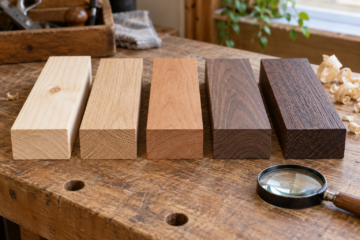
Best species at a glance
| Wood species | Appearance with oil | Strengths | Main drawbacks |
|---|---|---|---|
| Walnut | Deep brown, low-contrast to moderately figured | Rich color, stable, easy to finish | Expensive; lighter sapwood may need sorting |
| White oak | Warm tan to medium brown with prominent grain | Durable, widely available, strong visual texture | Open pores and potentially uneven color |
| Cherry | Pinkish brown that darkens and warms over time | Fine grain, smooth feel, takes oil evenly | Can blotch slightly; color changes with light |
| Hard maple | Light cream with subtle grain | Hard, clean, inexpensive compared with walnut | Can look flat and may finish unevenly |
| Ash | Light tan with bold, oak-like grain | Good value, strong, attractive open grain | Less naturally dark; pores remain visible |
| Pine | Honey-colored, rustic, knots often visible | Cheap, easy to find, suitable for light-duty shelves | Soft, dents easily, prone to blotching |
Walnut for depth and elegance
Black walnut is the easiest recommendation when the goal is a naturally dark, premium-looking shelf. A clear oil brings out brown and chocolate tones without making the surface look painted. The grain is usually attractive without being excessively busy, and walnut sands to a smooth surface with relatively little trouble.
Walnut is also stable enough for normal indoor shelving, but it is not immune to movement. Use properly dried lumber, leave room for seasonal movement where the shelf meets a cleat or bracket, and avoid sealing only one face. The main trade-off is cost. Walnut is worth paying for when the shelf is a visible feature, but it is unnecessary for a utility shelf that will be hidden behind books or storage bins.
Buy boards with matching heartwood if you want a uniform dark face. Pale sapwood can look intentional, but a random mix may appear like a color defect after oiling. A clear hardwax oil is a good fit for walnut because it adds depth while retaining a relatively natural sheen.
White oak for bold grain and durability
White oak is often the best all-around shelf wood. It is hard enough for books and household objects, widely stocked at lumberyards, and visually strong under oil. Quarter-sawn or rift-sawn boards show straighter grain and may include medullary rays; plain-sawn boards have the familiar cathedral pattern.
Because oak has large open pores, it will not feel as glass-smooth as maple unless you fill the grain. That is not a defect. Many people prefer the tactile, natural surface. If you want a flatter surface, sand to 180 grit and apply a grain filler before the oil, testing first because filler changes the appearance.
White oak generally costs less than walnut and is the sensible cheaper option when you want a substantial, furniture-like shelf. Red oak is also usable, but it has a pinker cast and more pronounced pores. Do not substitute it blindly if the surrounding furniture is neutral or gray-toned.
Cherry and maple for cleaner looks
Cherry produces one of the most attractive oil finishes: initially light reddish brown, then noticeably darker and warmer with exposure to light. This change is normal, but it means a new shelf may not match older cherry furniture immediately. Cherry has a fine, closed grain and usually feels smooth without pore filling.
Hard maple is a better choice when you want a pale shelf with a clean, understated appearance. It is harder than cherry and resists dents, making it useful for kitchen, office, or children’s-room shelving. The downside is that maple’s tight grain can absorb finish inconsistently, especially if the surface is sanded unevenly. Use a light final sanding, remove dust carefully, and test the exact oil on an offcut.
For maple and cherry, avoid assuming that a darker oil will create walnut-like color. Oil can deepen the wood, but it will not reliably turn pale hardwood into a convincing dark species. If color matching matters, use a compatible stain-and-topcoat system and test it on scrap first.
Ash and pine when the budget matters
Ash offers much of oak’s visible grain at a reasonable price. It is strong and finishes well with clear oil, although its light color gives a less dramatic result. Ash is a practical choice for long shelves when walnut pricing is hard to justify.
Pine is fine for inexpensive shelves, painted projects, and rustic interiors. It is not fine when you expect a crisp, dent-free surface. Pine compresses under brackets, bookends, and dropped objects, and resinous knots can remain sticky or bleed through some finishes. Select straight, dry boards and expect more color variation.
To reduce blotching on pine, use a wood conditioner for softwood before a tinted product. For a truly natural appearance, clear oil is usually safer than stain because stain can collect darkly in soft earlywood and around knots.
Preparing the shelf for oil
Surface preparation controls the final appearance more than the label on the finish. Flatten the board first, then sand through 120, 150, and 180 grit. On dense hardwoods, stopping at 180 grit is usually enough. Sanding much finer than 220 can reduce absorption and make some oils look uneven; follow the finish maker’s instructions if they specify a different sequence.
Break sharp edges with a few light passes of 180-grit paper. A razor edge chips easily and holds little finish. Vacuum the surface and wipe it with a clean, dry cloth. Avoid soaking the wood with water unless you deliberately plan to raise the grain and sand it back.
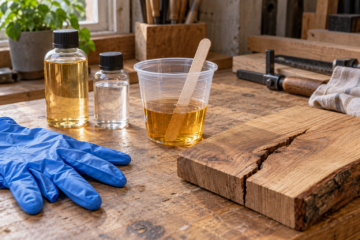
Apply oil in a thin, even coat, allow the stated penetration time, and wipe off every wet area the product instructs you to remove. Pooled oil can remain gummy for days. A second coat often improves protection, but more coats do not compensate for flooding the first coat. A lint-free finishing cloth helps prevent fibers in the surface.
Choosing the finish
For a natural, low-sheen look, hardwax oil is convenient and easy to repair, but it may offer less resistance to standing water than a film finish. Danish oil is simple and attractive, though protection varies widely by formula. Pure tung oil can look excellent but may require several thin coats and long curing times. Do not treat “oil finish” as a single performance category.
Let the shelf cure fully before loading it. Many products feel dry within 24 hours but need several days, sometimes longer, to reach useful hardness. Oil-soaked rags can self-heat and catch fire. Lay them flat outdoors to dry or store them submerged in water in an approved container; never leave them crumpled in a workshop bin.
0 Comments