What's inside
- Best species at a glance
- Teak and ipe: longest service, highest preparation demands
- Mahogany: the practical premium choice
- Cedar and redwood: good protection without excessive cost
- Pine and pressure-treated lumber: acceptable budget choices
- Preparation determines the result
- Choosing the finish and maintenance schedule
- Related Guides
- Best species at a glance
- Teak and ipe: longest service, highest preparation demands
- Mahogany: the practical premium choice
- Cedar and redwood: good protection without excessive cost
- Pine and pressure-treated lumber: acceptable budget choices
- Preparation determines the result
- Choosing the finish and maintenance schedule
- Related Guides
As an Amazon Associate I earn from qualifying purchases. This post may contain affiliate links at no extra cost to you.
Exterior oil finishes are easiest to maintain on woods that absorb them evenly, resist decay, and do not move excessively with seasonal moisture changes. No oil can make an unsuitable species weatherproof, though. Direct sun, standing water, end grain, and poor surface preparation will eventually expose weak points.
For most outdoor projects, teak, ipe, mahogany, cedar, and redwood are the strongest candidates. Pressure-treated pine and other softwoods can also work when cost matters, but they require more preparation and more frequent maintenance. The best choice depends on whether you are finishing a deck, porch furniture, siding, or a small outdoor project.
As an Amazon Associate we earn from qualifying purchases at no extra cost to you.


Our Top Picks
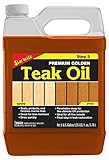
 TotalBoat Marine-Grade Teak Oil Wood Sealer for Boats32 fluid ounces2.4 x 4.5 x 7.5 inchesCheck on Amazon
 Penofin Deep Penetrating Oil Treatment for Exotic HardwoodOne Size7 x 7 x 8 inches0.01 poundsCheck on Amazon


Best species at a glance
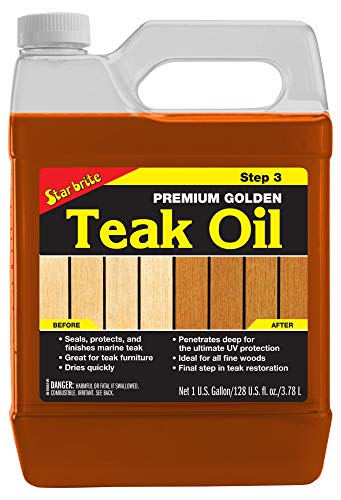
| Wood species | Durability | Oil absorption | Maintenance interval | Best use |
|---|---|---|---|---|
| Teak | Excellent | Moderate; oily surface | 6–12 months | Furniture and marine-style projects |
| Ipe | Excellent | Low to moderate | 6–12 months | Decking and heavy-use structures |
| Mahogany | Very good | Even and moderate | 6–18 months | Furniture, doors, and trim |
| Cedar or redwood | Good | High and uneven in places | 6–12 months | Siding, planters, and light furniture |
| Pine | Fair unless treated | High, with blotchy areas | 3–9 months | Budget projects and covered structures |
Teak and ipe: longest service, highest preparation demands
Teak is naturally resistant to rot and insects, and its moderate movement makes it reliable for outdoor furniture. It contains natural oils, so a penetrating finish may remain workable rather than soaking in immediately. New teak should be cleaned of surface oil and contaminants with a suitable wood cleaner, then allowed to dry fully. Wiping the surface with a compatible solvent immediately before finishing can help, but test the product first and follow its label.
Ipe is exceptionally hard and dense. It stands up well to foot traffic, rain, and abrasion, but that density limits oil penetration. It also dulls cutting tools quickly and can be difficult to sand. Use a finish specifically intended for dense exterior hardwoods, apply a thin coat, and remove puddles within the time stated on the label. Thick oil left on the surface can wrinkle, remain tacky, or peel in sheets.
These species are good candidates for a dense hardwood exterior oil finish. The cheaper option is to let teak or ipe weather naturally. That is perfectly reasonable when a silver-gray appearance is acceptable; the wood will still need cleaning and inspection, but you avoid a recurring coating schedule.
Mahogany: the practical premium choice
Genuine mahogany has a relatively straight grain, good dimensional stability, and enough porosity to accept penetrating oil more evenly than very dense hardwoods. It is one of the easier premium woods to finish on doors, outdoor furniture, handrails, and trim.
Mahogany often looks best with a lightly tinted oil. Clear oil offers limited protection from ultraviolet light, and the wood will darken, fade, or turn gray faster in direct sun. A finish with transparent iron-oxide pigments generally protects color better than a completely clear product. Plan on cleaning and recoating roughly once a year in full sun, or every 12 to 18 months in a shaded location.
Cedar and redwood: good protection without excessive cost
Western red cedar and redwood have useful natural decay resistance and are substantially cheaper than ipe or teak. They are common choices for siding, planter boxes, porch furniture, and fence components. Their main weakness is softness. Dents, scratches, and raised grain appear more readily, and horizontal surfaces weather faster than vertical ones.
These woods can absorb a large amount of oil, especially on end grain. Apply a first coat until the surface stops drinking it in, then wipe away all excess after about 15 to 30 minutes, or according to the product instructions. A second light coat may be appropriate after the first has dried. Do not keep adding oil until the surface looks glossy; a shiny film is often the beginning of peeling.
Knots and resin pockets can also cause adhesion problems. Sanding does not remove resin deep in the wood. If a knot repeatedly bleeds or stays sticky, use a finish system designed for resinous wood rather than trying to bury the defect under more oil.
Pine and pressure-treated lumber: acceptable budget choices
Pine is inexpensive and widely available, but ordinary untreated pine has poor outdoor durability. It can absorb water quickly, develop black mildew stains, and decay at ground contact or around fasteners. Use it outdoors only where the design sheds water and maintenance is realistic.
Pressure-treated pine lasts longer because preservative chemicals protect it from decay and insects. However, it may arrive wet from the treatment process. Finishing too soon traps moisture and can lead to uneven color, blistering, or early failure. A practical test is to sprinkle water on the surface: if it beads strongly, wait; if it darkens and absorbs within several minutes, it may be ready. Moisture meters are more reliable, with many exterior products calling for wood moisture below about 15% to 18%.
For budget projects, a penetrating exterior wood oil is often sufficient. Do not spend for a premium hardwood-specific finish on a low-cost picnic table that will be replaced in a few years. Spend the money instead on good drainage, rounded edges, and end-grain protection.
Preparation determines the result
Start with clean, dry wood. Remove mill glaze, gray fibers, dirt, and loose old finish. Sand new wood to about 80 or 100 grit for a rough-sawn or heavily weathered surface, then finish around 120 grit for most exterior work. Sanding much finer than 150 or 180 grit can reduce absorption and leave a slick surface, particularly on dense species.
Ease sharp edges with a small chamfer or several sanding passes. Sharp corners hold too little finish and fail first. Treat end grain carefully because it absorbs water rapidly; apply extra finish there, but wipe off runs and puddles. Keep the project out of rain for at least the product’s stated curing period, commonly 24 to 72 hours.
Apply oil in the shade when the wood surface is cool, typically between 50°F and 90°F. Direct sun can flash off solvents before the finish penetrates. Use a brush or pad, maintain a wet edge, and wipe off unabsorbed material. Rags soaked with drying oil can ignite through spontaneous combustion, so store them submerged in water in a sealed metal container until disposal.
Choosing the finish and maintenance schedule
Choose a penetrating oil with UV-resistant pigments when retaining the original color matters. Clear oils are better treated as water repellents than as permanent color protection. For a small furniture project, a UV-protective exterior wood oil is usually easier to renew than a film-forming varnish.
Inspect the wood twice a year, especially horizontal surfaces and end grain. Recoat when water stops beading, the color looks dry and faded, or the surface begins absorbing water unevenly. Clean first, allow it to dry, and apply only enough fresh oil to restore an even appearance. If the surface is peeling, scrape and sand back to sound wood rather than applying another coat over the failure.
0 Comments