What's inside
As an Amazon Associate I earn from qualifying purchases. This post may contain affiliate links at no extra cost to you.
Ebonizing can make either white oak or black cherry look convincingly black, but the route to that color—and the result beneath it—differs. White oak is the more predictable choice for a deep, grain-visible black, especially with an iron-and-tannin reaction. Cherry is smoother and less open-grained; it can take a dark finish well, but often needs a dye or pigment-based finish to reach an even, opaque-looking black.
Choose based on the furniture’s intended look, not just the species name. Ebonizing does not hide every difference in grain, figure, or color, and a sample board is essential before treating a finished piece.
As an Amazon Associate we earn from qualifying purchases at no extra cost to you.

How the woods differ
| Factor | White oak | Black cherry |
|---|---|---|
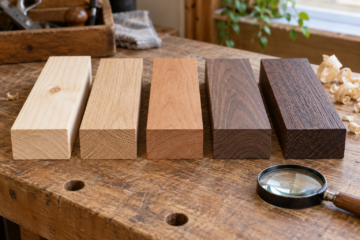
| Grain | Open pores and strong grain; ray fleck may show on quartersawn stock | Fine, closed-looking grain with generally subtle figure |
| Iron-and-tannin reaction | Usually strong and dark because oak is rich in tannins | Often weaker or less consistent; tannin content varies |
| Best route to black | Iron acetate for grain-visible black; dye or pigment for more uniform coverage | Usually dye, pigment, or a combination for reliable depth |
| Common risk | Raised grain, uneven color in end grain, or overly prominent pores | Blotching, uneven color, and a brown cast rather than true black |
White oak’s large pores are part of its appearance even after blackening. That can be an advantage on a table or cabinet where you want a black surface that still reads as wood. It can be a drawback if you want a smooth, piano-black look; filling the pores adds work and may change the appearance.
Cherry’s finer texture gives a quieter surface, but its natural reddish-brown color can influence translucent finishes. A black dye that looks neutral on white oak may look warmer on cherry. Make test pieces from the actual stock, including any boards with sapwood or strong color variation.
Choose a coloring method
An iron-and-tannin solution, often called iron acetate, reacts with tannins in wood to make a dark color. You can buy a wood ebonizing solution or make one by dissolving clean steel wool in vinegar. Homemade batches vary, so strain them and test before use. Do not expect the same result on every board.
Oak usually darkens dramatically with this method. Cherry may turn gray, brown, or only partially black, depending on the wood and solution. A tannin-rich pretreatment can improve the reaction on low-tannin stock, but it can also make the color uneven if application is inconsistent. Test the full sequence on offcuts rather than judging by a wet surface.
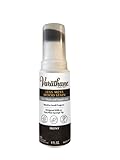
Water-soluble dye gives more control over hue and is a practical choice for cherry. Apply it evenly with a pad or spray equipment, following the product directions; avoid stopping mid-panel, which can leave lap marks. For a more opaque black, use a compatible black pigment stain or a dye-and-pigment schedule. A concentrated black wood dye is useful when you want the grain to remain visible without relying on cherry’s tannins.
Prepare the surface
Sand evenly through the grits. For most furniture work, stop at 150 or 180 grit before a water-based dye or reactive solution; sanding much finer can reduce absorption and create pale patches. Remove glue squeeze-out completely. A thin smear of dried glue can resist color and show up as a bright spot after finishing.
On oak, inspect joints and end grain carefully. End grain absorbs liquid faster and may turn much darker than the face grain. Lightly ease sharp edges, since color and finish can build differently there. If using a water-based product, dampen the surface with clean water, let it dry, then sand off the raised fibers with the final grit. This reduces roughness after coloring.
Cherry is prone to blotching with some penetrating stains. A dye often gives a more even result than a heavy pigment stain, but no method eliminates the need for a sample. Keep sanding pressure consistent and avoid spot-sanding after the surface has been colored.
Apply and seal
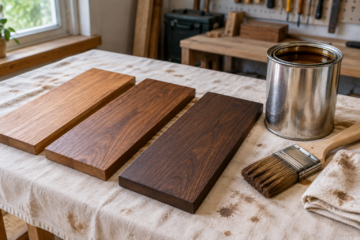
Work on a fully assembled sample, not just a flat scrap. Apply the color in the same way you plan to treat the furniture, then let it dry completely. Iron-based treatments can leave a surface that looks dark while wet but dries lighter or more gray than expected. Some solutions also raise grain or leave residue; follow the product label, and do not mix chemicals unless the manufacturer specifies that they are compatible.
Once dry, remove loose residue gently with a clean, dry cloth or a light pass with a fine abrasive, taking care not to cut through the color. Avoid aggressive sanding after ebonizing: a few strokes can expose lighter wood on edges and corners. Seal with a clear finish tested over the color. Water-based finishes tend to preserve a cooler black; oil-based finishes can add warmth and deepen the appearance. A thin seal coat followed by two or three protective coats is a common furniture schedule, but use the finish maker’s recommended film thickness and recoat times.
If the surface will see heavy use, prioritize a durable topcoat over a fragile, heavily burnished color layer. Check adhesion and color transfer on the sample after the finish cures. A finish that looks sound after an hour may still be soft or vulnerable to marking for several days.
Which wood should you buy?
For a black finish with visible, pronounced grain, white oak is usually the safer buy. Its tannins make reactive ebonizing more dependable, and its grain gives the finished piece character. Budget for pore filling if you want a smooth surface, and expect end grain and ray fleck to remain visually distinct.
Black cherry is a good choice when you want a finer, less prominent grain or already have suitable cherry stock. It can be the cheaper option if the material is on hand, and there is no reason to replace it just because it may need dye rather than an iron reaction. But if buying specifically for an easy, repeatable deep black, oak generally demands fewer experiments. In either case, buy extra stock for test pieces and approve the finished sample under the lighting where the furniture will be used.
0 Comments