What's inside
As an Amazon Associate I earn from qualifying purchases. This post may contain affiliate links at no extra cost to you.
A soft black finish is charcoal-colored, slightly transparent, and low in contrast—not the solid, uniform black of paint. The wood underneath still matters: its pores, grain, and natural color show through. For furniture, species with even texture and restrained grain are easiest to control; dramatic grain can look striking but may make the result read as high-contrast or striped rather than soft.
As an Amazon Associate we earn from qualifying purchases at no extra cost to you.
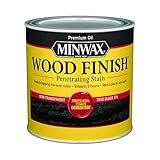


Our Top Picks
 Varathane Total Control Ebony Gel StainHalf Pint (Pack of 1)2.88 x 2.88 x 2.97 inchesCheck on Amazon
 1/2 pt Minwax 13407 Clear Pre-Stain Wood Conditioner1/2 Pint3 x 3.25 x 3 inches0 PoundsCheck on Amazon


Best wood species for a soft black finish
Maple is a dependable choice when you want a calm, even surface. Its tight grain and pale color keep the finish from looking busy, though the dense, sometimes blotchy surface can take dye unevenly. Use a test board and consider a compatible conditioner or sealer if the stain instructions call for one.
Birch is another light, fine-grained option. It can produce a subtle charcoal appearance, but like maple it may blotch, especially on figured or unevenly sanded areas. It is often a practical, relatively inexpensive choice for painted or stained furniture panels.
Red oak has open pores and strong grain. Black color settles into those pores, creating visible dark lines. That can be attractive if you want texture, but it is not the best route to a smooth, quiet charcoal finish. White oak has similarly open pores, with a different grain character, and may also show pronounced contrast.
Cherry has a fine, attractive grain, but its reddish-brown color affects the final tone. A black stain may read warm or brownish rather than neutral charcoal, and cherry darkens with age. Choose it when that warmth is welcome, not when you need a consistent cool black.
How common furniture woods compare
| Species | What shows through | Main risk | Best fit |
|---|---|---|---|
| Maple | Quiet, fine grain | Blotching or uneven color | Subtle, controlled charcoal |
| Birch | Fine grain with mild variation | Blotching | Budget-friendly furniture parts |
| Red oak | Strong, open grain | Dark pores look striped | Textured, grain-forward finish |
| White oak | Open grain, often pronounced | High contrast in the pores | Visible natural character |
| Cherry | Fine grain, warm undertone | Finish can look brown or warm | Soft black with warmth |
| Alder | Usually restrained grain | Color variation between boards | Even-looking, paint-grade furniture |
Choose the right kind of black stain
“Black stain” can mean a pigment stain, a dye, or a combination product, and those behave differently. Pigment stains tend to collect in open pores and emphasize grain. Dyes penetrate more evenly and can look clearer, but may be less forgiving of sanding scratches and uneven absorption. For a soft, transparent result, look for a charcoal or ebony stain rather than a solid-color coating, and check whether it is intended for your wood and finish system.
On maple or birch, a charcoal wood dye or stain can give a more uniform effect than a heavy pigment stain, but test it first. On oak, a pigment-based product may deliberately darken the pores. If you want less grain contrast, a black wood toner applied in thin coats can tint the surface more evenly; it also requires careful spraying to avoid lap marks and uneven buildup.
Prepare the surface before staining
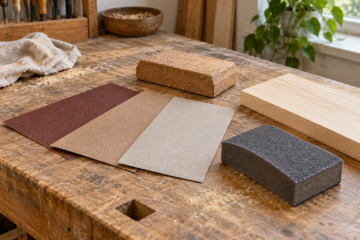
Remove the old finish completely if the new stain is meant to penetrate. Sand bare wood evenly, usually through grits such as 120, 150, and 180. Going much finer can reduce absorption on some woods; stopping too coarse leaves scratches that become obvious under dark color. Sand with the grain on visible faces, then vacuum and wipe away dust using a method compatible with the stain maker’s directions.
Do not judge color from a small dab on the finished piece. Make a sample from the same species, sanded to the same grit, and apply the stain and topcoat in the same sequence. Include an edge or end-grain area if the furniture has one: end grain can absorb more color and turn much darker. Test at least two coats if the product allows them, since additional color can shift a soft charcoal toward near-black.
For blotch-prone maple and birch, use a stain-compatible pre-stain conditioner or a washcoat only after testing. These reduce uneven absorption but can also make the color lighter. Follow the product’s timing carefully; applying stain outside its recommended window can cause weak color or streaks. A pre-stain wood conditioner is inexpensive insurance on a small project, but a test board is more reliable than assuming it will solve every blotch.
Protect the finish without losing the soft look
Dark stain can rub off or appear cloudy if it is not fully dry before topcoating. Follow the label’s drying time, which varies with product, temperature, humidity, and coat thickness; a surface that feels dry may still be releasing solvent. Apply a compatible clear finish in thin coats, and test it over the stain first. Some topcoats warm the color or make the grain look sharper.
A matte or satin clear coat usually preserves a subdued appearance better than gloss. For dining tables and other heavily used surfaces, prioritize durability and follow the finish maker’s cure time before putting the furniture back into service. A cheap, compatible clear finish is adequate for a shelf or occasional-use piece; high-wear furniture deserves a finish rated for that job.
Which wood should you buy?
For the most restrained grain, start with maple or birch, then test for blotching. Choose alder when an even, understated look and moderate cost matter more than a sharply defined grain pattern. Pick oak only if you want the pores and grain to remain part of the design. Cherry is a good choice when a warmer charcoal is acceptable. Whatever the species, the sample board—not the stain label—is the best guide to the final color.
0 Comments