What's inside
As an Amazon Associate I earn from qualifying purchases. This post may contain affiliate links at no extra cost to you.
A pale whitewash works best when the wood underneath has a quiet grain and a light, even color. Species matters: the same white stain can look airy on maple, striped on oak, and muddy on red-toned pine. Before choosing a product, test it on the actual furniture—ideally on an inconspicuous area or a matching offcut. A whitewash is translucent, so it will not hide dark patches, old stain, or repairs as reliably as paint.
As an Amazon Associate we earn from qualifying purchases at no extra cost to you.


Our Top Picks
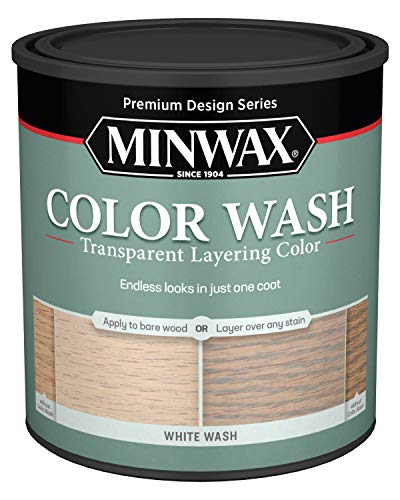 Minwax Color Wash Transparent Layering Color1 Quart (Pack of 1)4.25 x 4.25 x 4.88 inches2.5 PoundsCheck on Amazon
 Varathane Less Mess Whitewash Wood Stain & Applicator4 Ounce (Pack of 1)1.75 x 1.75 x 6.5 inches0.25 PoundsCheck on Amazon
 Minwax 233334444 Polycrylic Protective Wood Finish8 fl oz2.9 x 2.9 x 3 inches0.66 poundsCheck on Amazon


Best species for a pale whitewash
Maple is a strong choice for a restrained, clean whitewash. Its fine, subtle grain keeps the finish from looking too busy, though its dense surface can take pigment unevenly. A thin, water-based white stain or diluted white paint usually gives more control than a heavy-bodied product. Sand evenly and avoid polishing the surface to a glassy smoothness, which can reduce absorption.
Birch is similarly pale and fine-grained, often at a lower price than maple. It can develop blotches, especially on larger panels, so test first and consider a compatible pre-stain conditioner if the sample shows uneven color. Conditioner may also make the wash lighter because it limits absorption; check the final result before coating the whole piece.
White oak is the better pick when visible grain is part of the goal. Its open pores hold white pigment, creating a pale, defined grain pattern. This can look crisp and intentional, but heavy application may leave chalky residue in the pores. Wipe back promptly and check the surface from several angles before the finish dries.
Ash has a bold, open grain like oak, but its color and grain contrast can vary. It takes a pale wash well when you want texture to show, though it is less suitable for a nearly uniform white appearance. Poplar is inexpensive and easy to work, but its green, gray, or brown streaks can remain visible through a translucent finish. It is fine for a painted look; for a pale transparent wash, buy boards or furniture parts with consistent color.
Species comparison
| Species | Typical look after whitewashing | Main risk | Best fit |
|---|---|---|---|
| Maple | Quiet, fine grain; clean pale tone | Uneven absorption | Subtle, modern finish |
| Birch | Light and understated | Blotching or conditioner reducing color | Budget-friendly pale furniture |
| White oak | Distinct grain with white in the pores | Chalky buildup in open grain | Visible, textured grain |
| Ash | Strong, open grain | High contrast between grain and background | Rustic or graphic effect |
| Poplar | Variable; sometimes green or gray shows through | Color streaks remain visible | Opaque paint or very inexpensive projects |
| Pine | Knots and growth rings show strongly | Blotching, yellowing, and resinous knots | Casual look after sample testing |
Where pine and red oak can disappoint
Pine is widely available and inexpensive, but it is not the easiest route to an even pale finish. Soft earlywood absorbs more than dense latewood, and knots can bleed yellow or brown through a white coating. A conditioner can reduce blotching, but it will not make the grain uniform or reliably seal resinous knots. If the piece is pine, test the wash and sealer together; use an appropriate knot-sealing primer where knots show through, or choose paint if an even white surface matters more than visible wood.
Red oak has open pores like white oak, but its pink or red undertone can make a pale wash look warmer or slightly muddy. It can still work if that warmth suits the room. For a cooler white, compare samples under the furniture’s real lighting before committing. A white product does not necessarily neutralize the wood’s underlying color.
Prepare the surface and test the wash
First identify the existing finish. A wash applied over intact varnish or lacquer may sit on top, wipe off unevenly, or fail to adhere. For a transparent result, remove or sand back the old coating until the wood is consistently exposed. Start around 120 grit if you need to remove finish, then sand to 150 or 180 grit. Going much finer can limit stain absorption; always follow the coating maker’s directions if they specify a different grit.
Vacuum dust and wipe the surface with a clean, dry cloth. Raise the grain before applying a water-based wash by wiping bare wood lightly with a damp cloth, letting it dry, then sanding off the raised fibers with 180 grit. This reduces roughness after the first coat. Use a water-based white wood stain for a ready-made translucent finish, or dilute white paint with water for a simple, inexpensive wash. Paint mixtures vary in opacity, so make a small test batch rather than assuming a fixed ratio will suit every species.
Brush or wipe the test onto a sanded sample, then wipe back after a short interval—start with about one minute and adjust. Longer dwell time usually increases color, but can also make the result patchier. Let the sample dry fully; wet whitewash often looks more opaque than it does dry. Check it in daylight and in the room’s evening light. If you want less white, wipe more firmly or use a thinner mixture. If grain contrast is too strong, choose a finer-grained species or a more opaque finish.
Choose protection without changing the color too much
White finishes can yellow under some clear coats. A water-based clear finish is generally a safer starting point for preserving a pale appearance than an oil-based varnish, but test it: even clear products can deepen color or make the grain look more pronounced. Use a product compatible with the wash, apply thin coats, and let each coat dry as directed. A clear coat also makes the surface easier to clean, but it can reduce the raw, chalky look.
For a gentle sheen and modest protection on light-use furniture, consider a water-based clear wood finish. For tabletops or other high-wear surfaces, prioritize a finish rated for furniture use and follow its full cure time before putting objects on the piece. The best species is ultimately the one whose natural color and grain already suit the result: white oak for visible texture, maple or birch for subtle grain, and pine or poplar when budget matters more than perfect color uniformity.
0 Comments