What's inside
As an Amazon Associate I earn from qualifying purchases. This post may contain affiliate links at no extra cost to you.
Teak and sapele can both make handsome clear-coated boat interiors, but they suit different priorities. Teak is the familiar choice for durability and a warm, oily appearance. Sapele costs less in many markets and offers a richer, more mahogany-like look, but it needs careful preparation and dependable sealing. Neither species is maintenance-free: sunlight, moisture, and worn finish eventually demand attention.
As an Amazon Associate we earn from qualifying purchases at no extra cost to you.


Quick comparison
| Factor | Teak | Sapele |
|---|---|---|
| Appearance | Golden to brown; usually straight or mildly figured grain | Reddish brown; often ribbon-striped or interlocked grain |
| Natural durability | Strong resistance to decay and moisture | Moderate to good, but less forgiving of persistent dampness |
| Finishing | Natural oils can interfere with adhesion | Usually takes clear finish readily after proper sanding |
| Cost and availability | Often expensive; supply and sourcing vary | Often less expensive and available in broad boards |
| Best fit | High-wear or moisture-prone areas where budget allows | Cabinet faces and trim kept dry and maintained |
Appearance and grain
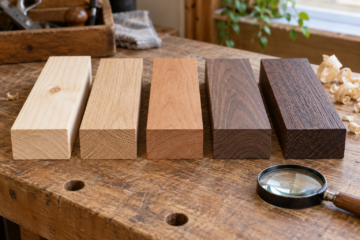
Choose by looking at the actual boards, not just a species sample. Teak varies from pale honey to deep brown, and its color tends to mellow with age. Sapele commonly has a red or copper cast, with a pronounced ribbon figure that shifts as the light changes. That figure can be striking on cabinet doors, but interlocked grain may also tear out during planing or sanding.
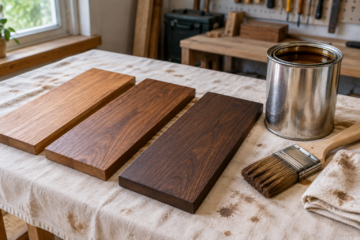
Clear coatings deepen both colors. They also make glue smears, scratches, and uneven sanding conspicuous, especially under cabin lighting. If a consistent appearance matters, lay out the boards together before cutting and keep adjacent pieces in sequence. Test the intended finish on an offcut; a small sample can look very different once coated.
Durability and location
Teak’s natural oils and durability make it a sensible choice where occasional splashes, condensation, or frequent handling are likely. That does not make unfinished teak waterproof, and it does not protect a clear coat from scratches or standing water. A leaking port or wet locker can damage either species if water stays trapped against the wood.
Sapele is a reasonable, often cheaper choice for dry cabin joinery: drawer fronts, trim, and cabinet panels away from persistent leaks. It can perform well there with a sound coating and routine inspection. It is less forgiving if moisture repeatedly gets into end grain, joints, or the back of a panel. In either species, seal cut edges and end grain, and avoid designs that trap water.
Preparing teak for clear coat
Teak’s oils are the main finishing challenge. They can reduce adhesion if the surface is oily, dusty, or contaminated when coated. Sand the surface evenly, commonly finishing at 120 to 150 grit for a film-forming varnish; overly fine sanding can reduce mechanical bite. Remove dust with a vacuum and a clean cloth compatible with the coating. If the coating maker specifies solvent wiping or a particular cleaner, follow its directions and allow the wood to dry fully before coating.
Do not rely on a quick wipe to fix greasy wood. Test adhesion on a hidden area or scrap: apply the planned system, let it cure as directed, then check for lifting or poor bonding. If the finish peels, blisters, or stays soft, stop and identify the cause before coating the rest. Mixing products from different systems without checking compatibility can create the same problem.
Preparing sapele for clear coat
Sapele is generally less oily, but its interlocked grain makes surface preparation important. Use sharp cutters and light finishing passes to limit tear-out. Sand with the grain where possible, checking the surface in raking light; cross-grain scratches often show clearly after a clear coat is applied. A practical progression is 80 or 100 grit only where needed to remove tool marks, then 120 and 150 grit for final preparation. Avoid skipping grits.
Because sapele is less naturally resistant to decay than teak, give special attention to end grain, fastener holes, and joints. Seal these as part of the finish system rather than assuming the broad face will protect them. If a panel’s back will face a damp locker, finish that side too; coating one face alone can leave the panel more vulnerable to moisture movement.
Choosing a clear finish
For bright, exposed interiors, choose a marine-rated clear varnish with UV protection and use the full coat schedule on the label. A penetrating oil is easier to refresh but provides less of a protective film and may need frequent upkeep. A hard two-part clear coating can resist abrasion, but repairs are more involved and the product may be less convenient for a small interior job. Check that the coating is suitable for the location and wood, and ventilate carefully during application.
For a straightforward brush-on system, compare marine spar varnishes with UV protection. Follow the manufacturer’s advice on thinning, recoat windows, temperature, and sanding between coats. Applying extra coats outside the specified schedule is not a substitute for a clean, dry surface or proper edge coverage.
Buying and maintenance
Price the project by usable board footage, not just the quoted cost per board foot. Include waste for grain matching, defects, and cutting around knots or checks. Teak’s higher price may be justified for a wet, high-touch area; paying for it on a dry cabinet face does not automatically produce a better-looking or longer-lived finish. Sapele is the economical choice when the location stays dry and you are willing to inspect and maintain the coating.
Whatever you buy, reject boards with unstable checks, severe warping, or defects that land in exposed faces. Use a marine-appropriate adhesive for the joint and conditions, and do not expect clear coat to bridge a moving seam. Inspect once or twice a year for dull patches, cracks, water staining, and lifting around edges. Small coating repairs made before water gets beneath the film are much easier than stripping an entire panel. For sanding and touch-up work, a set of quality finish brushes and fine-grit sandpaper is more useful than trying to correct a failed coating with another heavy coat.
0 Comments