What's inside
As an Amazon Associate I earn from qualifying purchases. This post may contain affiliate links at no extra cost to you.
For a stained indoor plant stand, choose wood that is stable, easy to sand, and attractive under the stain you plan to use. Poplar is inexpensive and paints well, but its green and brown patches can look uneven under a clear or light stain. Pine is widely available, though knots and resin can complicate finishing. For a more predictable stained result, a straight-grained hardwood such as birch, maple, or white oak is usually a better buy.
The stand also has to handle wet pots, drips, and the weight of the plant. No finish makes wood waterproof, and a film finish can still be damaged by standing water. Use a saucer beneath each pot, wipe up spills promptly, and seal every face of the wood—including undersides and end grain.
As an Amazon Associate we earn from qualifying purchases at no extra cost to you.


Our Top Picks
 Homsorout 2 Tier Plant Stand Indoor Outdoor for29.13"9.84 x 9.84 x 29.13 inches4.41 PoundsCheck on Amazon
 Varathane Water-Based Ultimate Satin PolyurethaneHalf Pint (Pack of 1)3 x 3 x 3 inches0.64 poundsCheck on Amazon


Compare woods before you buy
| Wood | Stain appearance | Cost and workability | Best fit |
|---|---|---|---|
| Poplar | Often blotchy; green or gray areas may show through | Usually affordable and easy to cut and sand | Painted stands, or dark-stained projects where color variation is acceptable |
| Pine | Can blotch; knots may darken or bleed resin | Low-cost and easy to find; soft and dents easily | Budget stands with a rustic look or a tested dark stain |
| Birch | Light, fine grain, but stain can go uneven without preparation | Moderately priced; available as boards and plywood | A clean, light-colored look with a conditioner or dye test |
| Hard maple | Pale and subtle; pigment stain may look muddy or patchy | Hard and durable, but more demanding to cut and stain evenly | A smooth, light finish or a carefully tested dye-and-clear-coat schedule |
| White oak | Distinct grain; takes many stains well | More expensive and heavy, but sturdy | A durable stand where visible grain and a richer finish are priorities |
For a first stained stand, white oak is a reliable choice if the budget allows. Birch can be a good middle ground, but test the exact board: color and stain response vary. If cost matters most, pine is fine when you like its knots and variation; do not expect it to resemble evenly stained oak. Browse white oak hardwood boards or local lumberyard offcuts to compare grain and price before committing.
Buy boards that suit the stand
Inspect boards for twist, bow, cracks, loose knots, and end checks. A straight board saves time and makes a stand less likely to rock. For a small stand, ¾-inch stock is a common starting thickness for legs and shelves, but design and span matter: a wide shelf carrying a heavy ceramic pot may need thicker stock or a support beneath it. Match the wood thickness and joinery to the load rather than relying on finish to add strength.
Solid wood moves as humidity changes. Allow it to acclimate indoors for several days, then build with sound joints and avoid trapping a shelf tightly across the grain. For a simple project, hardwood plywood can make a stable shelf, but cover exposed edges with solid edging if you want a finished appearance. Use a moisture-resistant wood glue rated for interior use; wipe squeeze-out before it hardens, because glue spots reject stain.
Prepare the surface for an even stain
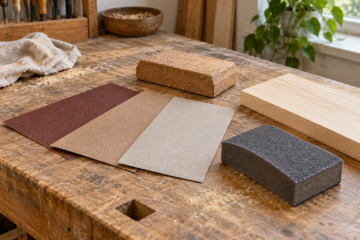
Sand progressively rather than jumping straight to fine paper. For most furniture-grade boards, start at 120 grit if there are saw marks, then use 150 and finish at 180. Sanding much finer can close the surface and make some stains absorb less evenly. Use a sanding block on flat faces, and break sharp edges lightly so the finish does not wear through at corners.
Remove dust with a vacuum and a clean, lint-free cloth. Do not use a tack cloth that leaves residue unless its manufacturer says it is compatible with your finish. Before staining the assembled stand, test the full schedule on an offcut from the same board: sand it, apply any conditioner, stain, and topcoat. A color that looks good wet can dry lighter or warmer.
Choose a stain and protective finish
For pine, birch, or maple, a pre-stain conditioner can reduce blotching, but it can also make the stain lighter. Follow the product’s timing instructions and apply stain within its stated window. Gel stain is another option when you want more surface color and less reliance on absorption. Neither approach guarantees uniform color, so a sample board is worth the few minutes it takes.
Use an interior stain, then add a compatible clear protective finish. Water-based polyurethane dries relatively clear and has lower odor than many oil-based products; oil-based polyurethane adds warmth and generally needs longer drying and curing time. Apply thin coats, typically two or three, following the label for recoat time. Sand lightly between coats only if directed, and remove all dust before recoating. For a stand exposed to frequent splashes, water-based interior polyurethane is a practical category to compare, but it is not a substitute for a saucer.
Seal the top, sides, bottom, joints, and shelf edges. End grain absorbs finish quickly, so it may need extra attention. Let the coating cure for the full time on the label before placing a damp pot on the stand; “dry to touch” is not the same as fully cured. Add felt pads if the stand sits on a delicate floor, but do not use pads to hide an unstable base.
Avoid the common failures
Blotchy stain usually comes from uneven absorption, glue residue, or inconsistent sanding—not from the clear coat. Fix preparation issues before staining rather than trying to cover them with extra stain. If the finish stays tacky, the coat may be too thick, the room too cold, or the product applied over an incompatible layer; follow the label’s temperature and ventilation requirements.
For an inexpensive stand that will be painted, poplar or pine is often the sensible choice. For a stained piece meant to show wood grain, spend more on a board that looks good unfinished and test the finish before building. That choice has more effect on the final result than buying an expensive topcoat and applying it to unsuitable, poorly prepared wood.
0 Comments