What's inside
As an Amazon Associate I earn from qualifying purchases. This post may contain affiliate links at no extra cost to you.
A pale writing desk looks simple, but light-colored finishes are less forgiving than dark stains. They expose blotches, sanding scratches, glue spots, dents, and uneven sheen. The best wood species depends on whether you want a nearly white surface, visible grain, or the lowest-cost top that will be painted or clear-coated.
For most desks, hard maple is the safest premium choice. Birch is a less expensive alternative with a similar overall color, while ash and white oak are better when you want pronounced grain. Poplar makes sense for a painted desk, not usually for a clear pale finish.
As an Amazon Associate we earn from qualifying purchases at no extra cost to you.


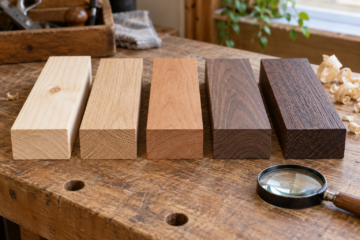
Best Wood Species at a Glance
| Species | Natural color and grain | Best use | Main drawback |
|---|---|---|---|
| Hard maple | Cream to nearly white; fine, subtle grain | Clear-coated premium desk | Expensive and can look slightly yellow under finish |
| Birch | Light cream; restrained grain | Budget pale desk or plywood top | Blotches easily with stain |
| Ash | Light tan; bold open grain | Pale desk with visible texture | Open pores need careful filling for a smooth surface |
| White oak | Light beige; strong grain and rays | Durable, distinctive desk | Darker and busier than maple or birch |
| Beech | Pale pinkish cream; fine grain | Hard-wearing painted or clear desk | Can move noticeably with humidity changes |
| Poplar | White to greenish or gray; plain grain | Painted desk parts and budget builds | Soft, dent-prone, and sometimes oddly colored |
Hard Maple for the Cleanest Look
Hard maple gives the closest naturally pale appearance without hiding the wood under paint. Its tight, quiet grain suits a modern writing desk, and its hardness—about 1,450 on the Janka scale—resists dents from laptops, books, and everyday use.
Choose clear, straight-grained boards if you want an even surface. Maple can still show mineral streaks and small color shifts, especially in wide boards. A water-based clear coat generally keeps it lighter than an oil-based finish, which adds a noticeable amber cast. For a pale maple desk, compare water-based polyurethane finishes and test the exact product on offcuts before finishing the top.
The trade-off is price and workability. Maple is harder to plane and sand than pine or poplar, and sanding cross-grain scratches can remain visible under a clear finish. Stop at 150 or 180 grit unless the finish manufacturer specifies otherwise; sanding much finer can reduce adhesion.
Birch as the Budget Alternative
Birch is often the sensible cheaper option. Clear birch boards and birch plywood are pale, widely available, and strong enough for a normal desk. A 3/4-inch plywood top with a solid-wood edge is usually more stable than a wide solid board and costs less than a comparable maple panel.
Birch’s weakness is blotching. When stain or tinted dye penetrates unevenly, some areas become dark while others stay pale. If you want a subtly warmer color, apply a pre-stain conditioner or a thin washcoat first, then test it on scrap. A clear coat with no stain is safer if the natural birch color already works for your room.
Birch plywood edges need attention. Apply solid-wood edging at least 1/8 inch thick, flush-trim it, and sand carefully. Iron-on veneer edge banding is acceptable for a low-cost desk, but it is easier to damage during routing and sanding.
Ash and White Oak for Visible Grain
Ash starts light but has much stronger grain than maple or birch. It is a good choice when “pale” does not mean “plain.” Its open pores accept pale stains and whitewash well, although the grain can become more prominent and slightly darker than the surrounding wood.
White oak is harder and more moisture-resistant than ash, making it a durable choice for a heavily used desk. It naturally leans beige rather than white. A water-based finish preserves a lighter appearance, while oil-based products emphasize the golden tones. If you want the grain visible but the color restrained, test a clear finish before trying a white or gray stain.
Open-grained species can feel textured after several finish coats. For a glass-smooth writing surface, use a water-based grain filler, scrape it across the grain, let it dry fully, and sand it level before topcoating. Grain filler is optional for a rustic desk, but worthwhile where you write directly on paper.
Beech and Poplar: Useful, With Limits
Beech is pale, hard, and relatively affordable. It has a fine grain that works well with clear finishes, but it can move as indoor humidity changes. Leave expansion room around a solid-wood top rather than fastening it rigidly across its width. Beech also tends to show a warm pink or tan cast, so it is not the best match for a stark white interior.
Poplar is commonly the cheapest practical option, especially for a painted desk. It machines easily and takes primer well, but it is soft enough to dent under chair arms, desk accessories, or careless clamping. Its greenish, gray, or purple streaks can look unattractive under a clear finish. Use poplar for painted aprons, drawers, and legs; choose birch, maple, or oak for a clear-coated desktop.
Preparing and Finishing a Pale Desktop
Start by flattening the top, then sand through 120, 150, and 180 grit. Use a bright raking light to find scratches, and remove dust with a vacuum followed by a clean, slightly damp cloth appropriate for the finish system. Do not flood unfinished wood with water; raised fibers can create a rough surface.
Glue squeeze-out is a major failure point on pale desks. Dried glue blocks stain and finish, leaving obvious light patches. Remove squeeze-out with a sharp chisel or scraper after it gels, then sand the area evenly. Before applying anything to the desk, make a sample using the same species, sanding schedule, glue, and finish.
For a pale, durable surface, apply three or four thin coats of water-based polyurethane, sanding lightly with 320 grit only when the label calls for it. A matte or satin water-based wood finish hides fewer reflections and usually looks more natural than gloss. Allow the finish to cure for the stated period—often several days—before placing heavy equipment on the desk.
If the desk will be painted, the species matters less. Poplar or birch plywood is usually fine, provided you use a stain-blocking primer, fill dents and edge voids, and sand between coats. Spend extra money on maple or oak only when the wood will remain visible or the desk must withstand unusually hard use.

0 Comments