What's inside
As an Amazon Associate I earn from qualifying purchases. This post may contain affiliate links at no extra cost to you.
For a clear-finished headboard, the best wood is usually straight-grained, stable, and attractive under a transparent finish. Cherry is a strong choice if you want warm color that deepens with age; walnut suits a darker, more dramatic look; and white oak offers a durable, more pronounced grain. If cost matters more than a uniform, furniture-grade appearance, clear pine or poplar can work, but each has quirks that show up once finish goes on.
As an Amazon Associate we earn from qualifying purchases at no extra cost to you.


Choose by appearance and budget
Buy boards or panels for the look you want before choosing a finish. Clear finishes do not hide knots, mineral streaks, color variation, glue lines, or mismatched grain. A “clear” finish can also warm or darken wood, so check a sample finished with the product you plan to use.
| Wood | Appearance under clear finish | Trade-offs | Typical use |
|---|---|---|---|
| Cherry | Fine, fairly even grain; starts pinkish or light brown and darkens with light exposure | Costs more than common softwoods; color changes over time | Refined, warm-toned headboards |
| Walnut | Deep brown heartwood with lively grain and occasional lighter sapwood | Often expensive; sapwood may contrast sharply | Dark, high-contrast designs |
| White oak | Strong open grain, usually tan to brown; a clear coat can emphasize the grain | Can look busy on a large panel; pores may need extra filling for a glass-smooth surface | Durable, traditional or modern designs |
| Clear pine | Light color with visible growth rings and occasional knots | Soft and easily dented; can turn blotchy with some finishes | Lower-cost, casual headboards |
| Poplar | Generally subtle grain, but color can include green, gray, or purple streaks | Low cost, but its uneven color may look odd under a transparent finish | Hidden framing or painted parts |
Best all-around: cherry or white oak
Cherry is a good default for a clear-finished headboard when you want the wood itself to be the feature without a strong open grain. It machines and sands well, and a satin clear coat keeps it from looking overly glossy. Expect its color to change: a sample beside a window may darken noticeably over months. If matching a new headboard to existing furniture matters, do not assume the fresh board’s color will stay the same.
Choose white oak if you prefer visible grain and a harder surface. It is a practical option for a headboard that may get bumped during bed-making or moving, though no finish makes wood dent-proof. White oak’s open pores remain visible under many clear coats. That is a style choice, not a defect; filling the grain adds labor and can make the surface look flatter.
When walnut or a cheaper wood makes sense
Walnut gives a headboard a rich, dark look without stain, but inspect the board faces for sapwood and color differences before buying. For a wide panel, arrange the boards on the floor first and rotate them until the grain and color flow well. A clear coat can increase contrast between boards rather than blending it.
Clear pine is a reasonable budget choice for a simple or rustic headboard. It is softer than hardwood, so expect dents from sharp impacts and avoid placing the finished face against tools or grit during assembly. Select boards with few knots and straight grain. Knotty pine can look good, but knots may leak resin, especially near heat or after finishing.
Poplar is usually better for a painted headboard or concealed rails than for a clear show surface. Its grain can be mild, but green or purple streaks may stand out under a transparent coat. If you want an inexpensive clear-finished panel, compare actual boards of pine and poplar in the shop rather than relying on the species name alone.
Solid wood or plywood?
A wide solid-wood panel moves across its grain as humidity changes. For a 20-inch-wide panel, seasonal movement can be enough to cause trouble if it is rigidly fastened to a frame. Attach a solid panel with screws in elongated holes, clips, or another method that lets it move. Do not glue the full panel edge-to-edge to a rigid frame.
For a broad, flat headboard, good veneer-core hardwood plywood is often the easier choice: it is more dimensionally stable and reduces the risk of seasonal cracks. Buy a panel with a face veneer thick enough for light sanding, and check the edges for voids if they will be visible. Plywood is not automatically cheaper than solid lumber, especially in premium veneers, but it can save time and reduce movement problems.
Prepare the surface for a clear finish
Start with dry, flat stock. For solid lumber, check for cupping, twist, and bowed edges before cutting. Join board edges carefully and use enough clamps to close the seam without forcing it into a curve. Spread glue evenly, remove squeeze-out while it is still manageable, and avoid leaving dried glue on the face: glue blocks stain and can remain visible under clear finish.
Sand progressively, typically through 120, 150, and 180 grit. On many clear-finished furniture surfaces, sanding beyond 180 or 220 adds little and may burnish the wood enough to reduce finish absorption. Use a sanding block near edges, keep the sander moving, and vacuum dust from corners and pores. Raise the grain on water-based finishes by wiping the surface lightly with a damp cloth, letting it dry, then sanding off the raised fibers with 220 grit.
For a clear finish, try a small offcut first. Oil-based polyurethane usually adds an amber cast; water-based polyurethane tends to keep pale woods lighter. A penetrating oil gives a lower-build, more natural feel but generally needs more upkeep and less protection against spills. Apply according to the label, including its temperature and recoat-time limits. A water-based polyurethane is a useful category to compare if you want to preserve a lighter wood color.
What to check before buying
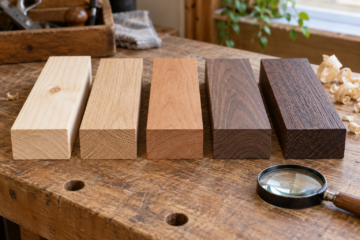
For a clear finish, inspect both faces under good light and reject boards with defects you cannot design around. Check that a plywood face is the species and grade you expect, and buy a little extra for test pieces and trimming. If you are unsure how the wood will look, pick up sample boards and test your chosen finish before assembling the headboard. A set of finish sample boards can help compare sheen and color, but an offcut from the actual lumber is more reliable.
For most buyers, cherry is the easiest route to a balanced furniture look, white oak is the pick for prominent grain and wear resistance, and clear pine is fine when the budget is tight and a few dents or knots are acceptable. The best choice is the board or panel whose grain, color, and finished sample suit the room—not simply the hardest or most expensive species.

0 Comments