What's inside
As an Amazon Associate I earn from qualifying purchases. This post may contain affiliate links at no extra cost to you.
Ebonizing is not the same as applying black stain. A good ebonized surface has a deep, charcoal-to-black color that still looks like wood, with the pores and figure visible under the finish. The wood species matters because most chemical ebonizing relies on a reaction between iron and tannins. More tannin usually means a darker, faster, and more even result.
As an Amazon Associate we earn from qualifying purchases at no extra cost to you.

Our Top Picks
 Polyurethane Wood Finish Water Based Polyurethane Clear Gloss100 ml1.6 x 1.6 x 4.7 inchesCheck on Amazon


Best wood species for ebonizing
White oak is the most dependable choice. Its high tannin content produces a dark blue-black to black reaction with iron acetate, and its open pores accept the color evenly. Quarter-sawn white oak gives especially attractive ray fleck under a black finish. Red oak also works, but it can produce a slightly warmer or less uniform black and often needs a test coat.
Walnut is another strong option. It already has a dark brown base, so it reaches a rich black with less visual harshness than pale woods. The grain remains easy to see, and small variations tend to look intentional. Walnut can be expensive, but it is a good choice when you want a black finish with brown depth rather than a flat, painted appearance.
Cherry ebonizes well enough for furniture and small projects, although the result may lean toward dark brown or purple before the final finish is applied. Cherry’s relatively fine, closed grain gives a smoother-looking surface than oak. Because cherry darkens naturally with light, the color can shift over time if you leave areas unfinished or use a clear finish with strong ambering.
Ash has a pronounced open grain and generally reacts well, though its lower tannin level can make the color less predictable than white oak. It is inexpensive and widely available, making it a sensible choice for a test project or painted-black look with visible pores. Apply the reactive solution in thin, even coats; puddles can make the earlywood darker than the surrounding surface.
Maple, birch, beech, and poplar are poor candidates for a one-step chemical ebonizing process. They contain relatively little tannin, so iron acetate may produce only a weak gray or uneven gray-brown color. These woods can still become convincingly black, but they usually need a tannin wash first or a dye-and-topcoat schedule.
| Species | Typical result | Evenness | Best use |
|---|---|---|---|
| White oak | Deep blue-black to black | Very good | Furniture, cabinets, visible grain |
| Walnut | Rich black with brown depth | Very good | Premium furniture and small parts |
| Cherry | Dark brown-black or purple-black | Good | Fine furniture and turned work |
| Ash | Gray-black with strong pore contrast | Good to fair | Lower-cost projects and bold grain |
| Maple or birch | Weak gray unless treated first | Fair | Use with tannin, dye, or paint |
Choose the process before buying lumber
For oak, walnut, cherry, and ash, iron acetate is the economical starting point. It is made by combining steel wool and vinegar, then allowing the mixture to react for several days. Strain it through a coffee filter before use. The solution may look pale, but it can turn wood nearly black as it dries and oxidizes.
Use clean, oil-free 0000 steel wool and white vinegar. Coarser steel wool leaves more debris, and oily steel wool can interfere with the reaction. Do not seal the jar airtight while it is reacting; gas can build up. Keep the solution labeled and away from metal containers.
For low-tannin woods, apply a tannin source first. A commercial tannin concentrate is more predictable than tea, which varies substantially in strength. Brush it on evenly, let the surface dry completely, and sand off any raised fibers with 320-grit paper before applying the iron solution. Two light tannin coats are often better than one heavy coat.
If you need a consistent black on maple or poplar, a black dye is usually the better buy. Dye gives more control over color and avoids the patchy reaction common on low-tannin lumber. A water-soluble black wood dye is economical for small projects, while a pigmented black stain is more forgiving on large panels but can obscure fine grain.
Surface preparation controls the final result
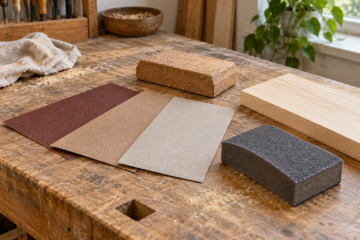
Sand to 150 or 180 grit for open-pored species. Going much finer can burnish the surface and reduce absorption, while stopping at 80 or 100 grit leaves scratches that remain visible beneath black color. On maple and other tight-grained woods, 180 or 220 grit is reasonable if the surface is already flat.
Remove glue squeeze-out completely. Even a thin glue film can create pale streaks that are obvious on a black surface. Scrape dried glue, sand across the area, and wipe with mineral spirits to reveal remaining shiny spots. Do not rely on the reactive solution to hide them.
Apply the solution to a sample cut from the same board. Test the face, end grain, and any figured areas separately. Wait at least 30 minutes before judging the color, and preferably let the sample sit overnight. Some woods look gray while wet and become much darker after drying.
Application and sealing
Brush or wipe on the iron solution with a synthetic brush, working quickly enough to keep a wet edge. Avoid repeatedly brushing areas that have started to dry. Two thin applications usually produce a more even color than flooding the surface once. If the grain rises, let the wood dry, then scuff lightly with 320-grit abrasive without cutting through the color.
The surface can look uneven after ebonizing because earlywood, latewood, end grain, and sapwood react differently. A very light coat of black dye can even out small variations, but heavy dye application may cover the grain you wanted to preserve. For severe blotching, sand back and change the process rather than adding more finish.
Once fully dry, seal the surface. Water-based clear finish preserves a cooler black, while oil-based varnish adds warmth and can make walnut and cherry look brown-black. For furniture, use a durable water-based clear wood finish in three or four thin coats, sanding lightly between coats with 320-grit paper. A penetrating oil alone is usually not enough protection for tabletops.
Wear gloves and eye protection, provide ventilation, and dispose of iron-soaked rags safely. The cheapest option is fine when you are ebonizing tannin-rich oak and can test first. Spend more on tannin, dye, or a controlled finish schedule when the wood is pale, expensive, or impossible to replace.
0 Comments