What's inside
As an Amazon Associate I earn from qualifying purchases. This post may contain affiliate links at no extra cost to you.
For a stained cabinet interior that will see dishes, pans, or pantry goods, the best choice depends on what “wear” means in your cabinet. Shelves loaded with cookware need stiffness and a tough finish; a lightly used linen cabinet can do well with less expensive plywood. A durable finish helps, but it cannot prevent a thin shelf from sagging or a rough, splintery edge from getting damaged.
As an Amazon Associate we earn from qualifying purchases at no extra cost to you.


Our Top Picks
 Varathane Dark Walnut Wood Stain1 Quart (Pack of 1)4.25 x 4.25 x 4.9 inches2.4 poundsCheck on Amazon
 Minwax PolyShades Wood Stain + Polyurethane Finish0.25 Quart2.9 x 2.9 x 3 inches0.6 poundsCheck on Amazon
 Varathane Water-Based Ultimate Satin PolyurethaneHalf Pint (Pack of 1)3 x 3 x 3 inches0.64 poundsCheck on Amazon


Best all-around choice: birch plywood
For most stained cabinet interiors, choose good-quality birch plywood with a solid birch face veneer. It is widely available, reasonably stable, and has a fine, fairly uniform grain that takes stain more evenly than many open-grained woods. It also avoids the large color and grain variations that can make a run of pine shelves look patchy.
Check the actual face before buying. “Birch plywood” describes a range of products, and some panels have thin face veneers, patches, or voids near the edges. For visible shelves or cabinet sides, look for a smooth, sanded face and ask whether the panel is intended for interior cabinetry. A 3/4-inch panel is a practical starting point for shelves, but shelf width and support spacing matter: a long, heavily loaded shelf may still sag. Add a front hardwood edge or a center support rather than expecting stain or finish to solve a structural problem.
Compare the options
| Material | Stain appearance | Wear and stability | Good fit |
|---|---|---|---|
| Birch plywood | Fine, fairly even grain; test first for blotching | Stable panel; exposed edges need treatment | General-purpose stained interiors and shelves |
| Maple plywood | Light, subtle grain; can stain unevenly | Hard face, but thin veneer can be damaged by sanding | Light-colored interiors and carefully finished cabinetry |
| Oak plywood | Strong, open grain; stain highlights the grain | Hard, with a durable face | Cabinets where a pronounced grain is wanted |
| Solid poplar | Often blotchy; green or gray tones may show through | Easy to machine, but dents more readily than hard maple or oak | Painted parts or hidden rails, not a first choice for visible stained shelves |
| Solid pine | Pronounced grain and frequent color variation | Soft and prone to dents; can move with humidity | Budget projects where a rustic look and lighter loads are acceptable |
Oak is a sound choice if you want visible grain and a darker, traditional look. Its open pores can make a stain appear textured, and some finishes leave the grain more pronounced. Maple is harder than birch and resists dents well, but its pale, tight grain can be frustrating to stain evenly. For either, make a sample from offcuts before committing.
Choose for load and budget
For a cabinet holding dishes or small appliances, birch or oak plywood is usually worth the modest step up from inexpensive pine shelving. Plywood’s cross-laminated construction resists seasonal movement better than a wide solid-wood board, and it is less likely to cup across its width. For a closet or a cabinet with light contents, pine can be perfectly serviceable if you accept dents and a less uniform stain color.
Look at the span as well as the species. A 3/4-inch shelf spanning several feet can bow under concentrated weight. Shorten the span with a center divider, add a front nosing, or use a thicker panel. A hardwood nosing glued to the front edge improves stiffness and protects the plywood veneer from knocks. A 3/4-inch birch plywood panel is a useful place to start for typical cabinet parts, but check thickness, veneer quality, and panel flatness in person when possible.
Prepare the surface before staining
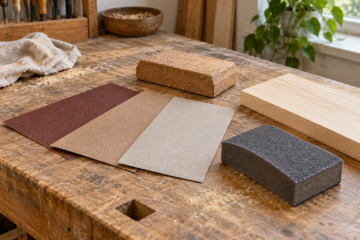
Preparation often determines whether the finished interior looks even. Sand bare wood lightly with 120- or 150-grit paper, then finish at 180 grit. On thin plywood veneer, avoid aggressive sanding and do not keep chasing a small mark: it is easy to sand through the face and expose the darker core. Sand with the grain on visible surfaces, remove dust with a vacuum and a clean, dry cloth, and round sharp exposed edges slightly so finish does not leave a fragile, thin film on them.
Stain a sample made from the same panel, using the same sanding sequence. Birch and maple can develop dark patches because some areas absorb more stain than others. A compatible wood conditioner or a gel stain can reduce that contrast, but each changes the final color and may make it lighter or less vivid. Follow the product label’s timing; conditioner applied too early or left on too long can limit stain absorption. Do not rely on a color swatch from a different wood species.
Use a protective finish for shelf wear
Stain adds color, not meaningful protection. For cabinet interiors that get regular use, apply a clear finish compatible with the stain and allow it to cure for the time specified on the label. Water-based polyurethane tends to stay clearer over pale wood and has lower odor during application; oil-based finishes often warm and deepen the color. Both can work. A water-based polyurethane for interior wood is a reasonable option when you want to preserve a light birch or maple tone.
Apply thin, even coats rather than one heavy coat. Two or three coats are a common target for shelves, with a light scuff sand between coats if the label calls for it. Let each coat dry fully before recoating, and give the finished parts adequate cure time before loading them. A surface can feel dry while still being soft enough for dishes or cans to leave pressure marks. No clear coat makes a shelf waterproof: wipe spills promptly and avoid leaving damp items against the finish.
Mistakes that shorten the finish’s life
Do not stain dusty wood, skip the sample, or sand plywood as if it were thick solid lumber. Do not put heavy cookware on an unsupported, wide shelf and blame the finish when it bows. Also avoid coating only the visible top of a solid-wood shelf: sealing both faces and edges helps reduce uneven moisture movement. For plywood, finish exposed edges too; a thin edge band or glued hardwood strip both improves appearance and protects the vulnerable veneer layers.
If cost is the main concern, use sound plywood for the structure, reserve solid hardwood for the front edge, and use a simple, compatible clear finish. That combination typically buys more practical durability than choosing an expensive species for every hidden part.
0 Comments