What's inside
As an Amazon Associate I earn from qualifying purchases. This post may contain affiliate links at no extra cost to you.
Poplar and alder are both workable hardwoods commonly used for painted furniture, cabinet doors, and face frames. Neither is automatically the better choice: poplar usually costs less and is easy to find, while alder can offer a more uniform-looking surface and may be easier to match across visible parts. For paint, preparation and construction often matter more than the species.
As an Amazon Associate we earn from qualifying purchases at no extra cost to you.


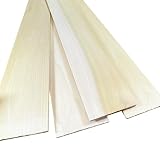

Poplar vs. alder at a glance
| Factor | Poplar | Alder |
|---|---|---|
| Typical cost | Usually the budget-friendly option | Often costs more, depending on region and grade |
| Workability | Easy to cut and shape; can dent and fuzz | Easy to machine and sand; can also dent |
| Color and grain | Can have green, gray, or brown streaks | Usually light brown to reddish-brown, with fairly subtle grain |
| Paint performance | Good with careful sanding and a suitable primer | Good with careful sanding and a suitable primer |
| Best fit | Painted parts where price and availability lead | Visible painted parts where a more consistent board set is worth the extra cost |
What shows through paint?
Opaque paint hides color, but it does not hide every surface defect. Raised grain, dents, glue smears, open joints, and uneven sanding can still show under a smooth finish. Both species can take a good paint job; neither eliminates the need to prepare the wood.
Poplar color varies noticeably from board to board. That is mostly irrelevant under an opaque finish, but it can make unfinished parts look mismatched during assembly. Poplar can also feel slightly fuzzy after sanding, especially on end grain or after water-based primer raises the fibers. A light sanding after the first primer coat usually deals with this.
Alder tends to have a more even, warm color and relatively quiet grain. That consistency can be useful when several door frames or furniture parts are visible together. It is not a guarantee of a defect-free finish, though: knots, small voids, and machining marks still need attention. If the paint is thin or the work will be viewed in strong side lighting, inspect and prepare either species carefully.
Choosing by cost and board quality
For painted cabinet doors or furniture parts that will be hidden behind the finish, poplar is often the sensible buy. Put the savings toward straight, dry stock and better finishing supplies rather than paying extra for a species whose color will be covered. Alder is worth considering when the pieces are prominently displayed, the boards are more consistent at your supplier, or you already know you prefer how it machines.
Compare actual boards rather than relying on species alone. Check for twists, bows, loose knots, checks at the ends, and damaged edges. A straight poplar board is a better starting point than a warped alder board. For narrow door rails and stiles, reject stock that will require heavy removal to get straight; excessive milling wastes material and can leave parts undersized.
Machining, dents, and joinery
Both woods are relatively easy to cut, route, and sand with sharp, well-adjusted tools. Poplar can tear or fuzz when cutters are dull, and its softer areas may compress under clamps. Alder also machines readily but is not a hard, dent-resistant choice. For cabinet doors that will be handled often, paint does not protect corners from impact; crisp edges can chip regardless of species.
Use moderate clamping pressure and spread it across the joint. Too much pressure can dent either wood or squeeze out nearly all the glue, leaving a starved joint. Remove squeeze-out before it dries, but do not smear it across the face: dried glue blocks primer and can leave visible shiny patches. A properly fitted joint and sound glue bond matter more than choosing alder over poplar.
A reliable paint-prep sequence
Sand machined faces evenly, usually beginning around 120 grit and finishing at 150 or 180 grit before priming. There is little benefit in polishing bare wood to an extremely fine grit; that can reduce mechanical tooth for some coatings. Break sharp edges slightly so paint can cover them instead of pulling thin at the corner. Vacuum the dust and wipe with a clean, lint-free cloth.
Apply a primer suited to the wood and topcoat. A wood primer for painted furniture helps even out absorption and gives the finish coat a consistent base. Follow the label for recoat time and sanding; product directions vary. After the first coat dries, sand lightly with 220 grit to remove raised fibers and nibs, then remove the dust before applying the next coat.
Pay special attention to end grain, joints, and any knots or filled defects. End grain absorbs more coating and may look rough or uneven if left under-primed. Use a compatible filler for dents and nail holes, let it dry fully, then sand it flush. If you find oily or resinous spots, test your primer on a scrap first rather than assuming the finish will adhere.
Which should you buy?
Choose poplar for most budget-conscious painted projects, especially when parts are small, hidden, or being covered with an opaque finish. It is a practical option for cabinet frames and furniture components if you select straight stock and take time with primer and sanding. Expect some color variation and occasional fuzz, not a failed paint job.
Choose alder when its board quality, availability, or more consistent appearance justifies the price. It is not a shortcut to a smoother painted surface, and it does not make a door stronger or more dent-proof. For either species, use a high-build wood primer only when the product is compatible with your paint system and you need extra filling; thick primer will not fix poor joints, deep dents, or uneven sanding.
Before committing to a full set of doors, make a test panel from offcuts. Sand, prime, and paint it using the same schedule planned for the project. The test will reveal grain texture, raised fibers, and adhesion problems more reliably than the species name alone.
0 Comments