Key takeaways
- Peak horsepower is a marketing number: what really decides whether a compact vac keeps pulling on a sander is sealed suction, filter area, hose size and a switched outlet.
What's inside
As an Amazon Associate I earn from qualifying purchases. This post may contain affiliate links at no extra cost to you.
You clamp a 5 gallon wet/dry vac onto a random orbit sander, flip both switches, and twenty minutes later the suction has gone soft, the pad is skating on a film of dust, and the motor is screaming at a pitch that sounds like it is working harder than ever. It isn’t. Picking a compact shop vacuum for power tools is a different problem from picking the can you keep around for screws and spilled water, even though the two sit on the same shelf and look nearly identical.
Most of the confusion comes from the number printed largest on the box: peak horsepower. That figure is measured at motor stall, inlet blocked, for a fraction of a second. It says nothing about whether the vac can keep a 1-1/4 inch hose clear while a sander feeds it flour-fine dust for an hour. Two other specs decide that, and they pull against each other.
As an Amazon Associate we earn from qualifying purchases at no extra cost to you.


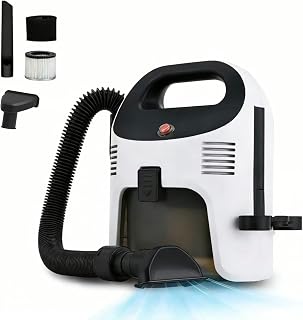

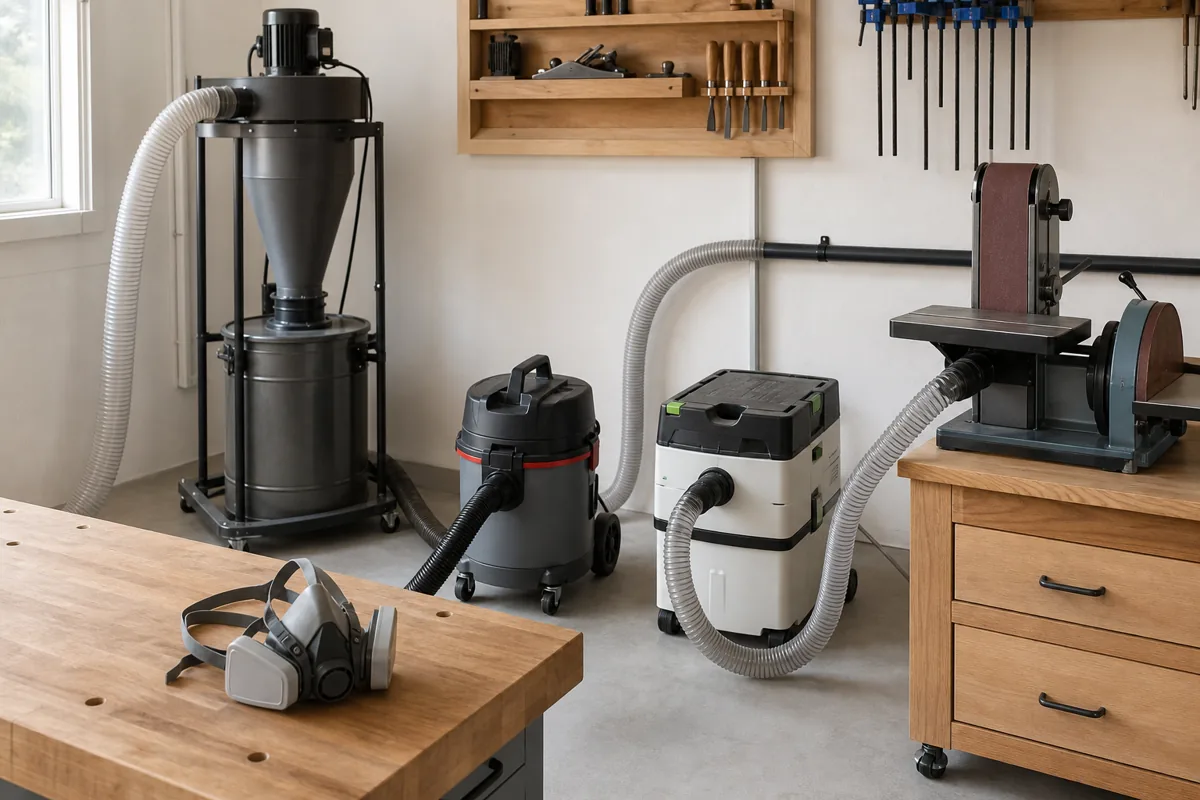
Why a Compact Shop Vacuum for Power Tools Is Its Own Category
Picture two jobs. A dust collector moves an enormous volume of air at very low pressure through a 4 inch duct, which is how it swallows the ribbon of chips off a jointer. A shop vac does the reverse: high sealed suction, measured as water lift in inches, pushing a modest volume of air very fast through a narrow hose. Drinking through a cocktail straw takes pressure. Drinking through a fire hose takes volume. Power tool dust ports are straws, so the small high-pressure machine wins there and the big one does not.
Reverse it and you explain a familiar frustration. Hook a compact vac to a miter saw and you will still be sweeping, because the saw throws a wide, fast plume that no 1-1/4 inch hose can catch. That is a volume problem, and a louder vac will not solve it. Jumping up two tank sizes does not change the physics either.
| Vac class | Tank range | Best fit | Trade-off |
|---|---|---|---|
| Hand-carry mini | 1 to 2.5 gal | Detail sanders, trim routers | Small filter loads fast |
| Compact wet/dry | 2.5 to 5 gal | Sanders, jigsaws, track saws, cleanup | Often no auto-start outlet |
| Dust extractor | 6 to 10 gal | All-day sanding, HEPA work, drywall | Costs two to four times as much |
| Cordless vac | Battery, small tank | Punch-list cleanup, truck, mobility | Lower sealed suction, runtime limits |
The Specs That Matter, and the One That Doesn’t
Skip peak horsepower. Look for sealed suction in inches of water lift and CFM quoted together, or air watts, which combines them into one usable figure. Companies that build for tool use tend to publish both, because their buyers ask. After that, three practical items decide whether you can live with the vac.
Filter area and rating. A larger pleated cartridge holds more dust before airflow falls off, and a HEPA or high MERV rating matters if your shop shares air with the house.
Hose diameter. The 1-1/4 inch hose is the tool hose; 1-7/8 inch and up are for floor cleanup. Every extra foot and every tight bend costs suction, so keep the tool hose short.
Auto-start and variable suction. A tool-triggered outlet runs the vac off the tool’s trigger, and it is the feature you notice most. Check the amp rating of that passthrough against the tool you plan to plug in. Variable suction lets you back off so a sander pad or track saw base does not vacuum-lock to the work.
Compact Dust Extractor With Auto-Start Outlet
If you sand more than a couple of hours a month, shop this category first. You are paying for filter area, variable suction and a switched outlet, and those are the three things that turn dust collection into something you actually use.
Where Your Suction Actually Goes
Here is the misconception worth naming out loud: a vac that whines at a higher pitch is pulling harder. It is the opposite. The motor is loaded by the air moving through it. Choke that airflow with a packed filter and the motor unloads, spins faster and climbs in pitch while moving less air than when it was quiet. The rising whine is a warning light, not a performance meter.
Fine wood dust does not lie on the filter surface the way sawdust does. It packs into the pleats, where tapping and shaking will not get it out. That is the argument for a fleece bag: the bag takes the load, the pleats stay open, and the dust goes in the trash instead of into your face. A small cyclone separator does the same job from the other end, dropping chips and most fines before they reach the filter at all.
- ✔ A fleece bag plus clean pleats keeps suction nearly flat for hours
- ✔ A mini cyclone means far less filter cleaning and much cleaner emptying
- ✔ Bagged collection stops you from breathing what you just captured
- ✘ Bags are a recurring cost and a separator adds bulk beside a small vac
- ✘ Cheap bags tear at the collar and dump the load
- ✘ Every added junction is one more place to leak air
Matching the Vac to the Tool
Port sizes are the first snag. US tools usually take a 1-1/4 or 2-1/2 inch cuff, while many European-designed tools use 27mm or 36mm fittings that are close but not the same. An adapter kit solves most of it, and a wrap of tape seals a sloppy joint. Air leaking in at a bad joint is air not pulling dust at the tool.
Static is the other one people get wrong. Dry dust rushing through a plastic hose builds a charge until it finds a path, usually your hand. The common fear is that a hobby vac will touch off a dust explosion, and at this scale that is not the realistic risk. The real problems are that the zap hurts, it can scramble the electronics in a cordless tool, and charged dust clings to everything. An anti-static hose fixes it.
Anti-Static Tool Hose and Adapter Kit
The hose in the box is usually stiff, oversized for tool work and not anti-static. A flexible 1-1/4 inch anti-static hose with a universal adapter set is the least expensive change that makes an existing vac behave.
Setting One Up in a Small Shop
Give the vac a home. On a dolly under the bench, hose on a hook so it never kinks, one dedicated tool hose and one floor hose so you are not swapping cuffs mid-cut. Keep a spare filter and a few bags on the shelf, because running out is exactly when you start sanding without collection.
Expect noise in the mid 70s to mid 80s decibel range, loud enough to matter over a long session. An exhaust muffler, a rubber pad under the tank and a remote switch so the vac can live in a corner all help more than they sound like they should.
Small 2 to 4 Gallon Wet/Dry Vac
For weekend sanding and a trim router, a small can with a good filter and a bag covers most of what an extractor does. Add the hose upgrade and ignore the horsepower claim on the label.
Compact Shop Vac FAQ
Can I use a household vacuum on a sander instead? Don’t. Many household vacuums cool the motor with the same dirty air they are moving, so fine dust goes through the windings. The filter area is sized for carpet lint, not 5 micron wood dust, and there is no switched outlet. You will kill it in a season.
Do I need HEPA filtration for wood dust? It depends where you work. The harmful fraction is the part you cannot see, which stays airborne for hours, and several common species are classified as carcinogens. A good pleated filter plus a fleece bag catches most of it. If your shop is attached to the house, HEPA is worth the money.
Will a compact vac replace a dust collector? No, and the collector will not replace the vac. The vac handles high suction at small ports: sanders, routers, jigsaws, track saws. The collector handles high volume at big ports: table saw, jointer, planer. Most small shops end up with one of each.
Buy for filter area, sealed suction and a switched outlet, then spend a little more on a good hose and a stack of bags. That combination is what keeps a small vac pulling on hour three instead of hour one.
Check prices on Amazon →
0 Comments