What's inside
- Best Compact Lathe Dust Collection for Tight Workspaces
- Quick comparison: compact collection options
- Best choice by workspace and workload
- Head-to-head: shop vacuum versus compact 4-inch collector
- What matters most at the tool rest
- A practical sizing calculation
- Setup and maintenance that prevent performance loss
- Durability and ownership realities
- Final recommendation
- Related Guides
- Best Compact Lathe Dust Collection for Tight Workspaces
- Quick comparison: compact collection options
- Best choice by workspace and workload
- Head-to-head: shop vacuum versus compact 4-inch collector
- What matters most at the tool rest
- A practical sizing calculation
- Setup and maintenance that prevent performance loss
- Durability and ownership realities
- Final recommendation
- Related Guides
As an Amazon Associate I earn from qualifying purchases. This post may contain affiliate links at no extra cost to you.
Best Compact Lathe Dust Collection for Tight Workspaces
The best compact lathe dust collection setup for a tight workspace is usually a high-airflow shop vacuum or compact dust extractor connected to an adjustable 2-1/2-inch hood positioned close to the cutting area; choose a small cyclone collector instead when you routinely turn dry wood, sand bowls, or need longer hose runs.
A lathe creates two different collection problems. Turning produces heavy shavings that fall below the work, while sanding produces fine dust that travels outward at high speed. A narrow benchtop lathe can fit in a garage or spare room, but a conventional 4-inch dust collector may take more floor space than the lathe itself. The right choice depends less on maximum horsepower than on where the hose can go, how close the hood stays to the tool rest, and how easily you can empty and clean the system.
As an Amazon Associate we earn from qualifying purchases at no extra cost to you.


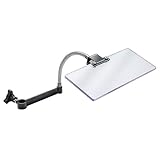
Quick comparison: compact collection options
| Collection option | Typical footprint | Hose size | Practical airflow at the tool | Best use | Main compromise |
|---|---|---|---|---|---|
| 2-1/2-inch shop vacuum | 12–18 in. wide; 18–26 in. deep | 1-1/4 to 2-1/2 in. | High vacuum, roughly 70–150 CFM through a short hose | Occasional turning and sanding in a benchtop shop | Small bin and louder operation |
| Compact dust extractor | 10–16 in. wide; 15–24 in. deep | 1-1/4 to 2-1/2 in. | Good suction with better filtration and sealing | Frequent sanding and portable setups | Higher purchase and filter costs |
| Wall-mounted or compact 4-inch collector | 18–28 in. wide; 12–20 in. deep | 4 in. | Higher volume, roughly 300–600 CFM at the machine with a short duct | Regular turning, larger bowls, and shared machines | Needs more clearance and cannot tolerate restrictive reducers |
| Two-stage cyclone with small drum | 18–24 in. wide; 18–30 in. deep | 2-1/2 or 4 in. | Strong separation and sustained suction | Frequent use where filter life matters | More components, hoses, and setup height |
| Ambient air cleaner | 20–30 in. wide; ceiling or wall mounted | None | Does not capture dust at the tool | Supplementing source collection | Not a substitute for a hood and hose |
These are useful planning figures rather than laboratory ratings. Manufacturer CFM figures are commonly measured without a hose, filter loading, bends, or a hood. The airflow that reaches the cutting area can be substantially lower.
Best choice by workspace and workload
| Your situation | Recommended setup | Why it fits |
|---|---|---|
| Small benchtop lathe, occasional use, limited budget | Shop vacuum, 2-1/2-inch hose, adjustable hood, pre-separator | Small footprint and low installation effort |
| Weekly bowl turning or frequent sanding | Compact extractor or cyclone-assisted vacuum | Better fine-dust filtration and less filter clogging |
| Garage with wall space but little floor space | Wall-mounted 4-inch collector with short flexible hose | Moves the motor and bin away from the lathe stand |
| Several machines sharing one collector | 4-inch collector with blast gates and dedicated lathe hood | Preserves airflow better than long 2-1/2-inch hose runs |
| Noise-sensitive indoor shop | Sealed extractor in an enclosure with ventilation, or remote collector | Allows the loud motor to be positioned farther away |
Head-to-head: shop vacuum versus compact 4-inch collector
Shop vacuum or extractor
A vacuum wins on compactness and suction pressure. That pressure helps when the hood is close to the tool rest and the hose contains a bend or a narrow opening. It is also convenient for a benchtop lathe that gets moved or stored after use. A model with a power-tool outlet or automatic switching can start collection with the lathe sanding tool, although the lathe itself should not be connected to an outlet beyond its rated load.
The weaknesses are limited capacity, high noise, and filters that clog quickly when sanding dry wood. A 10–20 litre collection container may fill faster than expected with shavings. A cyclone pre-separator reduces this problem, but the separator adds height and can be awkward beside a short stand.
Named compact extractors such as the Festool CT MIDI are examples of the portable extractor format. The important characteristics are not the brand name alone: look for a washable or replaceable fine-dust filter, a sealed container, a hose that remains flexible, and a cleaning method that does not release a cloud when the filter is serviced.
Compact 4-inch collector
A 4-inch collector moves more air, which is useful around a bowl or when the hood must sit several inches away from the work. It also handles larger shavings without the immediate blockage risk of a narrow hose. A wall-mounted unit can keep the floor clear in a garage, while a small drum or cyclone helps protect the filter.
Its limitation is resistance. Reducing a 4-inch port to a long 2-1/2-inch hose can erase much of the collector’s airflow advantage. Use the largest practical hose until the final short connection, avoid sharp elbows, and do not expect a large collector to compensate for a hood with a tiny opening.
What matters most at the tool rest
Hood adjustability
Choose a hood that can move vertically, horizontally, and rotationally without needing tools. For spindle turning, position its opening beside and slightly behind the cutting action, leaving enough clearance for the tool handle. For bowl turning, the hood usually needs a wider opening and a mounting arm that can swing around the outside of the bowl.
A hood opening of approximately 8–12 inches wide is a useful starting range for general turning. A smaller 4–6-inch opening can capture sanding dust well if it is close, but it may obstruct a gouge or fail to cover a large bowl. Flexible magnetic or articulated hoods are convenient, but they should not sag into the rotating workpiece.
Hose routing
Keep the hose short, supported, and above the lathe bed where possible. A 2-1/2-inch hose with two gentle bends may outperform a nominally larger hose crushed under a stand. For a compact shop, mount the hose on a swing arm or overhead hook so it does not catch the turning blank or become a trip hazard.
Grounding a flexible hose may reduce static shocks, but it does not make an unsuitable collection system safe. Keep electrical cords away from the rotating work and use a properly grounded circuit and dust-rated components.
Filter access
Filter access is an ownership issue, not a minor convenience. You should be able to remove or clean the filter without dismantling the lathe area. A clogged filter reduces suction at the hood, increases motor heat, and encourages users to run the system without filtration. Look for a large access panel, a filter-cleaning lever or pulse mechanism, and readily available replacement filters.
A practical sizing calculation
Suppose a benchtop lathe is 36 inches wide and the collector sits 5 feet away. A 2-1/2-inch hose may need 7 feet after allowing for routing and slack. If that path has three tight bends, a hood reducer, and a partly closed blast gate, the useful airflow can fall far below the vacuum’s advertised free-air figure. The solution is not automatically a larger motor.
Shorten the path to 4 feet where possible, replace two sharp elbows with broad sweeps, and place the hood within 2–4 inches of the sanding area. That distance is often more valuable than adding nominal CFM. If the hood must remain 8–12 inches away because of bowl clearance, a 4-inch collector becomes the more appropriate choice.
Setup and maintenance that prevent performance loss
- Capture at the source. Mount the hood beside the tool rest rather than behind the lathe. Airflow drops rapidly as the opening moves away from the dust stream.
- Separate shavings first. Add a pre-separator or cyclone before a vacuum when turning frequently. Empty it before the debris reaches the inlet baffle.
- Keep the filter clean. Tap or pulse-clean it outdoors according to the manufacturer’s instructions. Do not wash a filter unless it is specifically washable.
- Inspect the hose weekly. Look for splits, crushed sections, loose cuffs, and shavings lodged at reducers. A small leak near the hood can be more damaging than a dirty exterior.
- Check the hood position before every session. Ensure it cannot contact the blank, chuck, faceplate, or tool handle at maximum swing.
- Use respiratory protection and ventilation as additional controls. Source collection reduces airborne dust but does not eliminate it, especially during sanding and emptying.
Durability and ownership realities
The first parts to wear are commonly hose cuffs, flexible hood joints, separator seals, and pleated filters. A cheap hood with a loose joint may leak enough air to undermine an otherwise capable collector. Replacement hose, filter availability, and the cost of a new separator seal should be considered before purchase.
Do not use a fine-dust vacuum filter as a substitute for a cyclone when the container is routinely filled with long shavings. Do not connect a high-volume collector through several metres of narrow hose. Most importantly, do not rely on an ambient air cleaner to capture dust from sanding at the lathe; it only filters dust that has already escaped into the room.
Final recommendation
For most tight benchtop shops, start with a quality shop vacuum or compact dust extractor, a short 2-1/2-inch hose, a pre-separator, and a rigid adjustable hood positioned within a few inches of the tool rest. Move up to a wall-mounted 4-inch collector when you turn frequently, work on larger bowls, share the collector with other machines, or cannot keep the hood close. The best compact lathe dust collection system is the one that preserves airflow through a short route and remains easy enough to empty, clean, and reposition every time you use the lathe.
0 Comments