What's inside
As an Amazon Associate I earn from qualifying purchases. This post may contain affiliate links at no extra cost to you.
The best cabinet egg incubators for reliable hatching are the GQF Sportsman 1502 for high capacity and proven stability, the Brinsea Ova-Easy 580 for precise digital control and easy cleaning, and the Dickey 5-Tray Cabinet Incubator for custom-built durability and larger hatches — the right choice depends on how many eggs you hatch per month, how much floor space you have, and how much automation you need.
As an Amazon Associate we earn from qualifying purchases at no extra cost to you.



What Makes a Cabinet Incubator Reliable?
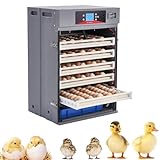
Cabinet incubators differ from tabletop models in one critical way: they are designed to hold temperature and humidity stable for weeks while holding hundreds of eggs. Reliability comes down to six factors you should evaluate before buying.
- Temperature stability: Look for forced-air circulation with multiple sensors and a proportional thermostat, not a simple on/off wafer. The best units hold within +/- 0.2°C (0.4°F) even when room temperature fluctuates 10-15°F.
- Humidity control: Cabinet models either use a water pan with wick pads or an integrated pump and humidity sensor. Pump-driven systems are more precise (typically 35-65% RH +/- 3%) and require less frequent refilling.
- Automatic turning: All true cabinet incubators turn automatically, usually every 2-4 hours. Check whether turning angle is adjustable and whether trays can be tilted or rolled without opening the door.
- Cleaning access: Sealed plastic interiors, removable trays, and large doors reduce bacterial load between hatches. Wood or plywood cabinets insulate well but are harder to disinfect.
- Power backup: A power outage during lockdown can ruin a hatch. Some cabinets offer 12V battery backup ports, low-power modes, or alarms.
- Footprint vs. capacity: A 270-egg cabinet can be 30 inches wide, while a 1,300-egg cabinet needs a dedicated corner. Measure doorways and floor space before you buy.
Best Cabinet Egg Incubators Compared
These three models represent the most common choices for small farms, breeders, and homesteads in 2026 and cover different budgets and capacities.
| Feature | GQF Sportsman 1502 | Brinsea Ova-Easy 580 | Dickey 2×4 (5-Tray) |
|---|---|---|---|
| Egg Capacity (Chicken Eggs) | 270 in setter, 3 hatching trays included | 580 | ~680-720 (with 5 setter trays) |
| Cabinet Material | Galvanized steel and rigid plastic board | HDPE plastic, double-walled | Laminated plywood with PVC interior |
| External Dimensions (W x D x H) | 30.5 x 30.75 x 33.75 in | 32.3 x 27.6 x 43.3 in | 48 x 24 x 60 in |
| Weight (Empty) | ~135 lbs | ~172 lbs | ~250-280 lbs |
| Temperature Control | Digital command center, 2 sensors, +/- 0.3°F | Brinsea Advance system, +/- 0.2°C | Digital thermostat with dual wafer backup |
| Humidity System | Wick pad and water pan + optional Humidity Pump | Integrated humidity pump (automatic) | Water pan + autofill float option |
| Turning System | Automatic, 4-hour cycle, tilting trays | Automatic, programmable interval, tilting trays | Automatic, timer-motor rolling trays |
| Power Draw | 325 watts (heater) | ~300 watts max | ~350 watts |
| Power Failure Features | Audible alarm, optional 12V battery backup | Audible/visual alarm, power recovery memory | Audible alarm, optional battery/inverter kit |
| General Market Range | $1,100 – $1,400 + pump if added | $2,800 – $3,600 | $1,800 – $2,500 (built to order) |
1. GQF Sportsman 1502 – Best All-Around for Serious Breeders
The 1502 has been the standard cabinet incubator for poultry breeders for decades for a reason. It uses a center-mounted heater and fan that pulls air through the trays, which keeps top-to-bottom temperature variation under 1°F when the room stays between 65-80°F. Capacity is 270 chicken eggs in the setter position, and it includes separate hatching trays so you can stagger hatches every week.
Temperature is managed by the digital command center with dual sensors, while humidity is maintained by a large pan and wicks. For hands-off control you will want the add-on humidity pump, which uses 5-gallon bucket and humidity sensor to keep RH precise without daily refills. The plastic board and metal cabinet is lighter than plywood and resists warping, but seams around the door gasket need regular cleaning to prevent mold.
Choose the 1502 if you hatch 50-270 eggs per month and want a serviceable machine with widely available replacement parts like motors, thermostats, and door gaskets.
2. Brinsea Ova-Easy 580 – Best for Precision and Easy Sanitation
Brinsea’s Ova-Easy line is built as a single molded HDPE cabinet with rounded corners and removable trays, which makes it the easiest cabinet to disinfect between hatches. The Advance control system gives you separate digital readouts for temperature and humidity and logs high/low deviations, useful if you hatch waterfowl or game birds that need tighter humidity windows.
With a 580 chicken egg capacity across five shelves, it has one of the best capacity-to-footprint ratios for its class. The integrated humidity pump is included, not optional, and draws from an external water container. The unit also includes a power-loss memory function that resumes the incubation program with minimal offset, though it does not run on battery alone without a separate inverter.
Choose the Ova-Easy 580 if you prioritize sanitation, hatch multiple species, and prefer a fully automatic humidity system out of the box. The taller 43-inch height still fits through a standard interior doorway.
3. Dickey 2×4 5-Tray – Best High-Capacity Custom Build
Dickey Incubators are built to order in the USA and use a plywood cabinet with a washable PVC liner. The 2×4 footprint (48 inches wide) is wider and shorter than imported cabinets, which improves stability in drafty barns and gives each tray more airflow around the eggs. Capacity depends on tray configuration, but the 5-tray setter holds roughly 680-720 chicken eggs, plus hatcher space below.
Controls combine a modern digital thermostat with a traditional wafer thermostat as a failsafe, a feature breeders value for unattended operation. Turning is done by a timer motor that gently rolls eggs on wire trays. The autofill humidity option connects to a water line or reservoir with a float valve, reducing daily checks.
Choose a Dickey if you need maximum eggs per hatch, want a cabinet that can be repaired with standard electrical parts, and have a permanent location with at least 55 sq ft of floor clearance for loading and ventilation.
Decision Matrix: Which Cabinet Fits Your Situation?
| Your Situation | Recommended Pick | Why |
|---|---|---|
| Hatch 100-250 eggs/month, first cabinet, limited budget | GQF Sportsman 1502 (without pump at first) | Lowest entry cost, proven support, upgradeable with pump later |
| Hatch multiple species, need accurate humidity, prioritize cleaning | Brinsea Ova-Easy 580 | Included pump and plastic cabinet reduce cross-contamination |
| Hatch 400+ eggs per cycle, dedicated hatch room/barn | Dickey 5-Tray | Highest capacity and plywood mass buffers temperature swings |
| Small utility room or closet, doorway under 30 inches | GQF Sportsman 1502 | Narrowest width and lowest height of the three |
| Frequent power flickers or off-grid setup | Any model + external battery inverter and alarm | No cabinet runs long on 12V alone; pair with deep-cycle battery and 1000W pure sine inverter |
| Staggered hatches every 7-10 days | GQF 1502 or Brinsea 580 | Both include separate hatcher trays so setter stays clean |
Runtime and Cost Per Hatch: A Worked Example
Capacity is not free. Electricity and consumables affect cost per chick, especially if you run year-round.
Assume a 21-day chicken hatch, room temperature 70°F, average draw of 150 watts once at temperature (heaters cycle), electricity at $0.15 per kWh:
- Daily energy: 0.15 kW x 24 hours = 3.6 kWh
- Cycle energy: 3.6 kWh x 21 days = 75.6 kWh
- Cycle cost: 75.6 kWh x $0.15 = ~$11.34 in electricity
- Add consumables: wick pads ($12-18 per 3-pack, replaced every 2-3 hatches), disinfectant, water
- Example per-chick energy cost: $11.34 / 200 hatched chicks = ~$0.06 per chick. At 50 chicks, ~$0.23 per chick.
This shows why running a cabinet half-empty is expensive. If you only need 40-60 chicks per month, a large cabinet wastes energy and humidity stability. Match capacity to at least 60% full per cycle for efficiency.
Power Backup Reality
Even the best cabinet loses 1-2°F per hour when unpowered in a 70°F room, and embryos are at risk after 4-6 hours below 95°F late in incubation. A 12V alarm helps you react, but only an inverter + deep-cycle battery (100Ah minimum) or generator keeps heat and turning going. A 100Ah AGM battery with a 1000W inverter will run a 300W cabinet for roughly 3-4 hours at 50% duty cycle — enough to cover most outages. For longer resilience, plan generator backup and avoid opening the door during an outage.
Durability and Ownership Realities
Cabinet incubators last 10-20 years, but three parts wear first.
- Door gaskets and latches: Silicone and magnetic seals compress over time, creating cold leaks at the bottom. Clean weekly and replace every 3-5 years.
- Turning motors and linkages: Motors run every few hours for months. Listen for grinding or uneven tilt. Keep pivot points free of dust and feather dander.
- Humidity wicks and sensors: Wick pads calcify in hard water and lose wicking. Soak sensors gently and use distilled water if your tap water is above 150 ppm hardness to extend pump life.
Common mistakes that shorten life and hurt hatch rates: placing the cabinet on an exterior wall or in direct sun, blocking rear vents within 6 inches of a wall, adding cold water during lockdown which drops humidity, and skipping a full disinfection between staggered hatches. Turn off and disinfect with a poultry-safe quaternary ammonium or 10% bleach rinse, air dry completely, and recalibrate thermometers against a medical-grade thermometer at 99.5°F before the next set.
Cleaning access matters more than it seems. HDPE cabinets can be pressure-washed and sanitized in under an hour. Plywood cabinets insulate better in unheated spaces but require hand-wiping and annual resealing of exposed wood to prevent moisture absorption.
Final Picks by Use Case
For most breeders moving up from a tabletop incubator, the GQF Sportsman 1502 offers the best balance of capacity, parts availability, and cost. If you need laboratory-level humidity accuracy or hatch waterfowl and quail alongside chickens, the Brinsea Ova-Easy 580 justifies its higher price with automation and sanitation. If you are running a small farm hatchery and need to fill 600+ eggs per cycle in one cabinet with a stable, workshop-repairable build, the Dickey 5-Tray is the most efficient use of floor space.
Before you order, measure your doorway, confirm a grounded 120V outlet on a dedicated 15A circuit, and plan where your water reservoir and backup power will sit — those three details determine day-to-day reliability more than any single feature.
Frequently Asked Questions
Do I need a separate hatcher?
Not required, but recommended if you do staggered hatches. Hatching creates down, moisture, and bacteria that can contaminate setter trays. All three cabinets above include or can be configured with hatcher trays at the bottom, which keeps the upper setter cleaner and stabilizes temperature for the next batch.
What room temperature do cabinet incubators need?
Most manufacturers specify 65-80°F with low drafts. Below 60°F, heaters run constantly and top-to-bottom variation increases. Above 85°F, the cabinet struggles to cool. A climate-controlled spare room, insulated garage, or basement with steady temperature is ideal.
How often should I calibrate temperature and humidity?
Check calibration before each hatch cycle and after any power outage or move. Use a calibrated thermometer placed at egg height on the middle tray for 30 minutes with the door closed. Humidity sensors should be checked with a salt test (75% RH) every 3-6 months.
0 Comments