What's inside
As an Amazon Associate I earn from qualifying purchases. This post may contain affiliate links at no extra cost to you.
A uniform black dye finish depends less on choosing the darkest wood than on choosing wood with even porosity, modest color variation, and a surface you can prepare consistently. Dye colors the wood rather than hiding it, so grain, mineral streaks, glue marks, and sanding scratches can all remain visible.
As an Amazon Associate we earn from qualifying purchases at no extra cost to you.


Our Top Picks
 Varathane Water-Based Ultimate Satin PolyurethaneHalf Pint (Pack of 1)3 x 3 x 3 inches0.64 poundsCheck on Amazon


Best species for an even black finish
For most projects, hard maple is the safest starting point. Its fine, relatively closed grain and pale, even color make black dye easier to control than on strongly ring-porous woods. Cherry can also take a smooth black finish, though its natural color and occasional figure may show through. Beech is another workable option when the boards are clear and evenly matched.
Birch is inexpensive and widely available, but it can vary from board to board and may take dye unevenly. Test it before committing to a large surface. Avoid assuming that a species name guarantees uniform results: sapwood and heartwood, grain orientation, and individual boards can differ substantially.
Wood species compared
| Species | Black dye uniformity | What to watch for | Best use |
|---|---|---|---|
| Hard maple | Very good | Hard grain can make sanding scratches conspicuous; figured boards show variation | Furniture parts, trim, small panels |
| Beech | Good | Color can vary; end grain darkens quickly | Shop projects and furniture where a calm grain is wanted |
| Cherry | Good, with visible character | Red-brown undertone and natural color variation may remain beneath black | Projects where a slightly warmer black is acceptable |
| Birch | Fair to good | Blotching and board-to-board variation; test carefully | Budget projects and plywood faces after a sample test |
| Red oak | Fair | Open pores absorb more dye and create a pronounced grain pattern | When visible pore contrast is part of the look |
| Pine | Poor for a uniform result | Soft earlywood and dense latewood take dye differently; knots add variation | Low-cost rustic work where unevenness is acceptable |
Oak is not a poor choice if you want black grain contrast, but it will not look like a smooth, solid black surface without pore filling. Pine is cheaper and can be made attractive, but expect more variation and more sample work. If the goal is a consistent black across a broad visible panel, maple is usually worth the extra cost.
Choose dye, not ordinary pigment stain
For a black color that follows the grain without muddying it, use a black wood dye. Water-based dye is easy to apply and clean up, while alcohol-based dye dries faster and can be harder to blend across a large panel. A black wood dye is a better fit than a generic black stain when you want the grain to remain clear.
Pigment stains sit more heavily in pores and can obscure fine detail. They can still be useful for a deliberately opaque or grain-filled effect, but they are more likely to look muddy on open-pored wood. Always check the dye maker’s instructions for compatible topcoats; some finishes can lift or disturb a water-soluble color layer.
Preparation determines the result
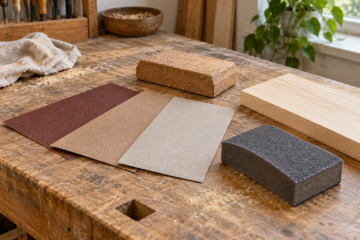
Sand the wood evenly through a sensible sequence, such as 120, 150, then 180 grit. For many dyes, stopping around 180 grit gives a clean surface without closing the grain too much. Follow the product directions: some dyes benefit from a coarser final grit, and sanding too fine can reduce absorption. Do not skip grits or press harder in one area; scratches that are hard to see on pale wood can become obvious after black dye.
Remove dust with a vacuum and a clean, dry cloth. Avoid oily tack cloths unless the dye manufacturer approves them. On water-based dye, raising the grain first can help: wipe the bare wood lightly with clean water, let it dry fully, then sand off the raised fibers with the final grit. Do this evenly, not just in patches.
Glue residue is a common failure point. Dried glue blocks dye, leaving pale spots or streaks. Inspect joints under angled light and remove squeeze-out before sanding. End grain absorbs more color than face grain, so sand it carefully and consider sealing it lightly with a compatible washcoat if the test piece shows an overly dark edge.
Test the full process before the project
Use offcuts from the same boards, not a different piece of the same species. Sand and dye the sample exactly as planned, then apply the intended topcoat. A dye-only sample can look even but change noticeably once sealed. For a large surface, test more than one board and include both face grain and an edge.
Apply dye in a continuous, even pass, keeping a wet edge and avoiding pauses in the middle of a panel. Work with the grain and follow the stated drying time. If the first coat is too light, build color with another coat rather than flooding the surface; excess liquid can make blotching and lap marks worse. Wear gloves and protect nearby surfaces, since black dye transfers readily.
If you want a more opaque black, a black grain filler can reduce the pale pore lines on oak or ash. It adds steps and changes the look, so test it with the dye and topcoat together. For a clear protective layer, choose a clear water-based wood topcoat if you want to minimize ambering; oil-based finishes tend to warm the color. Apply thin coats and avoid aggressive sanding through the dye, especially at edges.
What to buy for the job
For a smooth, predictable black surface, buy clear hard maple, a compatible black dye, and enough offcut material to make several test samples. Beech is a reasonable alternative when available at a better price. Choose birch only after a sample confirms the boards behave evenly. Buy pine or open-pored oak when you are comfortable with visible variation, not because black dye will hide it. The less uniform the wood, the more preparation and testing it takes to control the result.
0 Comments