What's inside
As an Amazon Associate I earn from qualifying purchases. This post may contain affiliate links at no extra cost to you.
A muted green wash is translucent: the wood’s grain and color remain visible, so the species matters as much as the stain. Oak can look strongly striped, pine can turn blotchy, and maple may barely take a water-based color. For a quiet, even result, start with a sample on the actual wood, then adjust the color and application before finishing the whole piece.
As an Amazon Associate we earn from qualifying purchases at no extra cost to you.


Our Top Picks
 Polyurethane Wood Finish Water Based Polyurethane Clear Gloss100 ml1.6 x 1.6 x 4.7 inchesCheck on Amazon


Best wood choices
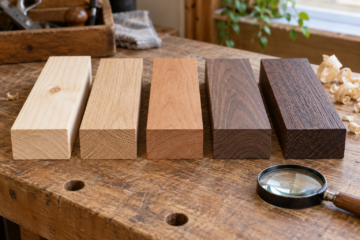
White oak is a reliable choice when you want visible grain without dramatic contrast. Its open pores take pigment readily, and the grain gives a green wash a natural, slightly rustic look. Red oak also accepts color, but its pinkish undertone can push some greens toward brown or olive. Test the exact board rather than relying on a sample from another species.
Alder and poplar have subtler grain and can produce a calmer, more uniform surface. They are common paint-grade woods, but their color varies: poplar may have green or brown streaks, and alder can show uneven absorption. Clear, light-colored boards are usually easier to finish consistently.
Pine is inexpensive and widely available, but its soft earlywood absorbs more stain than the dense bands around it. That can make a green wash look striped or blotchy. Maple is similarly challenging for translucent color: its tight grain often leaves pigment sitting on the surface, where it can look weak or streaky. Both can work if you accept variation and use a conditioner or a more controlled finish schedule.
How the species compare
| Species | Typical green-wash result | Main risk | Best use |
|---|---|---|---|
| White oak | Defined grain, medium contrast | Open pores can look dark | Furniture, shelves, cabinets |
| Red oak | Strong grain, warmer cast | Pink undertone shifts green | When a rustic look is welcome |
| Alder | Soft grain, generally even | Color variation between boards | Cabinet parts and interior trim |
| Poplar | Quiet grain, mixed board color | Green or brown streaks show through | Paint-grade work and small projects |
| Pine | Pronounced bands and knots | Blotching and uneven uptake | Budget projects with rustic character |
| Maple | Subtle grain, often pale | Streaking or weak color | When a very soft wash is wanted |
Choose a colorant for the effect
“Green wash” can mean a diluted stain, a tinted glaze, or paint thinned with water. A water-based pigment stain is a practical starting point for a transparent look; it colors the wood while leaving grain visible. A tinted glaze gives more control over color intensity and is useful when a stain absorbs unevenly, but it usually needs a sealed base and careful wiping.
For a pale, chalky wash, try a small amount of water-based paint diluted with water, then wipe it back before it dries. This is inexpensive and easy to adjust, but too much water can raise the grain and leave lap marks. Follow the paint maker’s directions for thinning, and do not assume every paint is suitable for a wipe-on wash. If you want a ready-to-use option, compare water-based green wood stains and test the color on scrap.
Color names are not dependable guides: “sage,” “moss,” and “olive” vary by brand and base. For a muted result, choose a sample that looks slightly less saturated than your target, since clear finish can deepen or warm the appearance. Avoid trying to correct a strong green by adding a large amount of brown on the workpiece; test adjustments in a cup or on scrap first.
Prepare and apply a sample first
Sand consistently with the same grit across the whole surface. For most furniture, 120 grit followed by 150 or 180 grit is a useful range; stopping at 220 can reduce stain absorption on some woods. Do not press hard or sand unevenly, especially on soft pine. Remove dust with a vacuum and a clean, lint-free cloth.
Make a sample from the actual species and, ideally, the same board. Include the full finishing schedule: stain or wash, dry time, and topcoat. Apply the color in thin, even passes with a cloth, brush, or pad, then wipe off excess in the direction of the grain. Work one manageable section at a time. Overlapping a wet edge after part of the surface has dried can leave dark bands, while letting pigment puddle in oak pores can make the grain look much darker than intended.
On pine or maple, test a pre-stain wood conditioner or a thin washcoat before the color. These reduce absorption differences, but they can also make the final color lighter. Follow the label’s timing: applying stain too soon or after the conditioner has fully cured may change the result.
Seal it without muddying the color
Let the color dry fully before topcoating. Water-based color may dry quickly to the touch but still need longer before a finish; use the product label’s stated interval. Test the topcoat on the sample because oil-based finishes often add an amber cast that can make a pale green look yellow or dull. A clear water-based topcoat generally preserves a cooler, lighter appearance. Apply thin coats and lightly sand between coats only as the finish maker directs; sanding through a translucent color layer creates pale patches.
If the sample is too dark, wipe sooner or dilute the colorant according to its instructions rather than sanding aggressively after application. If it is too uneven, try a conditioner, a glaze over a sealed surface, or a more opaque wash. A water-based clear wood finish is a sensible choice when keeping the green cool matters more than adding the warmth of an oil finish.
For the least troublesome combination, choose clear white oak for visible grain or a consistent, light-colored alder board for a quieter look. Pine is fine when price and rustic character matter more than uniformity. In every case, the sample board is the cheapest way to catch a color shift, blotch, or finish incompatibility before it spreads across the project.

0 Comments