What's inside
As an Amazon Associate I earn from qualifying purchases. This post may contain affiliate links at no extra cost to you.
Interior door casing is visible at eye level, so uneven stain, glue marks, and mismatched grain show more than they do on many trim boards. The best wood depends on the look you want and how much preparation you’re willing to do. For most stained casing, poplar is a poor choice despite its low price: it’s usually painted because its color and grain can look blotchy under clear or tinted stain.
As an Amazon Associate we earn from qualifying purchases at no extra cost to you.


Our Top Picks
 DoubleFill 2 Pack Solid Red Oak Hardwood Crown3/4'' × 2-5/8''49.61 x 4.13 x 2.76 inches4.3 PoundsCheck on Amazon


Best choices for stained casing
Oak is the easiest dependable choice when you want a pronounced grain pattern. Red oak is widely available, takes many stains reasonably evenly, and has a familiar open-grain appearance. White oak is typically pricier and has a slightly different, often calmer color; check a sample against your floor before choosing. Both have open pores, so stain accentuates the grain rather than hiding it.
Maple suits a smoother, quieter look, but it can develop dark, uneven patches with ordinary stain. Cherry starts pale pinkish and darkens with age and light. Pine costs less, but knots, resin, and changes in grain density can make its color unpredictable. For a no-surprises result, buy casing already matched to your door or get sample boards of the same species and finish them before ordering.
| Wood | Stain result | Cost and trade-off | Best fit |
|---|---|---|---|
| Red oak | Strong, open grain; generally predictable | Commonly available; prominent pores remain visible | Traditional or grain-forward interiors |
| White oak | Open grain, usually a muted brown or tan appearance | Often costs more; color varies by board | When its sample matches the surrounding wood |
| Maple | Fine grain; dark stain may blotch | Can need extra preparation and test boards | Light, understated finishes |
| Cherry | Smooth-looking grain; naturally warm color deepens over time | Not ideal if you need a stable, pale color | Warm interiors and clear or light finishes |
| Pine | Knots and soft bands can absorb stain unevenly | Often the cheaper option; board-to-board variation is higher | Rustic looks or a carefully tested budget job |
Match the casing to the door and room
Species matters, but so do the door’s grain, color, and sheen. A red-oak door beside pale maple casing can look like a mismatch even if both pieces are attractive on their own. If you can, use the same species as the door. If that is impractical, compare finished samples in the room, in daylight and at night; store lighting is not a reliable guide.
For a low-cost project, pine can be acceptable when a rustic, varied finish is part of the plan. Buy enough stock from the same batch to finish the whole opening, and reject boards with pitch pockets or knots where they will be prominent. Poplar is a good economical paint-grade wood, but stain usually emphasizes its greenish, brown, or gray color shifts instead of giving it the clean look people expect.
What to check before buying
Look at the actual boards, not just the species label. Grain and color vary within a species, and casing from different packs may not match. For stained work, buy a little extra—about 10 percent is a reasonable allowance for cuts and defects—and arrange the pieces in order before installation. Check that the profile is consistent and that boards are straight; bowed casing is harder to fit tight at the miters.
For a simpler route, compare unfinished solid-wood casing with unfinished oak door casing. If you’re comparing species, small wood stain sample boards help reveal how a finish behaves, but they are only useful when the wood is the same species and similarly prepared as your casing.
Prepare and test before installation
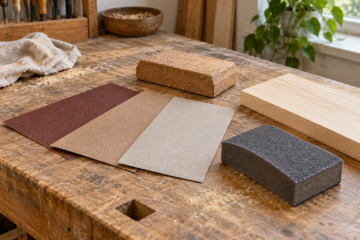
Sand consistently, working through roughly 120, 150, then 180 grit for most stain-grade casing. Follow the grain and avoid pressing hard at edges; sanding through a veneer or rounding a crisp profile is difficult to undo. Remove dust thoroughly. Glue squeeze-out, pencil marks, and fingerprints can all leave pale or dark spots because they block stain.
Always finish a cutoff or sample from the same stock with the complete intended process: conditioner or sealer if needed, stain, and topcoat. A stain that looks right in the can can turn too red or too dark on the wood, and clear coats can deepen the color further. Maple and pine are more likely to benefit from a conditioner or a tested washcoat; these can reduce blotching but also make the color lighter. Do not apply them automatically—test first.
For open-pored oak, a standard wiping stain leaves the grain visible. A gel stain can help control color on difficult or mixed surfaces, but it sits closer to the surface and may obscure grain if applied heavily. Follow the label’s timing and wipe-off directions. Leaving excess stain on the casing can produce a sticky, slow-drying film rather than a richer finish.
Finish the casing without common failures
Where practical, apply stain and at least the first clear coat before installation. That makes it easier to reach the edges and reduces the chance of staining a painted wall or door. Keep finish off the back edge where it may interfere with adhesive, if you plan to glue the casing. After installation, touch up nail holes with a compatible filler; ordinary wood filler may accept stain differently and leave visible dots, so test it on a scrap.
Use a clear topcoat suited to the room and the stain. Water-based finishes tend to preserve a lighter color; oil-based finishes commonly add warmth and ambering. Apply thin coats rather than one heavy coat, and sand lightly between coats only as the product label directs. If the trim will be cleaned often, prioritize a durable, fully cured finish over a quick recoat. Rushing installation before the coating has hardened can leave dents and shiny pressure marks.
For a first stained-casing project, red oak is the safest starting point when its bold grain suits the room. Choose maple for a quieter look only if you’re willing to test stain and preparation, and choose pine when its lower cost outweighs the extra color variation. The sample board—not the species name alone—is the best predictor of the finished result.
0 Comments