What's inside
As an Amazon Associate I earn from qualifying purchases. This post may contain affiliate links at no extra cost to you.
For a stained interior beam mantel, the best wood is usually kiln-dried pine or fir if you want to keep costs down, or white oak if you want a harder surface and more even stain color. The right choice depends on the look you want, the beam’s size, and whether it will be a solid timber or a hollow box built around a support.
As an Amazon Associate we earn from qualifying purchases at no extra cost to you.


Our Top Picks
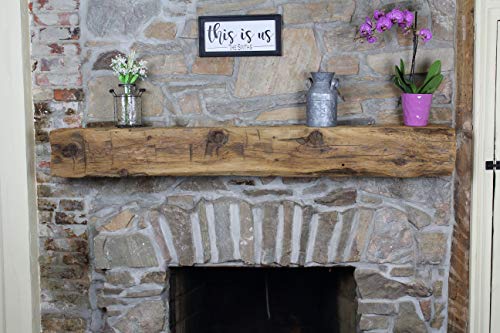
 Wilson 8"x 8"x 72" Hand-Hewn Barn Beam Mantel8x8 - 72 inches long72 x 8 x 8 Inches67 poundsCheck on Amazon
 1/2 pt Minwax 13407 Clear Pre-Stain Wood Conditioner1/2 Pint3 x 3.25 x 3 inches0 PoundsCheck on Amazon
 Polyurethane Wood Finish Water Based Polyurethane Clear Gloss100 ml1.6 x 1.6 x 4.7 inchesCheck on Amazon


Choose wood for the build, not just the stain
A mantel that looks like a heavy beam may be a three-sided box made from boards. That construction uses less wood, weighs less, and is often easier to keep straight than a large solid timber. For a box mantel, clear, kiln-dried boards are usually a better buy than a rough or construction-grade beam. For a solid mantel, weight and secure attachment matter as much as appearance.
Use wood that is dry and acclimated to the room before cutting. Aim for roughly 6–10% moisture content for a heated interior; wetter wood can shrink after installation, opening joints or cracking the finish. Let boards sit flat in the room for several days, and check them with a moisture meter if the stock’s condition is uncertain. Reject pieces with active cracks, loose knots, or obvious twist.
Do not assume a stain will make different boards match. Sapwood, heartwood, knots, and grain absorb color differently, and those differences remain visible under most transparent finishes.
How common species compare
| Wood | Stain behavior | Best use | Main trade-off |
|---|---|---|---|
| White oak | Usually takes stain evenly; pronounced grain | Refined or darker stained mantel | Costs more and is heavy |
| Red oak | Absorbs stain readily; open grain can look bold | Traditional, prominent grain | Can look pink or orange under some stains |
| Douglas fir | Strong grain contrast; earlywood can turn much darker | Rustic beam look | Can blotch or stripe without preparation |
| Pine | Soft and uneven; knots darken sharply | Budget or casual projects | Dents easily and may stain blotchy |
| Poplar | Often uneven with conventional stain | Painted mantels or hidden parts | Not a first choice for a natural stained finish |
Best all-around choice: white oak
White oak is a reliable pick when the mantel will be a focal point and you want a stained finish without fighting softwood blotching. Its grain is visible, but color tends to be more consistent than on pine or fir. It is also harder, so it resists small dents better than pine. The cost and weight are the drawbacks: a solid oak beam can be difficult to lift and must be anchored to framing, not just drywall.
For a restrained finish, test a medium-brown stain on an offcut from the actual boards. Oak can look much darker than the color shown on a can once the finish is applied. If you want a pale, natural appearance, clear oil or a lightly tinted finish may suit it better than a dark stain.
Budget choices: pine and fir
Pine is acceptable when the mantel is decorative, the budget is tight, and minor dents or color variation are not deal-breakers. It is soft enough to mark during installation, so protect corners and use padded clamps. Knotty pine can look intentional in a rustic room, but knots often take stain far darker than surrounding wood. If you want a clean, uniform finish, buy clear stock rather than expecting stain to hide defects.
Douglas fir is a good option for a more pronounced beam grain. Its alternating bands can produce dramatic color changes with stain, which is attractive for a rustic look but frustrating if you expect an even brown. A conditioner or sanding sealer can reduce uneven absorption, though it may also make the stain lighter. Test the full process on scrap cut from the same board.
For pine or fir, consider wood pre-stain conditioner if you plan to use a penetrating stain. Follow its timing instructions: applying stain too late or too soon can change the result.
Prepare the surface before staining
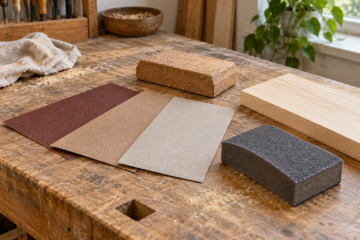
Sand with the grain, starting around 80 or 100 grit only if the boards have milling marks, then move to 120 and finish at 150 or 180. Going much finer can reduce stain absorption, especially on softwood. Remove glue squeeze-out completely; even a thin film can leave pale patches that sanding does not always reveal. Check the surface under raking light and wipe it with mineral spirits if the stain and finish system allows it.
Do not round over every edge. A small eased edge is less likely to splinter, but heavily rounded corners can make a beam look like trim instead of a timber. Fill nail holes with a stainable filler only after testing it. Many fillers take color differently from the surrounding wood, so a matching putty applied after the finish can be less conspicuous.
Choose a stain and topcoat as a system
Oil-based wiping stains give working time and suit many oak projects. Water-based stains dry faster and have lower odor, but can raise the grain; dampen the wood lightly, let it dry, and sand back raised fibers before staining. Gel stains can help even out color on pine because they sit closer to the surface, but they can obscure grain and may need careful wiping to avoid a muddy look.
Always make a sample using the same sanding grit, stain, and topcoat planned for the mantel. A clear coat changes the appearance: oil-based polyurethane often warms and darkens wood, while water-based finishes usually stay clearer. For a mantel above a fireplace, check the appliance manual for required clearances. A finish does not make wood safe to install inside a prohibited clearance zone.
Use a compatible clear water-based polyurethane for a lower-ambering topcoat, or an oil-based product if a warmer tone is wanted. Apply thin coats and follow the label’s recoat times; rushing can leave a soft or cloudy finish. A satin sheen is forgiving of dust and handling marks compared with gloss.
A practical buying checklist
For a uniform, durable stained mantel, buy kiln-dried white oak and build a hollow box if the design allows. Choose clear pine or fir when price matters more than perfect color consistency, and spend time on sample boards before staining. Buy enough stock to select matching grain and color, plus about 10–15% extra for cuts and defects. Whatever species you choose, dry boards, sound joinery, careful sanding, and a tested finish will matter more than the stain label.
0 Comments