What's inside
As an Amazon Associate I earn from qualifying purchases. This post may contain affiliate links at no extra cost to you.
For a painted storage chest, the best wood is usually cabinet-grade birch plywood for large panels and straight, clear poplar for the frame and edges. That combination stays reasonably flat, takes paint well, and avoids the rough, splinter-prone edges common with construction lumber. If budget matters more than a furniture-grade finish, sanded pine plywood can work, but plan on more filling and sanding.
As an Amazon Associate we earn from qualifying purchases at no extra cost to you.

Our Top Picks
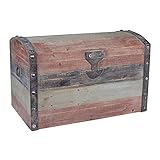
 51.2" Extra Large Storage Chest51.2" W x 15.7" D x 19.1" H15.7 x 51.2 x 19.1 inches40.7 poundsCheck on Amazon
 Household Essentials Large Wooden Storage TrunkLarge Single29 x 16.25 x 18.25 inches16 PoundsCheck on Amazon
 Zinsser Bulls Eye Water-Base Primer & Sealer32 Fl Oz (Pack of 1)4.25 x 4.25 x 4.85 inches0 PoundsCheck on Amazon
What matters for a smooth painted chest
Paint hides color and grain, but it does not hide uneven joints, dents, open plywood plies, or rough end grain. Those defects often become more visible under a solid finish. Choose stock that is flat and dry, use a suitable primer, and break sharp edges slightly before painting. A small 1/16- to 1/8-inch roundover or chamfer helps paint cover the edge and reduces chipping in use.
Think of the chest as two kinds of parts. Broad sides, lid, bottom, and dividers are often easiest to make from plywood. Rails, corner posts, trim, and exposed edges are better made from solid wood or covered with solid edging. The right choice depends on the design: plywood saves weight and resists seasonal movement, while solid wood gives you durable edges and a more traditional look.
Wood options compared
| Material | Best use | Paint preparation | Main trade-off |
|---|---|---|---|
| Birch plywood | Panels, lid, and bottom | Fill exposed plies; prime smooth face veneer | Good finish quality, but costs more than construction plywood |
| Poplar | Frame, trim, and solid edging | Sand to 180–220 grit; prime | Paints cleanly, but can dent more easily than harder hardwoods |
| Pine plywood | Low-cost panels and utility chests | Expect more knots, patches, and veneer irregularities | Cheaper, but takes longer to prepare consistently |
| MDF | Flat panels or decorative parts kept dry | Seal edges thoroughly; use dust extraction when cutting | Very smooth face, but heavy and vulnerable to moisture at edges |
| Solid pine | Simple frame and inexpensive trim | Fill knots and seal resin-prone areas with an appropriate primer | Affordable, but dents and can move or show knots through paint |
Best all-around choice: birch plywood and poplar
For a chest that will be used regularly, choose 1/2-inch or 3/4-inch birch plywood according to the span and load. Three-quarter-inch stock is a practical choice for a lid and long side panels; 1/2-inch may be enough for smaller sides with adequate framing. Check each sheet in the store: sight along its length for bow, inspect the face for patches or veneer damage, and reject sheets with loose plies. “Cabinet grade” is not a universal guarantee, so inspect the actual panel.
Use poplar for the frame, corner posts, and solid lipping on visible plywood edges. Poplar is generally stable and has a fine texture that accepts primer and paint without the deep pores found in open-grained woods. It is not dent-proof, but it is a reliable painted-wood choice. For a smoother edge, glue on 1/8- to 1/4-inch-thick poplar strips rather than trying to disguise a badly chipped plywood edge with filler.
For edge tape or solid lipping, use a wood glue rated for interior furniture work, spread a thin continuous film, and clamp evenly. Wipe away squeeze-out before it hardens; dried glue resists stain and paint and can leave a visible shiny patch. A suitable interior wood glue for furniture is usually enough for a household chest that will stay indoors.
When cheaper materials are fine
Sanded pine plywood is a sensible choice for a basement, playroom, or workshop chest where a few surface imperfections are acceptable. It is often less expensive than birch, but inspect for football patches, knots, and thin or chipped face veneer. Patches can telegraph through paint unless you level them with filler and primer. If the chest is small and the finish is not meant to look like built-in cabinetry, this extra preparation may be an acceptable trade.
Solid pine is also fine for a basic frame. Avoid boards with large knots near joints or exposed edges, and let the lumber acclimate indoors before cutting. Knots can bleed resin or discolor paint, so seal them with a stain-blocking primer rather than assuming ordinary wall primer will solve the problem. MDF gives a very smooth face for paint, but it is heavy, its edges soak up finish, and swelling from a leak or damp floor can be permanent. Do not use it for a chest likely to sit in a humid garage or get wet.
How to get smooth, durable edges
Cut panels with a sharp, fine-tooth blade and support the sheet close to the cut to limit splintering. If the back face chips, use a zero-clearance insert or score the cut line first. Fill small plywood voids with a paintable wood filler, then sand flush after it dries. For larger voids or damaged plies, replace the panel or add solid edging; a thick mound of filler is more likely to crack or show.
Sand faces progressively—typically 120 grit, then 150 or 180—using light pressure. Sand poplar edges to 180 or 220 grit, but do not polish them so finely that primer has trouble gripping. Round sharp corners slightly, then remove dust with a vacuum and a clean, dry cloth. Use a dedicated stain-blocking primer for painted furniture where knots or stains may bleed; follow its label for dry time and sanding.
After priming, sand raised fibers or small ridges with 220 grit, taking care not to cut through the primer at corners. Apply two thin topcoats rather than one heavy coat. Heavy paint can sag on vertical sides and build into rounded blobs at joints. For high-touch edges, let the coating cure for the manufacturer’s full stated period before loading the chest; dry-to-touch is not the same as fully hardened.
A practical buying plan
For a painted indoor chest, buy flat 3/4-inch birch plywood for the lid and main panels, poplar for the frame and exposed edging, and filler suited to painted wood. Choose sanded pine plywood instead if the budget is tight and you can tolerate extra patching. Skip MDF where moisture is likely, and avoid knotty, construction-grade boards for visible trim unless you are prepared to seal and level them.
Before committing to a full sheet, test your primer and paint on an offcut with the same face and edge treatment. That small test shows whether the veneer needs more filling, whether knots bleed, and whether your sanding leaves scratches visible under the finish. For filling pinholes or shallow dents, a paintable wood filler for furniture is useful, but it cannot substitute for sound, well-fitted joinery.
0 Comments