What's inside
As an Amazon Associate I earn from qualifying purchases. This post may contain affiliate links at no extra cost to you.
For a closet door finished in smooth enamel, the best wood is usually a paint-grade, stable material with a flat face—not an expensive species with attractive grain. For a slab or simple panel door, MDF gives the smoothest starting surface. For a framed door or one that needs better screw holding and impact resistance, poplar is a strong choice. The right pick depends on the door’s construction, weight, and exposure to humidity.
As an Amazon Associate we earn from qualifying purchases at no extra cost to you.

Our Top Picks

Quick picks by door type
Choose MDF for a flat, interior door where smoothness matters most and the edges can be sealed. Choose poplar for rails and stiles, routed details, or a door that will take more bumps. If budget is tight, paint-grade pine can work, but knots, resin, and uneven grain make it less predictable under enamel. For a standard closet in a dry bedroom, there is little benefit to paying extra for a premium hardwood if the door will be painted.
Compare the common options
| Material | Best use | Surface and prep | Main trade-off |
|---|---|---|---|
| MDF | Flat slab doors and paint-grade panels | Very smooth faces; seal cut edges before priming | Heavy, vulnerable to water, and weaker for screws near edges |
| Poplar | Frames, rails, stiles, and routed profiles | Generally fine grain; fill dents and inspect for green or gray streaks | Costs more than basic pine and can show color through thin paint |
| Paint-grade pine | Low-cost solid-wood doors in dry rooms | Knots and grain may need extra sealing and filling | Resin bleed and movement can spoil a flawless finish |
| Birch plywood | Lightweight slab or panel construction | Faces are smooth; veneer edges need filling or trim | Quality varies, and thin face veneer can sand through |
MDF: the smoothest route for a flat door
Medium-density fiberboard has a uniform face with no open grain to telegraph through paint. That makes it a reliable choice for a plain slab door or a flat center panel. It is often sold in paint-grade door blanks or as part of a manufactured door, which can be easier than building a large door from sheet stock.
Its weakness is moisture. MDF can swell if water reaches an unsealed edge, and the swollen area does not sand back to its original density. Seal every cut edge, routed area, and hardware recess with an appropriate primer or edge sealer before the finish coats. MDF is also heavy: check that the hinges and jamb are suited to the door’s weight, and use suitable fasteners rather than relying on short screws in a crumbly edge. Avoid it for a closet with persistent dampness or a door likely to be wet-cleaned.
Poplar: the practical solid-wood choice
Poplar is a good buy when the door needs solid rails and stiles, a shaped profile, or more dependable screw holding than MDF offers. Its grain is usually less pronounced than pine’s, so it takes a smooth enamel finish with less filling. Still, examine boards before buying: poplar can have green, gray, or purple streaks, and those colors may faintly show through a thin or light-colored paint job. Use an opaque primer and test the full primer-and-paint system on a scrap.
Solid wood moves as humidity changes. Build or buy a door with appropriate joinery and allow panels to float in their frames rather than gluing them rigidly across the grain. Movement can crack paint at joints or cause binding if a door is fitted too tightly. Poplar is not immune to dents, so it is worth filling dings before priming.
When pine or plywood is good enough
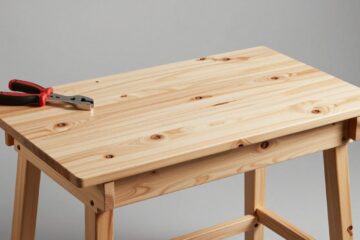
Paint-grade pine is a sensible budget option for a simple closet in a stable, dry room. It is easy to find and easy to work, but knots can bleed resin through paint, while soft earlywood dents more readily than dense latewood. Use a stain-blocking primer over knots and resinous areas; ordinary primer may not stop a brown or yellow spot from returning.
Birch plywood can make a lighter, stable slab, especially when the door is properly framed or braced. Check both faces under raking light for patches and sanding marks. Do not sand aggressively: face veneer is thin, and a small breakthrough can remain visible after painting. Plywood edges are layered, so plan to cover them with solid lipping or fill and sand them carefully.
Prep for a smooth enamel coat
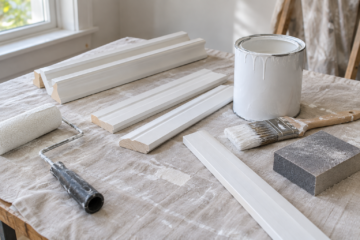
Start by checking the door for dents, raised grain, glue squeeze-out, and open joints. Sand solid wood and plywood faces with 120- to 150-grit paper, then finish around 180 grit. MDF faces need little sanding; use 180 grit lightly and avoid rounding sharp edges. Vacuum the dust and wipe with a clean, lint-free cloth. Dust left in corners or around routed details can become gritty bumps in the finish.
Prime before filling small surface defects if the filler needs a stable base, then spot-fill and sand flush. Follow the primer label for recoat time; rushing a second coat can trap moisture or leave a softer film. Sand the dry primer lightly with 220 grit and remove all dust. A high-build primer can help with minor texture, but it will not hide a dent, open joint, or uneven panel.
Apply two thin enamel coats rather than one heavy coat. A heavy coat is more likely to sag on vertical surfaces, bridge panel details, or remain tacky. Lay the door flat if practical and keep dust out of the room; otherwise paint one face at a time while the door is securely hung. Lightly sand between coats only when the coating is dry enough for sanding, using 220 to 320 grit. Check the finish under side lighting before the final coat, when defects are easiest to spot.
What to buy for a dependable result
For a smooth slab, look for a paint-grade MDF door blank with edges suited to the hardware and opening. For a solid framed door, buy clear, straight poplar for the visible rails and stiles rather than paying for stain-grade stock that will be covered. A stain-blocking wood primer is useful on pine knots and discoloration; on MDF, choose a primer compatible with fiberboard and seal the edges especially well.
For repairs, use a paintable filler intended for wood rather than a soft interior wall compound. A paintable wood filler can level small dents and nail holes, but deep voids or moving joints need a more durable repair. The cheapest material is fine when the room is dry and the door is simple; spend more on stable construction and careful preparation when a dead-flat, long-lasting finish matters.
0 Comments