What's inside
As an Amazon Associate I earn from qualifying purchases. This post may contain affiliate links at no extra cost to you.
Our Top Picks
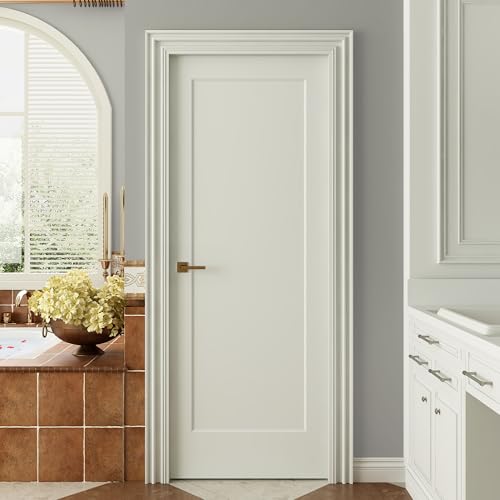 JUBEST 30"x80" 1-Panel White Primed Hollow Core Interior30x80 Inch1.38 x 30 x 80 InchesCheck on Amazon
 Kimberly Bay 6-Panel Solid Pine Unfinished Interior Door80x181.4 x 18 x 80 Inches30.8 PoundsCheck on Amazon


Best all-around choice: poplar
For a painted interior door, poplar is a practical balance of smoothness, price, and ease of machining. It is a hardwood, but it is softer and generally easier to cut and sand than oak or maple. Its fine, fairly even grain takes primer and paint without the pronounced texture you get from open-grained species. Poplar is commonly available for door components and is a sensible choice when the finish matters more than showing off the wood.
Poplar is not flawless. Its color can include green, gray, or brown streaks, which do not matter under opaque paint if the surface is properly primed. It can also dent more readily than harder woods. For a typical interior door, that is usually an acceptable trade-off; for a high-traffic door likely to take knocks, MDF or a harder wood may suit the application better.
As an Amazon Associate we earn from qualifying purchases at no extra cost to you.


Compare the common options
| Material | Paint-surface potential | Cost and workability | Best fit |
|---|---|---|---|
| Poplar | Fine grain; usually needs little grain filling | Moderate price; easy to machine and sand | Paint-grade solid-wood doors and trim parts |
| Clear pine | Can be smooth, but knots and grain may show through paint | Often cheaper; soft and easy to dent | Budget doors, especially when appearance demands are modest |
| Maple | Very fine, dense surface; can finish smoothly | Usually pricier; harder to cut and sand | Durable, higher-end paint-grade work |
| MDF | Very smooth and consistent, with no wood grain | Often economical; heavy and vulnerable to water | Flat panels or molded doors in dry interiors |
| Oak | Open pores can remain visible under paint | Hard and often costly; grain filling adds work | Usually better reserved for stained finishes |
These are general tendencies, not guarantees. Door construction matters: a door may combine a solid-wood frame with MDF or veneer panels. Check what the rails, stiles, and panel faces are made of rather than relying on the word “wood” in a product description.
When another material makes more sense
Choose maple when durability and a consistently fine surface are worth the extra material cost and effort. Its density helps it resist dents, but it is less forgiving to machine: dull cutters can burn it, and aggressive sanding can leave visible scratch marks. It still needs primer and sound paint preparation; the extra hardness does not prevent finish failure.
Pine can be a good budget choice, particularly for a simple door that will receive a light-colored paint. Inspect it for knots, resin pockets, and loose grain. Knots can bleed yellow-brown stains through paint, and soft earlywood can dent or sand lower than harder bands. Use a stain-blocking primer over knots and allow it to dry as directed before applying topcoats. If the surface is badly checked or the knots are unstable, saving money on the blank may cost more in repairs.
MDF gives the smoothest, most uniform face for a flat or molded interior door. It has no grain to telegraph through the paint, but edges absorb primer more readily than faces, so they may need extra sealing or another primer coat. Keep MDF dry: swelling at an edge or bottom rail is difficult to reverse. For bathrooms or areas that are frequently wet, choose a door material rated for that exposure rather than assuming ordinary MDF will hold up.
Oak is rarely the easiest route to a smooth painted result. Its large pores can show as small pits even after several coats. If you already have an oak door, a grain filler followed by primer can reduce the texture, but the extra labor may outweigh the cost of a paint-grade replacement.
What to check before buying
Look for straight rails and stiles, tight joints, and panels without cracks or loose veneer. Sight down the door from one corner; a twist or bow is hard to correct after hanging. On a paint-grade door, small color differences are harmless, but deep dents, raised patches, and open joints are not. Ask whether the door is solid wood, MDF, veneer, or a combination, and check its weight and hinge requirements.
For a solid-wood door, allow it to acclimate in the room for several days before finishing, following the maker’s instructions. Wood moves with changes in moisture, and painting one face while leaving the other bare can encourage uneven moisture exchange. Finish all faces and edges, including the top and bottom, while keeping paint buildup clear of hardware and hinge recesses. A ready-to-paint door is not necessarily ready to paint without sanding or priming.
Preparing for a smooth painted finish
Start with a clean, dry surface. Remove dust, grease, and handling marks; if the door has a glossy factory coating, scuff it enough to give the primer a key without cutting through the veneer. Fill small dents and nail holes with a compatible paintable filler, let it dry fully, and sand it flush. Use about 120- to 150-grit paper for leveling, then 180- to 220-grit for final sanding. Finer is not automatically better: polishing the wood too smooth can reduce primer adhesion.
Vacuum the surface and wipe away remaining dust with a clean, lint-free cloth. Apply a primer suited to the door and any problem areas. Use a stain-blocking primer for knots or suspected bleed-through; for MDF, pay particular attention to edges. After the primer dries, lightly sand raised fibers or nibs with 220-grit paper and remove the dust. Then apply two thin coats of a quality trim enamel, allowing the label’s full recoat time. Thick coats can sag on vertical panels and bridge details; thin coats are easier to control.
A good paint-grade poplar stock is a dependable starting point for a custom door or replacement parts. For the finish, choose a stain-blocking primer when knots, discoloration, or an unknown existing finish make bleed-through a concern; ordinary primer is fine on clean, unstained poplar. For hand preparation, 180- and 220-grit sanding sheets cover the final smoothing stages without removing material too aggressively.
Choose for the job, not just the species
For most new, paint-grade solid-wood interior doors, choose poplar. Pick MDF for a very smooth, stable face in a dry room, and consider maple when extra dent resistance justifies its higher cost. Pine is fine when the door is inexpensive and you can inspect and prime it carefully. Whichever material you buy, careful surface preparation and a compatible primer matter more to the final smoothness than sanding the wood to an unusually fine grit.
0 Comments