What's inside
As an Amazon Associate I earn from qualifying purchases. This post may contain affiliate links at no extra cost to you.
For painted hallway paneling, the smoothest result usually comes from a stable sheet good with a factory-sanded face—not from choosing an expensive hardwood. MDF gives the most uniform surface for a typical dry hallway. Paint-grade poplar is a better fit for solid-wood rails, stiles, and trim, while plywood makes sense where weight, fastening, or moisture exposure matters more.
As an Amazon Associate we earn from qualifying purchases at no extra cost to you.



Our Top Picks
 Maasechs 160'' L X 47'' W MDF Board160'' L X 47'' W39.76 x 3.07 x 0.47 inches22.05 poundsCheck on Amazon



Choose by panel type
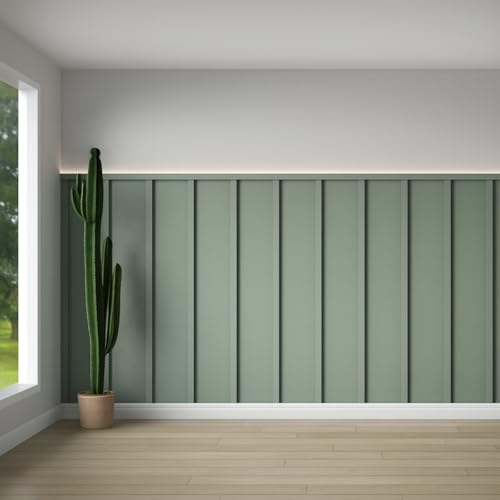
First decide whether you are installing broad panels, a frame-and-panel treatment, or narrow boards. Large flat areas reveal waviness and joints, so sheet material is often easier to make smooth. Narrow boards and trim have more edges and joints; solid paint-grade lumber can be more convenient there.
| Material | Best use | Surface and paint preparation | Main trade-off |
|---|---|---|---|
| MDF | Flat panels, applied molding, and dry interiors | Very uniform face; seal cut edges before priming | Heavy, dust-producing to cut, and vulnerable to swelling when wet |
| Paint-grade poplar | Rails, stiles, battens, and trim | Usually sands well; fill dents and inspect for green or gray color that may show through thin paint | Costs more than common softwood and can move with humidity |
| Birch plywood | Lightweight panels or areas needing better screw holding | Face veneer is smooth, but grain and veneer patches may telegraph through paint | More prep than MDF; exposed plies need filling or edge trim |
| Primed finger-jointed pine | Painted trim and narrow components | Factory primer saves a step; joints still need filling and sanding | Can dent, and joints may show if the stock moves |
Best choice for flat panels: MDF
For a dry hallway, 1/4-inch MDF is a common choice for decorative panel inserts over a sound, flat wall. It has no wood grain to raise or show through, and its face takes paint evenly after proper priming. For thicker wainscot panels or pieces that need to stay flatter during installation, 1/2-inch MDF is more rigid, but also heavier and harder to handle alone.
MDF’s weak point is water. A wet mop, plumbing leak, or damp wall can swell an unsealed edge, and that swelling usually cannot be sanded back to a clean, durable surface. Keep MDF off damp concrete and seal every cut edge, especially at the floor. If the hallway is prone to leaks or frequent wet cleaning, consider plywood or a moisture-resistant panel product rated for the location rather than assuming ordinary MDF is waterproof.
When buying, check the sheet for damage and bowing. A smooth face does not compensate for a panel that is warped or chipped at the corner. A moisture-resistant MDF panel search can help identify options, but verify the product’s actual rating and intended interior use before ordering.
When solid wood is worth it
For battens, rails, stiles, and base or cap trim, paint-grade poplar is a reliable choice. It is generally easier to get a clean, consistent finish than with knotty pine, and it cuts cleanly with sharp blades. Poplar is still wood: boards can cup or twist, and joints can open as indoor humidity changes. Buy straight stock, acclimate it in the room for a few days, and fasten it securely.
Finger-jointed pine is often cheaper and arrives primed, making it practical for straight trim in a dry hallway. Check every piece for loose joints, dents, and raised primer ridges. It is less forgiving of impacts than a harder species, so a busy corridor with bags, shoes, or furniture brushing the walls may need more frequent touch-ups.
Birch plywood is a useful middle ground when a large panel needs better screw holding or lower weight than MDF. Its face veneer can contain grain, patches, or small defects that become visible under glossy paint. For a smooth finish, fill defects and use a high-build primer; if you want a completely grain-free surface, MDF is usually the simpler route.
Prepare for a smooth paint finish
Start with the wall, not the panel. Remove loose paint, fill dents, and correct prominent bumps; paneling installed over a lumpy wall can follow those irregularities. Dry-fit pieces and leave the expansion clearance specified by the material maker. Use a level to establish the top line, since even a small slope becomes obvious along a long hallway.
Cut MDF with dust collection and a well-fitting respirator. Its fine dust spreads easily, so contain the work area and clean surfaces before painting. Sand faces lightly with 180- or 220-grit paper; aggressive sanding can leave dips or break through veneer on plywood. Seal MDF edges with a compatible primer or edge sealer, then sand them smooth after they dry. The edge often absorbs more finish than the face, so one coat may not be enough.
Use a primer suited to the substrate and paint system. Bare MDF, exposed plywood, and raw wood need primer; factory-primed trim may only need scuff-sanding and spot priming after repairs. For MDF and plywood, a water-based interior wood primer is a convenient category to compare, but follow its label for sanding time and recoating. If stains, knots, or tannin bleed are present, use a stain-blocking primer rather than relying on ordinary wall primer.
Fill nail holes and narrow seams with a paintable filler or caulk suited to the joint. Do not bridge large gaps with caulk alone; movement can crack the bead. After the primer dries, sand lightly and remove dust with a vacuum and clean cloth. Apply two thin paint coats rather than one heavy coat. A satin or eggshell finish is easier to wipe than flat paint, while gloss highlights dents and sanding scratches.
Avoid common failures
The most frequent problem with MDF is swollen, fuzzy cut edges caused by skipped sealing or moisture exposure. With plywood, it is visible grain, rough patches, or exposed plies left untreated. With solid wood, movement can print through at joints or reveal itself as small cracks. A smooth surface depends as much on careful fitting, edge sealing, and primer sanding as on the material itself.
For most dry hallways, choose MDF for broad flat panels and poplar or primed finger-jointed pine for the frame and trim. Pick plywood when weight, fastening, or moisture risk makes MDF a poor fit, and budget extra preparation for its grain and edges. That combination keeps material costs sensible without asking the paint to hide defects it cannot conceal.
0 Comments