What's inside
As an Amazon Associate I earn from qualifying purchases. This post may contain affiliate links at no extra cost to you.
Our Top Picks


What condensation changes
A painted window stool—the horizontal ledge at the bottom of a window—needs to cope with more than occasional damp wiping. Condensation can sit along its back edge, soak into joints, and expose weak spots in the paint film. The wood itself does not have to be waterproof. It does need to stay reasonably stable, accept paint well, and be dry and sound when installed.
First, check the cause of recurring water. If moisture is running down the window or pooling every morning, improve ventilation, reduce indoor humidity, or address the window leak before replacing the stool. No wood species or paint can reliably protect a ledge that stays wet. A stool with a slope toward the room and a small drip groove underneath can also help keep water from tracking back to the wall.
As an Amazon Associate we earn from qualifying purchases at no extra cost to you.


Best wood options
For most painted stools, poplar is a good balance of cost, workability, and a smooth finish. It is readily available, easy to cut and sand, and takes primer and paint well. Its main drawback is that it dents more easily than harder woods, and boards can vary in color. Since paint hides color, neither issue is usually a concern unless the stool will take heavy knocks.
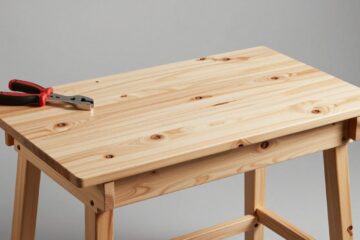
Finger-jointed pine is often the budget choice for interior trim. It is usually straight and stable, and its joints are less prone to the large knots found in some solid pine boards. Choose a piece with sound, well-bonded joints and no soft, damaged sections. Ordinary pine can work too, but knots may bleed through paint unless properly sealed, and resin can cause localized finish failure.
For a more dent-resistant surface, consider maple or birch. These are harder, but they cost more and can be less forgiving to cut and fasten. Their extra hardness does not make them immune to swelling or paint failure if water gets into an unsealed edge. MDF is smooth and inexpensive, but standard MDF is a poor choice where condensation repeatedly reaches an exposed edge. Moisture-resistant MDF is better, not waterproof; keep every cut edge sealed and avoid it where water regularly pools.
| Material | Strengths | Risks near condensation | Best fit |
|---|---|---|---|
| Poplar | Smooth, easy to cut and paint | Dents more readily than maple | Most painted replacement stools |
| Finger-jointed pine | Affordable, often straight | Joint or knot defects; inspect the board | Budget trim in a reasonably dry window |
| Maple or birch | Harder surface; resists dents | Higher price; still needs sealed edges | High-traffic ledges where durability matters |
| Moisture-resistant MDF | Very smooth and paint-ready | Cut edges can swell if water gets in | Dryer locations or carefully sealed installations |
For a typical painted interior stool, start with paint-grade poplar board. If you want the least expensive option and the ledge does not stay wet, finger-jointed pine trim board is a reasonable alternative.
Choosing and installing the board
Buy straight, dry stock with no cracks, loose joints, or soft spots. Avoid boards that are visibly cupped or twisted; paint will not flatten them. If the wood feels damp or has been stored outdoors, let it acclimate indoors before cutting. A thick stool can resist flexing, but choosing a thicker board is not a substitute for sound support beneath it.
Fit the stool so water cannot collect against the window. Where the design allows, a slight fall toward the room—about 1/8 inch across a 6-inch depth—is enough to encourage drainage without looking noticeably sloped. Keep the back joint tight and seal it with a paintable, flexible sealant after the primer and paint have cured as directed. Do not block drainage openings in the window frame.
For a bonded joint, use an adhesive rated for interior trim and the expected moisture exposure, then fasten the stool mechanically where appropriate. Glue does not make an open joint waterproof. If replacing an old stool, investigate staining, softness, or a musty smell before covering the area; hidden wet framing should be repaired first.
Prepare and paint for damp wiping
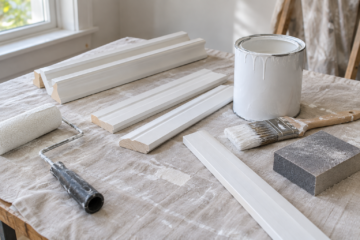
Sand solid wood smooth, usually beginning around 120 grit and finishing at 150 or 180 grit. Remove dust, then prime all faces you can reach, including the underside and especially the front and back end grain. End grain absorbs finish quickly, so it may need an extra primer coat. On pine knots or resinous areas, use a stain-blocking primer suited to the product label; a general-purpose primer may not prevent yellow-brown bleed.
For MDF, seal cut edges carefully with an appropriate primer or edge sealer, following the label. Those edges are the weak point: once swollen, MDF rarely returns to its original smooth shape. If the ledge is exposed to frequent condensation, solid poplar or a suitable hardwood is generally a safer choice.
Use a quality interior trim enamel rather than wall paint. A waterborne acrylic or urethane-modified enamel is a practical option for a washable, hard-wearing finish. Apply two thin coats over primer rather than one thick coat, and respect the stated recoat and cure times. Paint can feel dry long before it has reached full hardness, so avoid standing water and heavy cleaning during the cure period. For a suitable waterborne trim enamel, check the label for interior use and scrub resistance.
Common failures to avoid
Peeling paint usually starts where water enters: an unprimed end, a cracked joint, or a gap along the window. Bubbling or a soft, raised edge on MDF points to swelling beneath the coating. Yellow spots around pine knots indicate stain bleed, not ordinary dirt. Sanding and repainting without fixing the source of moisture often brings the same damage back.
Once the stool is installed, wipe away standing water and check the back seam periodically. Touch up chips before moisture gets under the paint. If condensation is frequent enough to leave puddles, fix the moisture problem first; for the replacement, choose solid paint-grade wood, seal every face and cut edge, and keep joints intact.
0 Comments