What's inside
As an Amazon Associate I earn from qualifying purchases. This post may contain affiliate links at no extra cost to you.
For painted kitchen cabinet frames in a high-traffic room, poplar is usually the best balance of price, workability, and paint performance. Hard maple is the tougher upgrade when doors and frame edges will take repeated abuse. Paint-grade MDF can produce the smoothest finish on flat panels, but it is a poor choice for every part of a cabinet frame, especially near sinks and dishwashers.
As an Amazon Associate we earn from qualifying purchases at no extra cost to you.


Our Top Picks
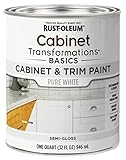
 Rust-Oleum Cabinet Transformations & Trim Paint32 Fl Oz (Pack of 1)4.25 x 4.25 x 4.9 InchesCheck on Amazon
 Giani Nuvo All-In-One Cabinet Paint Kit62 Fl Oz (Pack of 1)9.25 x 8.25 x 7.25 inches3 PoundsCheck on Amazon

Best wood species for painted cabinet frames
Cabinet frames are commonly built from narrow rails and stiles, often about 1 1/2 to 2 1/2 inches wide. The material needs to machine cleanly, hold screws and glue, remain reasonably stable, and accept primer without excessive bleeding or fuzzing.
| Material | Best use | Advantages | Limitations |
|---|---|---|---|
| Poplar | Most face frames and paint-grade parts | Affordable, stable, easy to machine, good paint adhesion | Soft; dents and bruises more easily than maple |
| Hard maple | High-wear frames and exposed edges | Dense, durable, tight-grained, holds a crisp edge | More expensive; can show glue or machining marks under paint |
| Paint-grade birch | Budget-conscious frames and small parts | Harder than poplar, widely available, relatively economical | Can have uneven color and blotchy end grain; less predictable than maple |
| Clear pine | Low-cost utility cabinets | Cheap and easy to find | Soft, resinous, prone to dents, knots, and movement |
| MDF | Flat panels, skins, and selected trim | Very smooth, uniform, and free of wood grain | Swells when wet; weak screw-holding compared with solid wood |
Paint-grade poplar boards are the sensible default for most face frames. Poplar is soft enough to cut and sand quickly, but it is considerably more dependable than pine. Green, gray, or purple streaks are common in poplar. They do not usually matter beneath opaque paint, although a high-build primer is still useful.
Choose hard maple when the frame will see frequent contact from chairs, bags, children, or cleaning equipment. Maple resists dents and holds a sharp outside corner better than poplar. The trade-off is cost and effort: it takes longer to sand, and machining burns or torn grain can remain visible after painting.
Where MDF helps, and where it fails
MDF is excellent for flat center panels, applied moldings, and narrow decorative strips. Its factory-smooth face needs little filling, and it has no grain telegraphing through the paint. It is often the cheapest way to get a flawless painted panel.
Do not treat MDF as a universal substitute for solid wood in a sink-area face frame. Unsealed edges can absorb water and swell permanently. MDF also has weaker screw-holding capacity, particularly at edges. If you use it for a frame, keep it dry, seal every cut edge, and use a construction designed around glue and mechanical reinforcement rather than relying on short screws alone.
For a mixed-material cabinet, a practical arrangement is poplar or maple for the rails and stiles, MDF for flat panels, and plywood for cabinet boxes. That combination puts each material where its strengths matter.
Buying, acclimating, and joining the frame
Buy straight, flat stock with no loose knots, deep checks, or damaged edges. For a face frame, select boards at least 3/4 inch thick after milling. Wider boards are not automatically better; narrow, straight strips are often more stable and easier to keep flat.
Store lumber indoors on stickers or a flat surface for several days before machining. Kitchen materials should be close to the room’s normal moisture level. Wood that is installed while unusually wet can shrink at joints later, producing visible seams through the paint.
Use a quality interior woodworking glue for normal cabinet joints. A face-frame joint should have clean, close-fitting surfaces; glue will not compensate for a gap. Pocket screws, loose tenons, dowels, or biscuits can all work when sized correctly. Keep squeeze-out off the visible face, because dried glue prevents primer from soaking into the wood and can create shiny, unpainted spots.
Do not flood joints with water to clean glue. A damp cloth can spread glue into the surrounding grain. It is better to scrape or pare away squeeze-out after it gels, then sand the area. On maple especially, glue residue is easy to see once the paint is applied.
Surface preparation that prevents paint problems
Start with fresh 120-grit abrasive to remove mill marks, then progress to 150 or 180 grit. Sanding much finer than 180 grit can burnish the surface and reduce primer adhesion. Break sharp outside corners with a light pass; a tiny radius is less likely to chip than a knife edge.
Fill nail holes and small defects with a paintable wood filler. For larger defects or open end grain, use a two-part filler or a suitable high-build surfacer. Let repairs dry fully before sanding flush. End grain on rails and stiles absorbs primer faster than the face, so expect at least two primer coats there.
Vacuum thoroughly, then wipe with a clean, lint-free cloth. Avoid silicone-containing cleaners, furniture polish, and oily rags. Contamination can cause fisheyes, craters, or areas where paint pulls away.
Use a stain-blocking shellac-based wood primer when poplar has strong discoloration, pine has knots, or repairs contain resin. For clean maple or poplar, a quality waterborne bonding primer is usually more pleasant to use and produces less odor. Sand the first primer coat lightly with 220 grit before the finish coats.
Paint selection for a busy kitchen
Use a cabinet-rated acrylic-alkyd or waterborne urethane enamel rather than ordinary wall paint. These coatings level better, resist blocking when doors close, and tolerate repeated cleaning. Apply two thin finish coats instead of one heavy coat. Heavy coats sag, remain soft longer, and collect dust.
A smooth finish depends more on preparation and application than on choosing the hardest wood. Brush marks and orange peel usually come from overworking paint, using the wrong roller, or recoating before the surface has dried. Follow the product’s recoat time and allow several days of gentle use after the final coat; full hardness can take longer.
Fine-finish cabinet rollers can work well on face frames when used with light pressure. Spraying gives the most uniform result but requires masking, ventilation, and careful thinning or tip selection. In a high-traffic kitchen, a slightly tougher maple frame with properly primed poplar trim is often a better investment than expensive paint applied over poorly prepared wood.
0 Comments