What's inside
As an Amazon Associate I earn from qualifying purchases. This post may contain affiliate links at no extra cost to you.
Our Top Picks
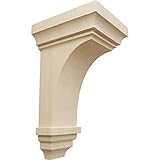
 Ekena Millwork COR03X08X13TSRW Boston Traditional Scroll Wood Corbels3 7/8"W x 8"D x 13"H8 x 3.9 x 13 inches4.25 poundsCheck on Amazon
 Ekena Millwork CORW05X05X10JERW Medium Jefferson Wood Corbels5-in. W x 5.75-in. D x 10-in. H5.75 x 5 x 10 inches2 poundsCheck on Amazon
 Ekena Millwork BKT03X05X07HARW Hamilton Traditional Wood Brackets3-in. W x 5-in. D x 7-in. H0.85 poundsCheck on Amazon


What matters in a painted corbel
For a decorative corbel that will be painted, choose wood that is stable, reasonably smooth, and easy to machine—not wood with an attractive grain. Paint hides color and much of the grain, but it does not hide dents, glue lines, open knots, or movement cracks. Those defects can show through the finish or weaken a carved profile.
For most indoor corbels, poplar is the best balance of cost and finish quality. Soft maple is a harder, cleaner upgrade; pine is a workable budget choice when the design is simple and the stock is dry and clear. If the corbel will support a shelf or countertop, select stock and fasteners for the load as well as the paint finish. A decorative shape is not a substitute for sound mounting.
As an Amazon Associate we earn from qualifying purchases at no extra cost to you.



Wood choices at a glance
| Wood | Typical strengths | Paint-related drawbacks | Best use |
|---|---|---|---|
| Poplar | Fine, fairly even texture; easy to cut and sand; usually affordable | Can dent; green or gray streaks may need extra primer | Most painted indoor corbels |
| Soft maple | Hard, stable, smooth surface; holds crisp details | Costs more and can be harder on cutters | Detailed work or edges exposed to bumps |
| Clear pine | Inexpensive and widely available | Knots, resin, and soft earlywood can telegraph through paint | Simple, low-cost corbels made from carefully selected stock |
| Paint-grade hardwood or plywood | Can be dimensionally stable and efficient for layered shapes | Quality varies; edges and plies need careful filling and sealing | Built-up designs or repeated parts |
Why poplar is the usual pick
Poplar machines cleanly with sharp tools and has a relatively fine texture, so it takes primer and paint without the deep grain valleys common in open-grained woods. It is also easy to shape into curves and small details without paying for a premium hardwood that will be covered. Look for straight, dry boards without pith, loose knots, or cracks near the intended profile.
Poplar can have green, purple, or gray streaks. These are mostly a color issue under opaque paint, but some discoloration or resinous areas can bleed through if they are not sealed. On a white finish, spot-prime suspect areas with a stain-blocking primer, then apply a full primer coat. Do not assume a thick topcoat will solve bleed-through; it often returns after drying.
For a straightforward indoor project, compare local stock with poplar boards sold online, but check the listed dimensions, grade, and shipping cost. Long or wide boards can arrive bowed, and online pricing is not always competitive once shipping is included.
When another material makes sense
Choose soft maple when the corbel has fine carving, narrow edges, or a high chance of being knocked. It holds details well and resists dents better than poplar, but the extra hardness makes cutting slower and can burn if a cutter is dull or fed too slowly. For a simple bracket painted white, that added cost may not buy much.
Pine is fine for a small, uncomplicated corbel if you can select clear, straight-grained stock. Avoid knots in the face and near thin projections: knots can loosen, leak resin, or remain visible as a hard spot under paint. Pine’s alternating hard and soft growth rings also make sanding uneven. A sanding block helps keep the surface flat rather than digging into the softer bands.
Paint-grade plywood can be useful for corbels assembled from layers, particularly when consistent thickness matters. Use a good-quality panel with a smooth face veneer, and plan to fill and seal exposed edges; the plies can absorb paint differently and may leave a striped edge. For solid carved profiles, plywood is usually a poor choice because cutting through the face veneer exposes layers.
Buying and preparing the blank
Buy stock thicker and wider than the finished part so you can remove defects and leave enough material for shaping. For a small decorative corbel, ¾-inch stock may work; larger or projecting designs may need 1½-inch stock or a laminated blank. Follow the drawing and intended mounting method rather than relying on thickness alone. Check each board on a flat surface for twist, bow, and cup, and reject pieces with checks that run into the profile.
For a pair, cut both blanks from the same board when possible. Similar grain and moisture history reduce the chance that one part moves or finishes differently. If laminating, use a quality interior woodworking glue compatible with the project, spread it evenly, and clamp until the glue maker’s stated time. Scrape squeeze-out before it hardens; dried glue resists stain-blocking primer and can leave a shiny patch.
Surface preparation and paint
Shape the corbel, then sand in stages: about 80 or 100 grit to remove tool marks, 120 or 150 to refine the surface, and 180 before priming. Use 220 grit lightly between primer coats if the surface feels rough. Going much finer before priming can burnish some areas and reduce primer bite; the goal is an even surface, not a polished one.
Fill pinholes and small gaps with paintable wood filler, let it dry fully, and sand it flush. Seal knots, resin spots, and questionable poplar streaks with a stain-blocking primer. Then apply a compatible primer over the whole part, followed by two thin finish coats rather than one heavy coat. Heavy paint can soften crisp edges, pool in inside corners, and sag on the underside of a curved detail.
For a smooth finish, a stain-blocking wood primer is a useful category to consider, especially under light-colored paint. Let each coat dry as directed before sanding or recoating. Paint can feel dry to the touch long before it reaches full hardness, so avoid tight clamping or installation pressure until the finish has cured.
If the corbel is outdoors
Exterior corbels need weather-resistant stock, protected end grain, and an exterior-rated primer and paint. Poplar is generally a poor choice where it will get wet repeatedly; use a suitable durable species or a rated exterior product instead. Seal every face, especially end grain and cutouts, and keep water from collecting on horizontal surfaces. Even good paint will fail early if the wood stays damp or water enters through an unsealed joint.
0 Comments