What's inside
As an Amazon Associate I earn from qualifying purchases. This post may contain affiliate links at no extra cost to you.
For a painted slatted room divider, choose straight, dry stock with a smooth face—not a prized decorative species. Poplar is a strong all-around choice for indoor projects: it machines cleanly, stays reasonably stable, and takes primer and paint well. Pine costs less and is easy to find, but knots and resin pockets can bleed through a light finish. If the divider will be handled often or needs a harder surface, consider paint-grade maple, accepting the higher cost and more demanding sanding.
As an Amazon Associate we earn from qualifying purchases at no extra cost to you.


Our Top Picks
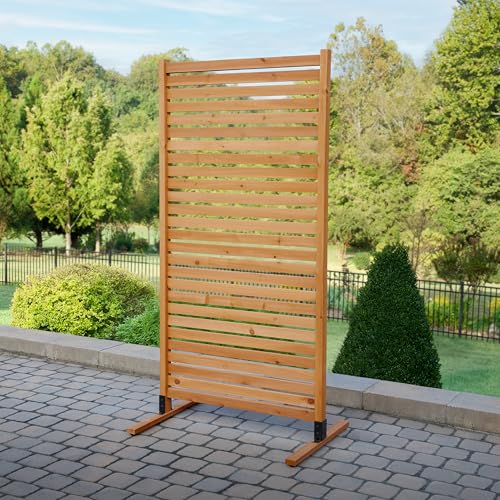 Enclo Slatted Freestanding/Surface Mounted Privacy Screen73.5in H x 36in W73.5 x 36 x 0.1 inches27.5 PoundsCheck on Amazon


Choose by priority
The best choice depends on whether you value price, paint appearance, or dent resistance. For a typical interior divider, buy kiln-dried lumber with straight grain and few knots. Check every slat along its length: a board that twists or bows slightly can make the finished screen look uneven, and paint will not correct it.
| Wood | Best for | Trade-offs | Typical preparation |
|---|---|---|---|
| Poplar | A smooth, opaque painted finish | Costs more than construction pine; can dent under impact | Sand to 150–180 grit, prime, then paint |
| Pine | Lower-cost indoor dividers | Knots, resin, and uneven grain can show through paint | Sort carefully; seal knots and use a bonding primer |
| Paint-grade maple | A harder, durable surface | Usually more expensive; dense areas can show sanding scratches | Sand evenly and use a primer suited to hardwood |
| MDF | Uniform, flat slats in a dry room | Heavy; edges absorb paint and swell if exposed to water | Seal cut edges, prime all faces, avoid damp locations |
Poplar: the reliable paint-grade pick
Poplar is easy to cut and rout, and its relatively fine texture makes it a forgiving choice for narrow slats. It is commonly sold in paint-grade sizes, so you can spend less time hiding knots and uneven grain. Its greenish or gray streaks do not matter under an opaque finish, but they can complicate a translucent stain.
Poplar is not dent-proof. If the divider sits in a busy hallway where bags, toys, or furniture will strike it, thicker slats or a harder hardwood may hold up better. For a room divider that is mostly stationary, poplar is usually a sensible balance of workability and finish quality.
Pine: a good budget option with extra sorting
Pine is fine when price matters and the divider is for a dry, low-impact space. Choose clear or select boards where possible. Reject slats with loose knots, visible resin, pronounced bowing, or large changes in grain. Knots can bleed yellow-brown color through paint, while resin may soften or interfere with the finish.
Before painting pine, spot-prime knots with a stain-blocking primer; ordinary wall primer may not stop them. For widespread knots or resin marks, use a stain-blocking primer over the whole surface. If you are using inexpensive construction lumber, allow it to acclimate indoors for several days and inspect it again before cutting. Wet or freshly stored boards can shrink and warp after assembly.
When maple or MDF makes sense
Paint-grade maple is worth considering when slats will be touched, bumped, or cleaned frequently. It is harder than poplar, but dense wood rewards careful sanding: coarse scratches can remain obvious beneath paint, especially under a satin sheen. Keep the final sanding consistent rather than jumping straight from rough grit to a very fine grit.
MDF gives you a uniform face without knots or grain, and it can be inexpensive for a painted divider. Its weakness is moisture: water can swell exposed edges, and the material is heavier than solid wood. Use it only in a dry room, seal every cut edge, and support long, narrow pieces well. For a freestanding divider that may be moved, solid wood is often easier to repair and less prone to edge damage.
Buy stock that stays straight
Slats amplify small defects because you see many parallel lines at once. Sight down each board from both ends and check for bow, cup, and twist. Buy a few extra pieces so you can reject one that moves after cutting. For a divider around 6 feet tall, slats roughly 1½ to 2½ inches wide are common, but the best width depends on the frame and the spacing you want. Keep spacing consistent with a spacer block rather than measuring every gap separately.
For a painted project, a paint-grade poplar board selection is a practical starting point. If choosing pine, look for select kiln-dried pine rather than knotty boards intended for rough framing.
Prep and paint without hiding defects
Cut and dry-fit the slats before finishing. Sand faces and edges to about 150 or 180 grit; going much finer can reduce primer adhesion on some products. Break sharp edges lightly with sandpaper so paint does not form a thin, fragile film at corners. Remove dust with a vacuum and a clean, lint-free cloth.
Prime bare wood before topcoating. For knotty pine, use a dedicated stain-blocking primer on knots or the full surface if discoloration is widespread. For poplar or maple, choose a primer labeled for wood and compatible with your chosen paint. A stain-blocking wood primer is the safer category when knots or tannin-like discoloration are a concern. Follow the label for drying and recoating times; rushing can lead to poor adhesion or a soft finish.
After the primer dries, sand lightly with 220 grit to knock down raised grain and dust nibs, then clean the surface. Apply two thin paint coats rather than one heavy coat. Paint every side of each slat, including ends, to reduce uneven moisture uptake. Let the finish cure for the time stated on the can before installing or stacking pieces—dry to the touch does not mean hard enough to resist dents.
Avoid the common failures
Paint will not straighten a warped slat, hide a knot permanently, or fill deep planer marks. Fix those problems before assembly: replace badly bent stock, seal knots, and sand visible defects flat. Do not rely on a thick coat to cover rough grain; it can leave drips between closely spaced slats and still reveal scratches after drying.
For most indoor painted dividers, buy poplar if you want the least fussy solid-wood finish, pine if you can inspect and sort it, and maple if durability justifies the added expense. MDF is a reasonable low-cost alternative for a dry location, provided its edges are sealed and its weight suits the design.
0 Comments