What's inside
As an Amazon Associate I earn from qualifying purchases. This post may contain affiliate links at no extra cost to you.
Our Top Picks


What Makes a Good Painted Bookcase
For a smooth painted bookcase, the best material is usually one with a uniform surface, few defects, and no open grain that will show through the finish. Paint hides color differences, but it does not hide dents, loose fibers, uneven joints, or a rough edge. Those defects often become more visible after primer and paint.
For most indoor bookcases, the practical choices are paint-grade plywood, medium-density fiberboard (MDF), and poplar. Pine can work, especially when it is inexpensive or already available, but its soft areas, knots, and uneven grain require more preparation. Solid hardwoods such as maple make excellent furniture but cost more than necessary for a painted shelf.
As an Amazon Associate we earn from qualifying purchases at no extra cost to you.

Best Materials Compared
| Material | Surface smoothness | Strength and stability | Best use | Main drawback |
|---|---|---|---|---|
| MDF | Very smooth faces; fuzzy cut edges | Heavy and stable, but sags over long spans | Fixed shelves, sides, and painted panels | Dusty to cut; edges need sealing |
| Paint-grade plywood | Smooth face, but may have patches or thin grain | Strong, lighter, and resists sagging better | Freestanding bookcases and long shelves | More expensive; edges need filling |
| Poplar | Fine, closed grain and easy to sand | Strong enough for most small furniture | Face frames, trim, and solid-wood parts | Costs more than pine; can dent |
| Pine | Variable grain with knots and soft spots | Light, but moves more with humidity | Budget projects and rustic designs | Knots and grain can telegraph through paint |
| Birch plywood | Generally smooth and uniform | Strong and stable | Higher-quality painted carcasses | More costly than construction plywood |
MDF Versus Plywood
MDF is often the easiest route to a factory-smooth painted surface. Its face has no grain, so it needs less filling than wood. A 3/4-inch panel works well for bookcase sides and shelves, and 1/2-inch MDF is suitable for a nailed or screwed back panel. The cut edges are porous, however. If they are painted without preparation, they absorb primer unevenly and remain visibly rough.
Seal MDF edges with a dedicated MDF edge sealer or high-build primer. Sand lightly after it dries, then apply another coat if the edge still looks fuzzy. MDF is also heavy: a full-size bookcase can become awkward to move. It is not the best choice where the unit will be exposed to damp floors, wet cleaning, or frequent spills. Moisture can swell an unsealed edge permanently.
Paint-grade plywood is the better structural choice for wide shelves or a tall bookcase that will be moved. Use cabinet-grade or furniture-grade plywood rather than roof sheathing or rough construction panels. Look for a face labeled A or B, with minimal patches and no voids near the edge. Plywood edges show alternating layers, so cover them with solid-wood edge banding, iron-on veneer, or a strip of poplar. Filling the layers with several coats of primer is possible, but it takes more work and can still look uneven.
For a small child’s bookcase, MDF is fine when the shelves are relatively short and the edges are carefully sealed. Choose plywood when shelves will exceed about 30 inches, when the bookcase must stay lighter, or when you want better screw-holding and impact resistance.
When Solid Wood Makes Sense
Poplar is one of the best solid woods for a painted project. It has a fairly fine texture, machines cleanly, and accepts water-based primer well. It is a useful choice for face frames, shelf fronts, legs, and trim. Poplar can have green or purple areas, but those colors disappear under opaque paint.
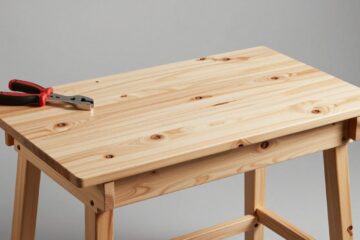
Pine is cheaper and perfectly adequate for a simple children’s bookcase if you select straight, clear boards. Avoid large knots, resin pockets, and boards that already cup or twist. Knots can bleed brown through paint, especially with white or pale colors. Spot-prime knots with a stain-blocking primer before priming the whole piece. If the budget is tight, using MDF for the broad panels and pine or poplar only for trim is a sensible compromise.
Surface Preparation for a Smooth Finish
Start by cutting accurately. A clean cut reduces the amount of filler needed. Break sharp exposed corners with a few passes of 150-grit sandpaper; a tiny 1/16-inch roundover is less likely to chip than a knife edge. Do not heavily round shelf fronts, because that makes them harder to paint evenly.
Fill screw holes, dents, plywood patches, and open joints with a paintable interior wood filler. Let it dry fully, then sand it flush with 180-grit paper. For MDF edges, sand first with 150 grit, seal the edge, and sand again with 180 or 220 grit. Avoid polishing the faces to a very fine grit before priming; primer adheres better to a surface with slight tooth.
Remove dust with a vacuum and a slightly damp lint-free cloth. Do not flood MDF or plywood with water. Dust left in corners will create bumps under the finish, especially on horizontal shelves where light hits at a low angle.
Primer and Paint Choices
Use a water-based acrylic or acrylic-alkyd system for most children’s furniture. It has lower odor than solvent-based products and cleans up with water, but it still needs ventilation. A water-based bonding primer is suitable for clean, sanded wood and previously painted surfaces. Use an oil-based or shellac-based stain-blocking primer only where knots, resin, or persistent discoloration are likely; these products smell stronger and require more careful ventilation.
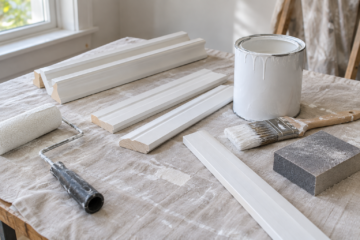
Apply one full primer coat, sand raised fibers with 220 grit, remove dust, and apply a second coat to porous MDF edges or patched areas. Two thin finish coats are more reliable than one heavy coat. A satin or semi-gloss cabinet, trim, or furniture paint is easier to wipe clean than flat paint. Satin usually hides minor surface flaws better than semi-gloss.
A small microfiber or fine-foam roller produces a smoother result than a coarse roller. Brush corners and edges first, then roll large panels while the brushed paint is still wet. Keep coats thin enough that they do not pool at shelf edges. Respect the label’s recoat time; painting too soon can leave soft paint, roller marks, or fingerprints.
Safety and Curing
Sand MDF and plywood with dust collection and wear a properly fitted particulate respirator. Keep children away during cutting, sanding, and painting. Even low-odor paint can release vapors while curing, so ventilate the room and follow the product label.
Paint that feels dry is not necessarily hard. Allow at least several days before loading the shelves, and longer if the room is cool or humid. Do not place books against a freshly painted back panel until the coating has hardened, or they may stick to it. Finally, anchor a tall bookcase to a wall stud or suitable wall hardware. A smooth finish matters, but preventing a tip-over matters more.
0 Comments