What's inside
As an Amazon Associate I earn from qualifying purchases. This post may contain affiliate links at no extra cost to you.
A kitchen toe kick is exposed to shoe scuffs, mop water and occasional spills, so the best wood is usually the one that stays flat and takes paint reliably—not the most expensive species. For a painted, removable toe-kick board, poplar is a strong all-around choice. Primed MDF can cost less and give a smoother face, while plywood is worth considering where moisture or frequent removal is a concern.
As an Amazon Associate we earn from qualifying purchases at no extra cost to you.


Our Top Picks
 Lieeres Cabinet Toe Kick Curved Corner Trim5.5"W x 4.5"H x 0.75"D0.75 x 5.5 x 4.5 Inches1 poundsCheck on Amazon


Choose for the job
First check how the toe kick will be installed. A separate board clipped or screwed to the cabinet can be removed for cleaning or repairs. A board fixed directly to cabinet sides needs accurate sizing and a finish that can tolerate floor-level moisture. Measure the opening at both ends and the middle; cabinets and floors are not always perfectly straight. Leave a small clearance above the finished floor rather than wedging the board against it.
For most dry kitchens, use paint-grade poplar if you want solid wood, or paint-grade MDF if you want a smooth, economical panel. Choose plywood when the board may get wet or needs to resist damage during repeated removal. Avoid relying on paint alone to protect a material that will sit in standing water.
Toe-kick material comparison
| Material | Advantages | Trade-offs | Best use |
|---|---|---|---|
| Poplar | Stable, easy to cut, holds fasteners well and paints cleanly with proper priming. | Costs more than MDF; dents and raised grain need sanding. | Solid-wood board in a typical kitchen. |
| MDF | Inexpensive, flat and smooth; no grain to show through paint. | Swells badly if water reaches an edge; screws near edges can cause splitting or bulging. | Dry area, protected edges, and a simple painted panel. |
| Paint-grade plywood | Stronger than MDF for its weight and less vulnerable to brief moisture exposure. | Edges show plies and need filling; face veneer can have patches or grain. | Removable panels or kitchens where damp mopping is common. |
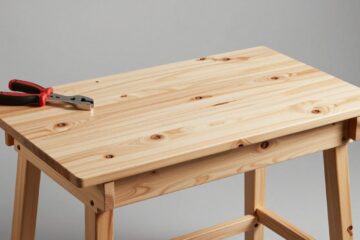
| Pine | Often readily available and inexpensive. | Knots, resin and soft grain can telegraph through paint or dent. | Budget projects when you can select straight, knot-free stock. |
Why poplar is a dependable default
Poplar is a hardwood, but it is comparatively easy to work and commonly sold as paint-grade trim stock. Its grain is less pronounced than pine’s, and it generally stays more predictable than a wide, inexpensive solid-wood board. Select straight stock without large knots, cracks or a pronounced bow. A board that rocks on a flat surface is likely to be troublesome once installed.
Poplar can have green or gray streaks. Those colors are not a defect for an opaque finish, but they can show through weak primer or thin paint. Sand the faces with 120- or 150-grit paper, then finish with 180 grit. Do not polish the surface to a very fine grit; that can reduce primer grip. Fill small dents and nail holes with a paintable filler, then sand them flush.
When MDF is the better buy
MDF is a sensible cheaper option for a straight, low-impact toe kick in a kitchen without recurring leaks. Its smooth face needs little prep, and the lack of wood grain gives a clean painted finish. The vulnerability is the edge: an unsealed MDF edge can wick up mop water, swell and remain rough even after it dries.
Seal every cut edge and exposed face before installation. Use a primer labeled for MDF or a high-quality bonding primer, and follow its coverage and drying directions. Pay special attention to the bottom edge and corners. If the toe kick sits where water routinely pools, choose plywood or solid wood instead; a bead of caulk cannot make an unsuitable panel waterproof.
Plywood and pine: useful alternatives
Paint-grade plywood is a practical middle ground when toughness matters more than a perfectly seamless face. Use a fine-sanded panel and inspect both sides for patches or voids. Fill visible defects and the exposed plies with paintable filler or edge compound, then sand smooth. Plywood can still delaminate or swell after prolonged soaking, so prime and paint it on all sides before fitting where possible.
Pine is fine if the board is straight and the knots are small and sound. Knots may bleed resin or discolor the paint, particularly under a pale finish. Spot-prime knots with a stain-blocking primer, then prime the whole board. If you do not want to manage knots and grain, the time saved by choosing poplar or MDF can be worth more than the lower price of pine.
Prep and paint for floor-level wear
Before painting, check the board’s fit and mark the top and bottom so the finished piece goes back in the right place. Ease sharp edges lightly with sandpaper; paint tends to cover a slightly softened edge better than a knife-sharp one. Remove dust with a vacuum and a clean cloth. For glossy factory-coated stock, scuff-sand until the sheen is dull and use a bonding primer.
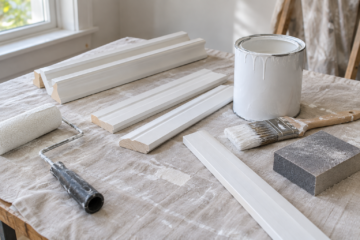
Apply primer to the front, back, ends and cut edges. Let it dry as directed, then sand lightly with 180- or 220-grit paper to remove raised fibers and nibs. Apply two thin coats of durable trim enamel rather than one heavy coat. A water-based trim enamel is easy to clean up and is suitable for many kitchens; choose a product rated for trim and follow its recoat time. Keep the panel off the floor until the finish has cured enough to resist sticking and scuffing.
For MDF or plywood, a primer intended for MDF and wood can help seal porous edges and improve adhesion. If the paint manufacturer specifies a different primer, use that system rather than mixing products at random.
Buying and installation checks
Match the board thickness to the cabinet opening and existing toe-kick detail; common trim stock is often around 1/4 to 3/4 inch thick, but the actual clearance matters more than a standard size. For a removable panel, use cabinet clips or screws placed where they can be reached. Predrill solid wood near the ends, and avoid overtightening MDF screws. If the board must be fastened near a damp floor, keep fasteners and cut ends sealed.
Buy the straightest piece you can find and check the surface under side lighting for dents and rough patches. A few minutes of selection and edge sealing usually matter more than upgrading to a premium species. For a dry, straightforward repaint, MDF is a reasonable budget choice. For a durable solid-wood toe kick with fewer finishing surprises, choose poplar; for greater tolerance of occasional dampness, use sealed paint-grade plywood.
0 Comments