What's inside
As an Amazon Associate I earn from qualifying purchases. This post may contain affiliate links at no extra cost to you.
A painted kitchen valance does not need an expensive hardwood. The best material is usually the one that stays flat, has predictable edges, and accepts primer without showing distracting grain. For most indoor valances, that means poplar, MDF, or a good-quality paint-grade plywood—not oak or maple.
As an Amazon Associate we earn from qualifying purchases at no extra cost to you.

Best Overall: Poplar
Poplar is the safest all-around choice for a solid-wood painted valance. It is stable, easy to cut, widely available, and usually less expensive than clear maple or cherry. Its tight, fairly smooth grain takes primer and enamel well, especially after sanding.
Poplar is also easy to shape if the valance has routed edges, end details, or small decorative parts. The main drawback is its green, gray, or purple streaking. Those colors are not a problem under a proper primer, but they can bleed through thin white paint if the surface is poorly sealed.
Use boards that are straight and free of large knots. For a simple face valance, 1/2-inch or 3/4-inch poplar is typical. A thicker board looks more substantial but adds weight, which matters if the valance is attached to a lightweight blind headrail or cabinet underside.
MDF Versus Paint-Grade Plywood
MDF is often the smoothest and most economical option for a flat painted valance. Its uniform fibers have no wood grain, so the finished face can look exceptionally smooth. It is easy to cut with ordinary woodworking tools and works well for rectangular valances, shaker-style parts, and routed profiles.
The weaknesses are significant in a kitchen. MDF swells when water reaches an unsealed edge, and swollen fibers cannot be sanded back to their original condition. It is also heavy and produces fine dust when cut. Use MDF when the valance will stay dry and all faces, edges, and cutouts can be sealed.
Paint-grade plywood is a better choice where weight, screw holding, or occasional humidity matters. Choose a panel with a smooth face and minimal core voids. Cheap construction plywood may have open grain, chipped plies, and football-shaped patches that remain visible after painting. Those panels are fine for hidden mounting cleats, but they often create extra filling work on visible surfaces.
| Material | Best use | Advantages | Common failure |
|---|---|---|---|
| Poplar | Most painted valances | Stable, easy to machine, good paint base | Color can show through weak primer; may dent |
| MDF | Flat, highly smooth indoor parts | No grain, inexpensive, clean-looking finish | Edges swell from moisture; heavy |
| Paint-grade plywood | Long spans and stronger mounting | Lighter than MDF, better screw holding | Voids and rough plies on cheap sheets |
| Pine | Budget projects and rustic designs | Cheap and widely available | Knots, resin, dents, and uneven grain telegraph through paint |
| Oak or maple | Only when matching existing trim | Hard and durable | Visible grain requires substantial filling |
When Pine Is Fine
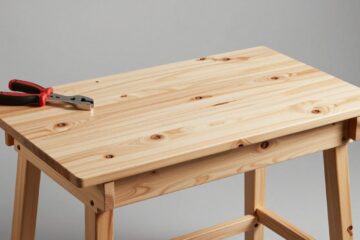
Clear, knot-free pine is acceptable when price is the priority or when you want the grain to remain slightly visible beneath the paint. It is not the best shortcut for a dead-smooth white finish. Pine moves more with humidity than MDF or poplar, and soft areas can dent during installation.
Knots are the bigger issue. Resin can bleed through ordinary latex primer, creating yellow or brown spots months later. If you use pine, let the boards acclimate indoors for several days, reject warped pieces, and seal knots with a stain-blocking shellac- or solvent-based primer before applying the general primer.
Surface Preparation Before Painting
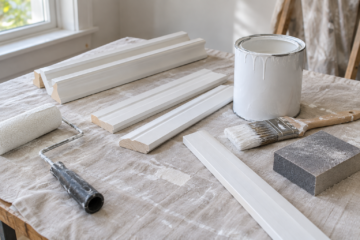
Cut and dry-fit the valance before finishing. Sand solid wood with 120-grit paper, then 150- or 180-grit. MDF faces usually need only light sanding with 180- or 220-grit; aggressive sanding can expose the softer core or create a fuzzy surface.
Pay special attention to end grain and MDF edges. End grain absorbs primer unevenly and can look darker or rougher than the face. Apply a thin coat of primer, let it dry, sand lightly, and apply a second coat if the edge still looks porous. On MDF, brushing or rolling diluted wood glue onto edges is sometimes used, but it can leave ridges and is harder to sand consistently. A dedicated MDF edge sealer or primer is more predictable.
Fill nail holes and small dents with a quality wood filler. For joints that may move slightly, use paintable acrylic-latex caulk rather than rigid filler. Do not caulk a gap that is larger than the product allows; wide gaps need a fitted piece of wood.
Primer and Paint Choices
Primer is not optional on a painted valance. It seals porous material, improves adhesion, and reduces the number of finish coats. Use a bonding primer on previously painted or glossy surfaces, and a stain-blocking primer over knots, resin, or suspicious discoloration. For a bright white finish, a high-quality water-based bonding primer is suitable for clean poplar and MDF; use shellac-based primer locally where stains are likely.
Sand the dried primer with 220-grit paper and remove dust with a vacuum and a slightly damp microfiber cloth. Apply two thin finish coats instead of one heavy coat. A cabinet-grade waterborne acrylic or urethane-modified enamel generally gives a harder, smoother surface than ordinary wall paint. Allow the stated recoat time, and avoid reinstalling the valance until the paint has cured enough to resist fingerprints and sticking.
Construction and Mounting Details
For a wide valance, add a rear cleat or small side returns rather than making the visible panel excessively thick. A 1/2-inch panel with a concealed cleat can look substantial while staying lighter than a solid 3/4-inch board. Predrill near edges to prevent splitting in poplar or pine, and use screws long enough to penetrate the cleat without breaking through the finished face.
Keep the bottom edge away from direct sink splashes and wipe up water promptly. If the valance sits near a range, use a washable finish and seal every face, including the back and bottom edge. In a dry window opening, inexpensive MDF is fine. In a humid room or where the valance may be bumped during cleaning, poplar or paint-grade plywood is the better buy.
0 Comments