What's inside
As an Amazon Associate I earn from qualifying purchases. This post may contain affiliate links at no extra cost to you.
For painted Shaker cabinet doors, the best material is usually not the most expensive hardwood. A stable, smooth, easy-to-prime substrate matters more than decorative grain. For most kitchens, a door made with hardwood rails and stiles plus an MDF center panel gives the cleanest finish at a sensible cost. A solid-poplar door is another strong choice, especially for a traditional five-piece door.
The right answer depends on how the door will be built, how much movement the room sees, and whether you want a factory-smooth finish or a little natural texture. Paint hides color, but it does not hide loose grain, dents, open joints, or seasonal movement.
As an Amazon Associate we earn from qualifying purchases at no extra cost to you.


Our Top Picks


Best overall: poplar with an MDF panel
Poplar is the common workhorse for painted cabinet doors. It is relatively inexpensive, machines cleanly, sands easily, and accepts primer and enamel without the prominent grain you see in oak or ash. Its green, gray, and purple streaks look uneven before painting, but color is irrelevant once the door is properly primed.
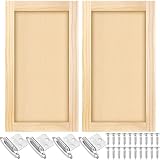
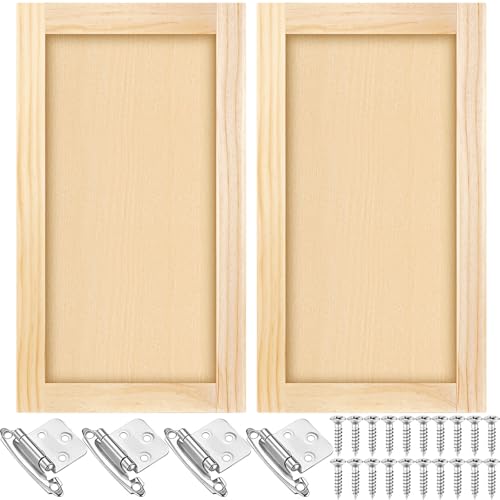
A practical Shaker door uses poplar for the rails and stiles and a 1/4-inch MDF panel in the center. MDF provides an exceptionally flat painting surface and does not have wood grain telegraphing through the finish. This combination also reduces the risk of a panel showing a visible glue line or changing appearance as the seasons change.
Poplar is soft, however. It can dent from fingernails, clamps, and careless handling, particularly along the edges. That is normally manageable on cabinet doors, but it is worth using a harder species if the doors will receive heavy abuse.
Maple versus poplar
Hard maple is harder and more resistant to dents than poplar. It machines well when your cutters are sharp and provides crisp, durable profiles. Its tight grain can produce a very smooth painted surface, although end grain and small machining marks still need careful sanding. Maple also costs more and is less forgiving to work by hand.
Maple’s main finishing problem is not open grain but uneven absorption and small surface defects that become obvious under a light-colored satin or semigloss paint. Use a high-build primer and inspect the surface under strong side lighting. If your doors will be used heavily or you want a premium hardwood frame, maple is a worthwhile upgrade. For ordinary kitchen use, poplar is usually the better value.
| Material | Painted finish | Durability | Cost and best use |
|---|---|---|---|
| Poplar | Smooth, low grain; easy to prime | Moderate; dents more easily | Best value for most five-piece doors |
| Hard maple | Very smooth with careful sanding | High | Premium frames and high-use kitchens |
| MDF | Very flat and grain-free | Good on faces; poor if edges get wet | Excellent center panels and slab doors |
| Birch | Fine grain but can show subtle texture | Moderate to high | Reasonable alternative when locally available |
| Oak or ash | Open grain often remains visible | High | Use only if a textured painted look is acceptable |
When MDF is the best choice
MDF is excellent for flat-panel Shaker centers and one-piece slab doors. It is dimensionally consistent, free of knots, and easy to sand. A 1/4-inch MDF panel floating in a hardwood frame is a reliable design because the panel can move slightly without forcing the frame apart.
Do not treat MDF edges like solid wood. Unsealed edges absorb primer aggressively and can swell if exposed to water. Sand the edges lightly with 180-grit paper, apply a dedicated MDF edge sealer or primer, let it dry, and sand again. Keep sink-side doors away from standing water and wipe spills promptly.
For a painted door made entirely from MDF, use moisture-resistant MDF when available, particularly in humid rooms. It is still not waterproof, and the edges require careful sealing.
Woods that create extra painting work
Oak and ash are structurally sound but have open pores. Even after several coats of paint, their cathedral grain and pores can remain visible. To get a genuinely smooth surface, you may need a grain filler followed by primer and sanding. That work can cost more than choosing poplar or MDF from the start.
Pine is cheap and widely available, but it is a poor default for high-quality painted doors. It has soft and hard bands that sand unevenly, resinous knots that can bleed through paint, and greater movement than many cabinet hardwoods. Knot sealing helps, but it adds another failure point. Pine is acceptable for a budget utility project if you accept dents and occasional touch-up.
Preparation that prevents failures
Buy straight, dry stock with a moisture content around 6% to 8% for typical indoor cabinet work. Let lumber acclimate in the work area for several days, then mill it to final size. Keep door parts flat and avoid storing finished doors leaning in direct sun.
Sand solid wood to 150 or 180 grit. Sand MDF faces with 180 grit; going much finer can reduce primer adhesion. Break sharp edges slightly rather than leaving a knife edge that chips easily. Remove dust with a vacuum and a clean, dry cloth.
Use a bonding, stain-blocking primer suited to the substrate. A waterborne primer is convenient and low-odor, while shellac- or solvent-based primer is more dependable against knots, resin, and stubborn discoloration. For a complete cabinet primer and paint system, follow the recoat time rather than sanding or recoating while the film is soft.
After the first primer coat, sand raised fibers and dust nibs with 220 grit. Apply two thin finish coats instead of one heavy coat. A quality waterborne cabinet enamel is easier to clean up; spraying gives the smoothest result, while a fine foam roller followed by light brushing is adequate for a small project. Allow several days of curing before installing hardware, even if the paint feels dry.
What to buy
For the best balance, choose poplar rails and stiles with a 1/4-inch MDF center panel. Choose maple if dent resistance and crisp machining justify the added cost. Choose all-MDF doors for flat panels or the lowest material cost, provided the edges are sealed carefully. Avoid oak, ash, and knotty pine unless you specifically want their texture or are prepared for extra filling and priming.
Use a good waterborne cabinet enamel, keep the door construction floating rather than rigidly gluing the panel, and spend more time on edge sealing and sanding than on exotic wood. Those choices have a larger effect on the finished painted door than the difference between most cabinet-grade hardwoods.
0 Comments