What's inside
As an Amazon Associate I earn from qualifying purchases. This post may contain affiliate links at no extra cost to you.
Our Top Picks
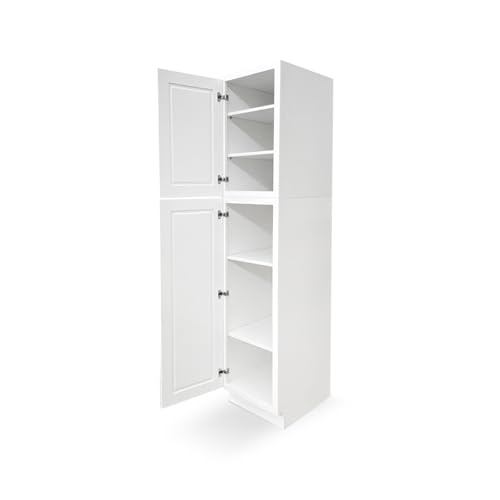
 Palace Imports Solid Wood Pantry Cabinet16.5" W x 71.5" H x 15.5" D15.5 x 16.5 x 71.5 inches70 poundsCheck on Amazon


The short answer
For most painted pantry cabinet doors, poplar is the best balance of price, stability, and finish quality. It machines cleanly, takes primer well, and costs less than maple. If you want a harder, tighter-grained surface and don’t mind paying more, use hard maple. For a budget project, paint-grade birch plywood works well for flat slab doors, while MDF is a good choice for flat doors kept dry and carefully sealed.
Door construction matters as much as species. A solid-wood panel inside a frame can move with seasonal humidity changes; a wide, one-piece solid panel can crack or buckle if it is trapped in a rigid frame. Choose the material and construction together, and use a primer intended for the substrate rather than relying on paint to hide problems.
As an Amazon Associate we earn from qualifying purchases at no extra cost to you.


How the main options compare
| Material | Best use | Advantages | Trade-offs |
|---|---|---|---|
| Poplar | Painted frame-and-panel or rail-and-stile doors | Affordable, easy to machine, generally stable | Soft; dents more easily than maple, and green or purple streaks may show through thin paint |
| Hard maple | Durable painted doors and crisp profiles | Hard, fine-grained, takes a smooth finish | Costs more and can be harder to machine; needs thorough priming |
| Birch plywood | Flat slab doors | Stable sheet material; lighter and less prone to seasonal movement than solid wood | Edges need filling or edge banding; face veneer can be thin |
| MDF | Flat slab or routed doors in dry interiors | Very smooth, uniform surface; no wood grain to telegraph | Heavy; swells if water reaches unsealed edges, and dust requires good protection |
| Paint-grade softwood | Low-cost utility doors | Often inexpensive and readily available | Knots, resin, and dents can cause extra prep or paint failure |
Poplar or maple for framed doors
Poplar is a practical default for a painted pantry door. Its modest price makes it suitable for multiple doors, and it cuts and sands without the effort required by harder species. Select straight, dry stock with few knots. Poplar can have conspicuous color variation, but that is mainly an appearance issue: an opaque paint system covers it if the surface is properly primed.
Maple is worth the extra cost when doors will take frequent knocks or you want sharp, durable edges on detailed profiles. Its density helps resist dents, but does not make the finished door immune to damage. Maple’s tight grain can also make primer adhesion more dependent on clean, properly sanded surfaces. For either species, build a framed door with a floating panel if using a solid-wood center panel; allow it to expand and contract instead of gluing it rigidly across the frame.
Best materials for flat slab doors
Birch plywood is a sound choice for a simple slab door. Choose a paint-grade panel with a smooth face and sound core; a low-grade sheet may have patches, voids, or veneer defects that become visible after painting. Seal or cover the edges, which absorb finish differently from the face. Edge banding or a solid-wood edging strip gives a cleaner, tougher perimeter.
MDF provides the smoothest starting surface for a flat painted door, and it is easy to route into simple profiles. It is heavy, so use hinges rated for the finished door’s weight and fasten them into solid backing or suitable hardware. MDF edges soak up primer and can swell permanently if left wet. Prime all faces and especially the edges, and keep the doors away from leaks, wet floors, or repeated damp cleaning. If you choose MDF, compare moisture-resistant MDF board options, but treat them as more moisture-tolerant, not waterproof.
Materials that need extra caution
Inexpensive pine can work for pantry doors, but knots may bleed resin or discolor the paint. Use knot-sealing primer over knots, then prime the full door; ordinary wall primer is not a substitute. Avoid wet or warped boards. Kiln-dried stock is preferable, and door parts should be acclimated indoors before assembly.
Do not assume plywood is automatically stable enough to hang without checking thickness and weight. Thin panels can bow, and a large door may need a frame or a thicker, flatter panel. For a budget, flat door in a dry pantry, birch plywood is often a better compromise than solid boards that may cup or move.
Preparation that prevents peeling and rough edges
Sand solid wood and plywood faces evenly, usually ending at 150 or 180 grit before priming. Going extremely fine can burnish the surface and reduce primer bite. Ease sharp edges slightly with a few passes of sandpaper; paint films are thin at knife-sharp corners and chip there first. Fill dents and small defects with a paintable wood filler, let it dry fully, then sand flush.
Remove dust with a vacuum and a clean, lint-free cloth. Apply a bonding primer suited to the material, following its label for coverage and recoat time. MDF edges may need a first sealing coat or extra primer because they absorb more than the faces. After primer dries, sand lightly with 220 grit to remove raised fibers or nibs, then clean again. A bonding primer for wood and cabinet doors is a useful category to consider when painting smooth hardwood or previously finished surfaces.
Apply two thin coats of cabinet-grade enamel rather than one heavy coat. Heavy coats sag on profiles, dry slowly, and can remain soft longer. Follow the manufacturer’s temperature and humidity limits, and allow the paint to cure before hanging or stacking doors; dry-to-touch is not the same as fully cured. A waterborne cabinet enamel is often easier to clean up than solvent-based paint, though product hardness and cure time vary.
What to buy for your project
Choose poplar for a conventional framed door when cost and easy machining matter. Choose maple when dent resistance and crisp detail justify the premium. Choose birch plywood for a straightforward slab door, and MDF for a very smooth slab or routed profile in a reliably dry pantry. The cheapest suitable material is often the right one: a well-prepared poplar or plywood door will generally outlast a more expensive door that was poorly primed, assembled with trapped panels, or painted before the surface was clean.
0 Comments