What's inside
As an Amazon Associate I earn from qualifying purchases. This post may contain affiliate links at no extra cost to you.
For a painted bed frame, the best wood is usually straight, dry poplar for the visible rails and posts, with plywood or solid hardwood chosen for the slats according to the design. Poplar takes paint well, is widely available, and costs less than paint-grade maple. But the frame’s joints and dimensions matter more than the species: a well-built pine frame can outlast a poorly joined hardwood one.
As an Amazon Associate we earn from qualifying purchases at no extra cost to you.


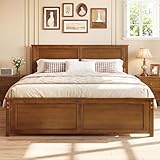

Our Top Picks
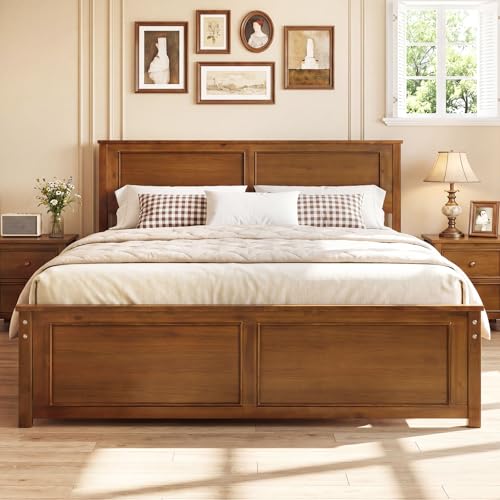 GIANTEX Wood Queen Size Bed Frame with HeadboardQueen83 x 64.5 x 36.5 Inches63 poundsCheck on Amazon


What matters most in bed-frame wood
A bed frame needs to carry weight without sagging, loosened joints, or squeaks. Its rails and corner joints take repeated sideways force when people climb in, turn over, or sit on the edge. Wood for those parts should be dry, straight, and free of large knots near joints and fasteners. For indoor furniture, lumber around 6–10% moisture content is a reasonable target; wetter wood can shrink after assembly and open painted seams.
Paint hides color and grain, but it does not hide defects reliably. Knots can bleed through, dents show under a smooth finish, and rough grain can telegraph through paint. Choose stock with few defects and plan to fill and sand it before painting.
Comparing common choices
| Wood | Cost | Paint performance | Best use | Main trade-off |
|---|---|---|---|---|
| Poplar | Moderate | Good; usually smooth and stable | Painted rails, posts, trim | Soft enough to dent; boards can vary in color, though paint covers it |
| Pine | Low | Fair to good with careful prep | Budget frames and hidden parts | Knots, resin, and dents can cause finish problems |
| Paint-grade maple | High | Very good; close, even grain | Durable visible parts | Costs more, and the improvement is modest once painted |
| Birch plywood | Moderate to high | Good on prepared faces | Panels and platform components | Exposed plies need edge treatment; quality varies by grade |
Best all-around choice: poplar
Poplar is a practical choice for painted bed-frame parts that need a clean appearance. It machines and sands easily, has less pronounced grain than pine, and generally accepts primer and paint without the resin problems common around pine knots. Select straight boards rather than buying by species alone; a bowed rail is a poor rail, whatever it is made from.
Poplar is not especially hard. A post or rail can still dent when struck, so it is not a reason to skip careful handling or a durable topcoat. It may also show green or purple-brown color before painting, but that is cosmetic. For a typical painted frame, the extra cost of maple is hard to justify unless the frame will take unusually heavy wear or the wood will remain partly exposed.
When pine is fine
Pine is a sound budget choice, especially for slats, hidden supports, or a frame where a few small dents are acceptable. Pick kiln-dried, straight stock and reject boards with loose knots, splits, or knots close to screw holes and mortises. Pine is softer than poplar and can crush around fasteners if joints are overtightened.
Knots are the main paint risk. Resin can migrate through paint and leave yellow-brown spots, even months later. Avoid knots on visible areas where possible. Seal unavoidable knots with a shellac-based knot sealer or primer, then prime the whole part; ordinary wall paint is not a substitute. A shellac-based wood primer is useful for localized resin and stain blocking, but it has a strong odor and needs good ventilation.
Choose parts by their job
For long side rails, prioritize stiffness and sound joinery. A rail that is too thin or too narrow can bow under load. Use the dimensions specified by a tested plan or bed-hardware maker rather than assuming a thicker-looking board is automatically adequate. Keep knots and end checks away from the rail ends, where bolts or bed-rail fittings concentrate stress.
Slats need to resist bending and stay in place. Straight, knot-free pine or poplar can work for ordinary slats when their spacing and thickness suit the mattress and frame design. Follow the mattress maker’s maximum slat-gap guidance; many mattress systems call for gaps no wider than about 2–3 inches, but requirements vary. For a platform or broad panel, good-quality plywood can be more dimensionally stable than a wide solid-wood board. Do not use particleboard for structural rails or slats: screw-holding and edge strength are poor for repeated bed-frame loads.
Prepare the surface for paint
Sand new lumber to about 150 or 180 grit before priming. Finer sanding is not automatically better: very smooth wood can reduce primer grip. Ease sharp edges with a small sanding pass, since paint tends to thin and wear first on knife-sharp corners. Fill small dents and nail holes with a paintable filler, then sand the patches flush. Do not rely on filler to repair a split or weak joint.
Remove dust with a vacuum and clean cloth. Apply a compatible wood primer, let it dry as directed, and lightly sand raised grain with 220 grit before the topcoat. Two thin coats of furniture-grade waterborne enamel are usually more even and durable than one heavy coat. Allow the manufacturer’s stated recoat and cure times; paint can feel dry while still being soft enough to stick where rails touch or hardware clamps down. A waterborne interior enamel is a practical option for a low-odor, washable finish.
What to buy
For a painted frame with visible solid-wood parts, start with poplar and choose the straightest, clearest boards available. Use pine when saving money matters more than a dent-resistant finish, especially for concealed components. Use plywood for suitable panels, not as a shortcut for narrow rails that need strong edge fasteners. In every case, let the wood acclimate indoors, keep structural joints sound, and prime resinous or repaired areas before applying finish paint.
0 Comments