What's inside
As an Amazon Associate I earn from qualifying purchases. This post may contain affiliate links at no extra cost to you.
For painted basement built-ins, the best wood is usually plywood for the cabinet boxes and solid poplar or paint-grade hardwood for face frames and trim. That combination stays reasonably stable, takes paint well, and avoids paying for attractive grain you plan to cover. Moisture control matters more than species: no wood product belongs against a damp foundation or in a basement with recurring leaks.
As an Amazon Associate we earn from qualifying purchases at no extra cost to you.

Check the basement before choosing materials
Measure relative humidity for several days, ideally during a damp season. If the space regularly sits above about 60% relative humidity, address ventilation, dehumidification, or water entry before installing built-ins. Wood movement and swollen MDF edges are costly symptoms of a moisture problem, not problems a better primer can solve.
Keep cabinet parts off concrete and masonry. Leave a small gap behind the units for inspection and airflow, and use plastic or composite shims at the floor. Do not use untreated wood as a sleeper directly on a slab. If the wall has a history of seepage, choose a design that can be removed or inspected rather than sealing the wall behind permanent cabinetry.
Best materials for each part
| Material | Best use | Advantages | Trade-offs |
|---|---|---|---|
| Cabinet-grade birch plywood | Cabinet sides, shelves, and partitions | Strong, screw-holding, and more stable than solid boards | Exposed plies need edge banding or trim; face veneer may need filling |
| Poplar | Face frames, stiles, rails, and trim | Easy to machine and generally smooth under paint | Can have green or purple streaks; soft areas dent more readily |
| MDF | Door panels, applied panels, and short, dry spans | Very smooth and inexpensive | Heavy; edges absorb paint; swells badly if water reaches it |
| Paint-grade pine | Budget face frames and noncritical trim | Cheap and widely available | Knots, resin, and dents can telegraph through paint |
For most built-ins, 3/4-inch cabinet-grade plywood is a sound choice for boxes and shelves. Look for flat panels with consistent cores and few voids, rather than choosing solely by the word “birch” on the label. Plywood is the better bet for long shelves and screw-loaded parts; add a front edge strip or stiffener if a shelf span is long or will carry books. A cabinet-grade birch plywood search can help compare available panel types, but check local sheet quality in person when possible.
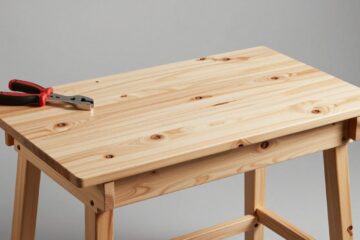
Poplar is a practical face-frame wood because it cuts cleanly and paints evenly after proper priming. Its color does not matter under an opaque finish, but knots and dark streaks can require extra primer or filler. For a lower-cost project, clear, dry pine is acceptable for short trim and lightly used frames. Reject boards with loose knots, twist, or large resin pockets; paint will not prevent knots from bleeding later.
MDF produces a very smooth painted surface, especially for flat door panels and decorative trim. Use it only where it will stay dry, and avoid it for cabinet bottoms near a potentially wet floor or for shelves expected to carry heavy loads over wide spans. Seal every cut edge: raw MDF edges soak up primer and can remain fuzzy or swollen. A moisture-resistant MDF board search may show specialty options, but “moisture resistant” is not waterproof.
Plywood, MDF, or solid wood?
Use plywood when strength, fasteners, and dimensional stability are priorities. Use MDF when a smooth, economical painted panel matters more than weight or water tolerance. Solid wood works well for narrow frames and trim, but wide solid panels move across the grain with seasonal humidity changes. Do not build a wide cabinet side from glued-up boards unless the design allows that movement.
For a utility-room built-in where the budget is tight and shelves are short, MDF can be a reasonable choice if the room stays dry and edges are sealed. For storage that may hold paint cans, tools, or books, plywood is usually worth the added cost. Avoid particleboard for basement cabinetry unless it is fully protected from moisture and the load is modest; a small leak can make its edges swell and crumble.
Glue and assembly
Use a woodworking PVA glue rated for interior use on dry, close-fitting joints. Glue is not a substitute for mechanical support: use screws, pocket screws, dados, or cleats appropriate to the design. Predrill near plywood edges to reduce splitting, and keep screw tips from breaking through the face. For large panels, allow the material to acclimate in the basement for several days before cutting, while keeping it flat and supported.
Prepare the surfaces for paint
Fill nail holes and small defects, then sand solid wood and plywood faces with 120- to 150-grit paper. Finish with 180 grit if the surface needs it; sanding much finer can reduce primer bite. MDF faces need only light sanding, but sand cut edges carefully and wear a respirator—MDF dust is fine and persistent. Vacuum thoroughly and wipe away remaining dust with a clean, slightly damp cloth, letting the surface dry before priming.
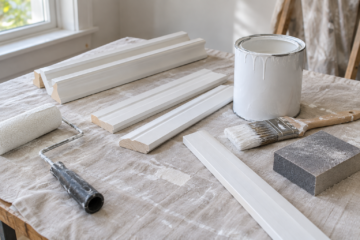
Seal MDF edges and plywood end grain with a suitable primer or edge sealer, then sand lightly after it dries. Use a bonding primer compatible with the finish paint; use a stain-blocking primer over pine knots or resinous areas. If knots still show through after the primer dries, apply another coat rather than hoping the topcoat will hide them. A waterborne bonding primer search is a useful starting point; confirm the label lists wood and MDF among approved surfaces.
Apply two thin coats of durable interior trim or cabinet paint rather than one heavy coat. Follow the label’s recoat time, and let doors and shelves cure before loading them; paint can feel dry while remaining soft underneath. Basement humidity and cool temperatures slow drying, so work within the product’s temperature range and provide ventilation. If water regularly condenses on the walls or the floor has flooded before, delay painting and installation until that moisture risk is fixed.
0 Comments