

What's inside
- Best Wood Lathe Accessories for Safer, More Accurate Turning
- Quick comparison: which accessories matter most?
- Choose by turning project
- Decision matrix for buying wood lathe accessories
- Accuracy depends more on setup than brand
- Sharpening accessories: the value is in repeatability
- Safety accessories worth prioritizing
- Worked buying calculation: when does a chuck pay off?
- Maintenance and common ownership mistakes
As an Amazon Associate I earn from qualifying purchases. This post may contain affiliate links at no extra cost to you.
Our Top Picks



Best Wood Lathe Accessories for Safer, More Accurate Turning
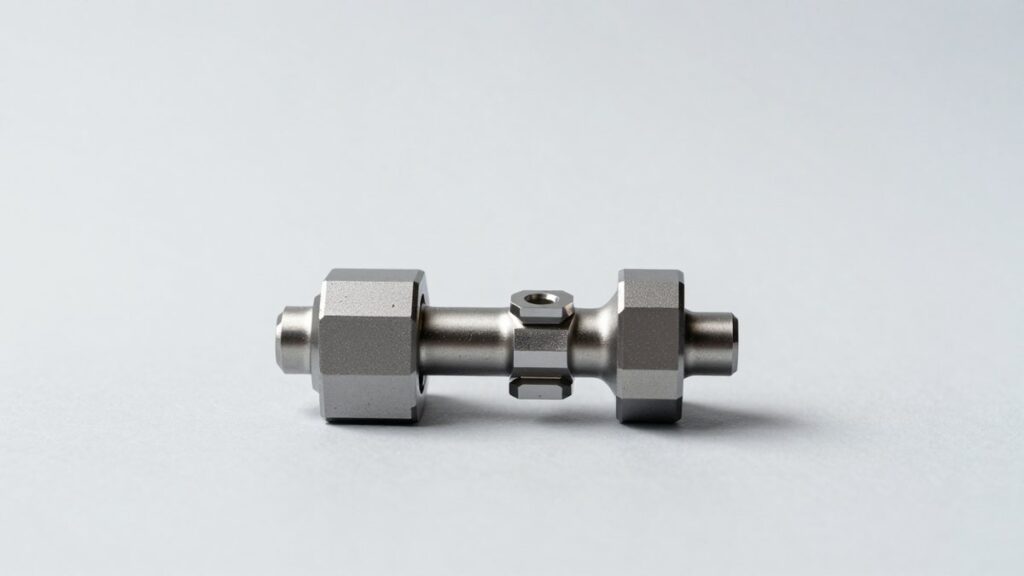
The best wood lathe accessories are a quality four-prong drive center, live center, chuck with several jaw sets, sharp tools, a reliable measuring system, and dust and face protection matched to your lathe’s size and spindle thread.
Buying accessories for a wood lathe is less about collecting every attachment and more about building a compatible system. Check four specifications before purchasing: spindle thread, Morse taper size, swing capacity, and the diameter of the work you plan to turn. A beautifully made accessory that does not fit your lathe is expensive workshop decoration.
As an Amazon Associate we earn from qualifying purchases at no extra cost to you.



Quick comparison: which accessories matter most?
| Accessory | Useful size or specification | Typical material | Best use | Relative cost |
|---|---|---|---|---|
| Four-prong drive center | MT2 or MT1; 3/4–1 in diameter | Hardened steel | Spindle turning between centers | Low |
| Live center | MT2; 60-degree point | Steel body with sealed bearings | Supporting the tailstock end | Low to moderate |
| Four-jaw chuck | 3–4 in body; 1–4 in jaw expansion range | Steel or stainless steel | Bowls, boxes, and repeatable mounting | Moderate to high |
| Interchangeable chuck jaws | 6–50 mm dovetail range, depending on set | Machined steel | Matching jaws to tenons and recesses | Low to moderate, per set |
| Calipers and wall-thickness gauge | 6–12 in caliper; 1/8–1/2 in measuring range | Steel, aluminum, or hardwood | Consistent hollow forms and bowls | Low |
| Sharpening system | 8 in wheel; 80–180 grit stones | Aluminum oxide or CBN | Repeatable cutting edges | Moderate to very high |
| Face shield and dust protection | Full-face visor; P2/N95 or powered respirator | Polycarbonate and replaceable filters | Protection from chips and fine dust | Low to very high |
Choose by turning project
For spindle work: centers, not a chuck
Rolling pins, chair legs, tool handles, and other long parts are usually best mounted between a drive center and a live center. A four-prong drive center transfers torque without removing a large amount of wood. A revolving live center supports the tailstock end while reducing friction.
For most benchtop and midi lathes, an MT2 live center is the common choice. Smaller hobby lathes may use MT1, while larger machines can use MT3. Match the taper exactly; a loose or incorrect Morse taper can damage both the accessory and the tailstock quill.
A cup center can be useful when a four-prong center would split fragile stock, but it generally provides less positive drive. For green or irregular wood, a large four-prong center and a properly tightened tailstock are usually more secure.
For bowls and hollow forms: a four-jaw chuck
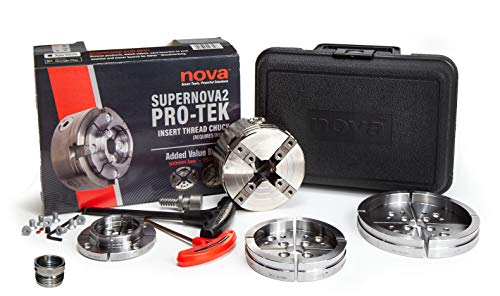
A self-centering four-jaw chuck is the most useful upgrade for bowl turning because it makes remounting faster and supports work after the outside is shaped. Nova, Oneway, Vicmarc, and Record Power make established chuck systems, but compatibility varies by model and adapter.
Choose a chuck with jaws designed for the tenon or recess you intend to cut. Dovetail jaws are common, but their actual gripping range is not the entire advertised diameter range. A small chuck may hold a 2-inch tenon securely but be unsuitable for a 12-inch bowl, even if the lathe can technically swing that diameter.
For a bowl blank, cut a clean tenon with a slightly angled dovetail profile rather than a straight-sided peg. The tenon should contact the jaw faces evenly, with no bark, torn fibers, or shoulder preventing the jaws from seating. A poorly shaped tenon is a greater safety risk than buying a more expensive chuck.
For hollowing: measuring tools and a steady rest
Calipers are among the most valuable low-cost lathe accessories. A bowl caliper lets you compare wall thickness without repeatedly removing the work. A simple target is often around 1/8 to 1/4 inch for small dry bowls, but the suitable thickness depends on diameter, species, moisture content, and the final shape.
A captured hollowing system or articulated boring bar can make deep vessels more controllable, but it adds cost and requires a suitable tool rest and lathe capacity. For large bowls and long, flexible workpieces, a steady rest supports the work and reduces vibration. It is particularly useful when the piece is too long or slender for the tailstock alone.
Decision matrix for buying wood lathe accessories
| Your situation | Buy first | Delay until later | Why |
|---|---|---|---|
| Beginner, very limited budget | Live center, drive center, quality 3/4 in roughing gouge, calipers | Large chuck and specialty hollowing tools | Improves basic control across many projects |
| Mini lathe, 8–12 in swing | MT2 centers, compact chuck, small bowl gouge | Large jaws, oversized faceplates, heavy steady rest | Keeps weight and overhang appropriate for the machine |
| Frequent bowl turning | Four-jaw chuck, dovetail jaws, bowl gouge, wall-thickness caliper | Decorative specialty attachments | Supports repeatable mounting and consistent walls |
| Limited workshop space | Compact dust extractor, modular chuck jaws, magnetic accessories | Separate large grinders and long bed extensions | Reduces storage demands without sacrificing essential control |
| Large or irregular blanks | Heavy faceplate, large drive center, steady rest, robust tool rest | Lightweight mini-lathe attachments | Prioritizes rigidity and secure holding |
Accuracy depends more on setup than brand
Runout is the amount an accessory deviates from true rotation. For small work, a few hundredths of an inch can affect a tenon or box lid. Clean the spindle nose, chuck register, and Morse taper before assembly. Wood dust or a small chip trapped between mating surfaces can produce visible wobble.
As a practical buying target, look for chuck and faceplate systems that advertise repeatability or low runout around 0.003–0.005 inch when correctly mounted. Treat such figures as manufacturing targets rather than a guarantee for every setup. A bent spindle, damaged threads, contaminated taper, or poorly cut tenon can create more error than the accessory itself.
For measuring tools, stiffness matters. A thin caliper that flexes can produce inconsistent readings, while a wall-thickness gauge with a broad contact surface is easier to use inside a bowl. For tool rests, select a post diameter that matches the banjo and a rest length that supports the work without forcing the tool too far over the edge.
Sharpening accessories: the value is in repeatability
Sharp tools reduce pushing, catches, and excessive sanding. A basic sharpening setup can include an 8-inch grinder, a friable aluminum-oxide wheel around 80 or 120 grit, a platform, and a simple grinding jig. CBN wheels cost more but resist loading and remain flatter over time, making them attractive for frequent turners.
Grinding jigs are useful when they return a bowl gouge or fingernail grind to the same position. The important measurement is not the brand name but whether the jig fits the tool diameter and allows the bevel angle you need. A 40–45-degree bevel is common for many bowl-gouge grinds, while specialized shear-scraper and spindle profiles use different angles.
Safety accessories worth prioritizing
- Full-face shield: Choose a clear polycarbonate visor that covers the face and sides, not ordinary safety glasses alone.
- Hearing protection: Use earmuffs or plugs during extended turning, especially with dust extraction and shop machinery running.
- Dust control: Capture chips at the source with a hood and use a properly fitted respirator or powered respirator for fine dust.
- Lathe guard or barrier: A shield helps contain fragments from cracked blanks and poorly secured work.
- Good lighting: A movable LED light reveals catches, torn grain, and uneven surfaces before they become larger problems.
Never rely on a face shield to compensate for questionable mounting. Inspect blanks for cracks, loose bark, embedded metal, and soft punky areas. Stand to the side when starting a large or unknown piece, begin at the lowest practical speed, and increase speed only after confirming that the work is secure and balanced.
Worked buying calculation: when does a chuck pay off?
Suppose a chuck is used for 60 bowl and box projects over three years. Spread across those projects, its hardware cost per project is small. Add a replacement jaw set used for 40 projects and the combined ownership cost per project stays modest. That is often better value than repeatedly making improvised mounts that consume extra wood, glue, and setup time.
However, a chuck is poor value if you mainly turn pens or long spindles. A modest set of centers used for 50 projects costs very little per project and is better matched to that work. Buy the mounting system that fits your most frequent project, not the accessory with the largest feature list.
Maintenance and common ownership mistakes
Brush wood dust from chuck slides, threads, and jaws after each session. Use a manufacturer-approved light lubricant sparingly; excessive oil attracts abrasive dust. Do not store a chuck with wet green-wood residue inside it, and inspect jaw screws for damaged heads before they become impossible to remove.
Centers wear at their points, bearings in live centers eventually develop play, and tool-rest edges can acquire nicks from dropped tools. Replace or dress damaged parts rather than filing away large amounts of material. Avoid using a chuck key, faceplate, or adapter with damaged threads, and never leave the chuck key in the chuck.
The best wood lathe accessories are therefore the ones that fit your spindle and taper, suit your work’s diameter and weight, improve repeatability, and remain easy to inspect and maintain. Start with secure centers and sharp tools, add a chuck for bowls and boxes, then invest in specialty attachments only when a recurring project proves that you need them.
FAQ
Worked buying calculation: when does a chuck pay off?
Related guides
More from Amazon
Programs that pair well with the guide above. Offers and eligibility are set by Amazon and may change.
A free business account with business pricing and bulk-buying tools for work, shop or home office.
Create a business accountFree shipping on eligible items, Prime Video and more. Eligible new members can start with a free trial.
Start a Prime free trialAudiobooks and podcasts to listen to on the go. Eligible new members can start with a free trial.
Try Audible freeAd-free music streaming. Eligible new subscribers can start with a free trial.
Try Music Unlimited freeAs an Amazon Associate we earn from qualifying purchases.
Write Your Review
No reviews yet. Be the first to share your experience!