

What's inside
- Top picks at a glance
- Best Grit CBN Grinding Wheels for Lathe Tools
- Choose grit by the job
- Match the wheel to your grinder
- Which setup fits your shop?
- What CBN changes—and what it does not
- Setup and care that protect the wheel
- More CBN wheels for lathe tools worth comparing
- Which CBN wheel grit is best for woodturning tools?
- Why This Add-On Exists
- New Picks at a Glance
- Grit Progression in Plain Terms
- Fit Checklist Before You Buy
- Setup and Care
- Who Should Skip These Picks
- Common Mistakes
- More Picks Worth Considering
- Buyer Questions
- What to Look For in a CBN Wheel
- Which One Should You Buy?
- Common Mistakes When Buying CBN Wheels
- Questions
- Related Guides
As an Amazon Associate I earn from qualifying purchases. This post may contain affiliate links at no extra cost to you.
Updated November 2026 – Wheel list and fit checks reviewed against current listings.
Our Top Picks


Top picks at a glance
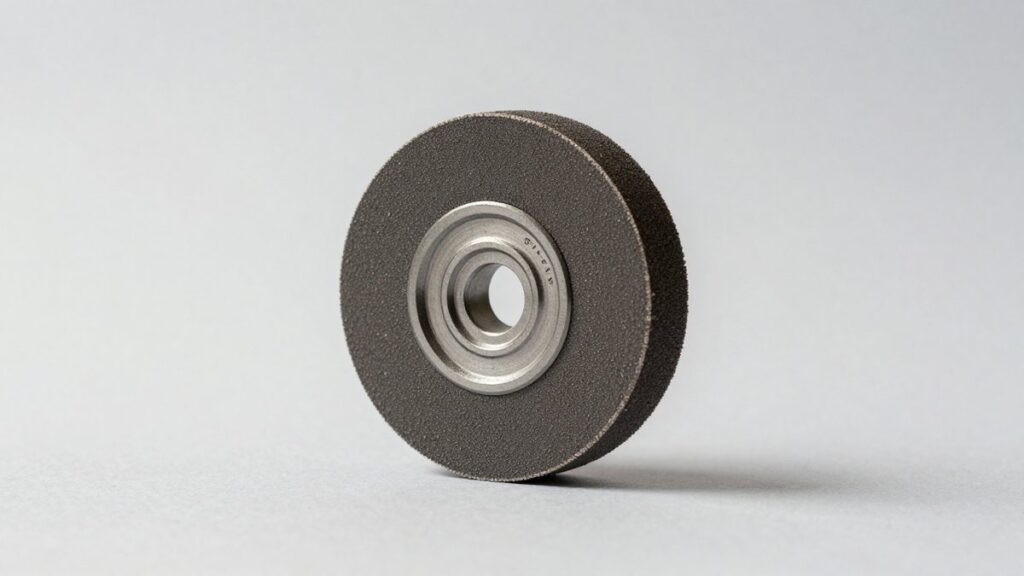
The best grit CBN grinding wheel for lathe tools is a 180 grit, 8 inch wheel with a 5/8 inch arbor, such as the MORESUPERHARD 8 Inch 180 Grit or the UF-Sharp 8 inch 180 Grit. Add the MORESUPERHARD 6 Inch 80 Grit when you reshape often, and a 320 grit wheel such as the POWERTEC 8 Inch 320 Grit for finishing.
| Wheel | Size and grit | Arbor | Best for |
|---|---|---|---|
| MORESUPERHARD CBN 6 Inch 180 Grit | 6 in x 1 in, 180 | 1/2 in | 6-inch grinders |
| MORESUPERHARD CBN 8 Inch 180 Grit | 8 in x 1 in, 180 | 5/8 in | All-round sharpening |
| MORESUPERHARD CBN 6 Inch 80 Grit | 6 in x 1 in, 80 | 1/2 in | Reshaping |
| CUSTOPOWLF 6 inch 800 Grit | 6 in x 1 in, 800 | 1 in listed | Final polish only |
| UF-Sharp CBN 8 inch 80 Grit | 8 in x 1 in, 80 | 5/8 in | Heavy shaping |
| UF-Sharp CBN 8 inch 180 Grit | 8 in x 1 in, 180 | 5/8 in | All-round sharpening |
| POWERTEC CBN 8 Inch 320 Grit | 8 in, 320 | 5/8 in | Finishing |
| BUCKTOOL 320 Grit 8-Inch CBN | 8 in x 1 in, 320 | 5/8 in | Finishing |
| GAXPAK CBN 8 inch | 8 in x 1 in | 5/8 in | Budget-tier 8-inch |
| UF-SHARP Mega Square 8 inch 180 Grit | 8 in x 1.5 in, 180 | 5/8 in | Wide face, bowl gouges |
| POWERTEC 4-in-1 8 Inch 180 Grit | 8 in x 1-1/4 in, 180 | 5/8 in | Radius edge, versatile face |
This list is based on maker listings and published specifications, not on use in our own shop. The wheel marked 800 grit is a polishing grade, so it is not a starting wheel.
Best Grit CBN Grinding Wheels for Lathe Tools
For most HSS lathe tools, a 180-grit CBN wheel is the best all-around choice for sharpening, while 80– grit is better for reshaping and 350– grit is for refining an already accurate edge. In practice, choose the coarsest grit that can do the job cleanly, then move finer only when the improvement matters: extra polishing does not compensate for a poor bevel or a dull tool geometry.
Before buying, check three things together: grit, wheel dimensions, and arbor fit. A wheel that has the right abrasive but does not match your grinder’s diameter, width, or shaft is not a useful upgrade. CBN wheels are intended for high-speed steel (HSS); they are generally not the right choice for carbide lathe tools.
As an Amazon Associate we earn from qualifying purchases at no extra cost to you.


Choose grit by the job
| Typical grit | Best use on HSS tools | Edge and finish | Practical trade-off |
|---|---|---|---|
| 80 | Removing damage, changing bevels, or quickly reshaping a tool | Fast stock removal; visibly coarse scratch pattern | Can remove useful steel quickly; use a light touch and check the profile often |
| 180 | Routine sharpening and modest geometry adjustments | Useful working edge with moderate scratches | Best one-wheel compromise for many turning shops |
| 350 | Refreshing a sound edge or reducing scratches after shaping | Finer finish; slower for substantial reshaping | Not a substitute for a coarse wheel if the bevel needs major correction |
| 600 | Fine edge refinement where a smoother grind is desired | Very fine scratch pattern | Slow stock removal; often unnecessary for a routine turning edge |
Grit numbering and abrasive grading can vary between manufacturers, so treat these as useful categories rather than a guarantee that two brands’ wheels cut identically. If the product uses a different stated grit, compare its intended use and manufacturer’s specification rather than relying on the number alone.
Match the wheel to your grinder
CBN wheels are commonly sold in sizes such as 6-inch and 8-inch diameters, with different widths and arbor bores. Diameter affects compatibility and the wheel’s surface speed at a given grinder speed; width affects how much usable face is available for grinding. Neither dimension is interchangeable just because the wheel looks close to the one you have.
| Dimension or fit check | What to measure | Why it matters |
|---|---|---|
| Outside diameter | Wheel diameter in inches or millimetres; common options include 6 in (152 mm) and 8 in (203 mm) | Must suit the grinder’s guards and rated wheel size |
| Face width | Grinding-face width; 1 in (25.4 mm) is a common reference size | Check clearance with tool rests, guards, and any sharpening jig |
| Arbor bore | Measure the grinder shaft and compare it with the wheel’s stated bore | A correct, secure fit matters; use only manufacturer-approved bushings or spacers |
| Speed rating | Compare wheel maximum RPM with grinder RPM | The wheel’s rating must meet or exceed the grinder’s operating speed |
| Rotation and clearance | Check the grinder manual, guards, and tool-rest position | Confirms the wheel can run safely without interference |
Measure the grinder shaft with a caliper if the specification is unclear, and confirm whether the wheel listing gives the bore itself or includes a fitted bushing. Do not force a wheel onto a shaft or improvise with loose washers. Follow the wheel and grinder manufacturers’ installation instructions, and do not run a wheel above its marked maximum speed.
Which setup fits your shop?
| Your situation | Practical choice | Reason |
|---|---|---|
| One wheel for occasional sharpening | 180 grit, in the diameter and bore specified for your grinder | Handles routine edge maintenance without making you buy a multi-wheel setup |
| Frequent tool reshaping or damaged edges | 80 grit, ideally paired with a separate finer wheel | Removes steel quickly; a finer wheel can take over for regular sharpening |
| Tools already have the right geometry | 350 grit | More suited to refreshing and refining than rebuilding a bevel |
| Small bench grinder or limited clearance | A compatible 6-inch wheel, if the grinder is rated for it | May fit a compact setup, but confirm speed, guards, and rest clearance first |
| Shared shop with frequent sharpening | Separate coarse and medium/fine wheels | A dedicated shaping wheel avoids using a fine wheel for heavy stock removal |
A two-wheel setup is usually more useful than buying the finest available grit first. For example, an 80-grit wheel for reshaping and a 180- or 350-grit wheel for maintenance cover different tasks. If you only sharpen tools that are already in good condition, skip the coarse wheel and start with 180 grit.
What CBN changes—and what it does not
CBN (cubic boron nitride) is a hard abrasive suited to grinding HSS. Compared with many conventional wheels, a CBN wheel can retain its form and does not usually need the same routine dressing used to restore a conventional friable wheel. That can be convenient for keeping a consistent grinding profile, especially when sharpening repeatable bevels.
It is still a grinding wheel, not a maintenance-free accessory. Dust and swarf accumulate, the wheel can be damaged by impact or poor mounting, and a sharp edge still depends on steady tool presentation. CBN wheels are generally selected for HSS; use an abrasive specified for carbide when sharpening carbide tools. Check the maker’s guidance for mixed-metal use and avoid contaminating the wheel with materials the maker prohibits.
Setup and care that protect the wheel
- Inspect before mounting. Look for shipping damage, cracks, or other defects, and follow the manufacturer’s inspection and installation directions. Do not use a damaged wheel.
- Confirm speed and fit. Match the bore, diameter, and maximum RPM to the grinder. Secure the wheel as instructed; do not overtighten or force components into place.
- Position the tool rest. Set it close to the wheel and keep it stable, following the grinder manual. Recheck the gap as the setup changes; a large gap can let a tool catch.
- Grind with light pressure. Let the abrasive cut. Heavy pressure can overheat the tool and wears the working surface faster. Use appropriate eye protection and follow the grinder maker’s safety guidance.
- Clean without dressing by default. Remove accumulated debris using only the cleaning method recommended for that wheel. Do not assume a conventional wheel dresser is suitable for CBN; an incompatible dresser can damage the abrasive layer.
- Store it carefully. Keep the wheel dry and protected from knocks. Avoid dropping it or striking the abrasive face while handling tools.
For most turners, a 180-grit wheel is the safest starting point if the main task is keeping HSS tools sharp. Choose 80 grit when geometry changes and stock removal are frequent, or 350 grit when you want a finer maintenance grind and already have the bevel established. Then verify the grinder’s wheel size, bore, width, and speed rating before ordering—the fit checks matter as much as the grit.
More CBN wheels for lathe tools worth comparing
UF-Sharp CBN Grinding Wheel 8 inch 180 Grit – Best alternative all-round wheel

UF-Sharp lists this 8 inch wheel at 180 grit, the grit most turners use for routine gouge and scraper sharpening.
Listing details
- 8 inch diameter, 1 inch wide
- 5/8 inch arbor
- 180 grit
- Listing claims vibration-free, cooler grinding and no dressing required
- Price tier: premium
Pros
- Common 8 inch size
- Most-used grit
- Standard 5/8 inch arbor
Cons
- Costs more than budget wheels
- Check your grinder’s speed rating
Skip it if your grinder has a 6 inch wheel or a 1/2 inch arbor.
UF-Sharp CBN Grinding Wheel 8 inch 80 Grit – Best for heavy reshaping

At 80 grit, this wheel removes steel faster, which helps with repairing nicked edges or changing a bevel before moving to a finer wheel.
Listing details
- 8 inch diameter, 1 inch wide
- 5/8 inch arbor
- 80 grit
- Listing claims non-deformable and no dressing required
- Price tier: premium
Pros
- Fast stock removal
- Pairs with a 180 or 320 grit wheel
- Same size as the 180 grit version
Cons
- Coarse scratch pattern
- Needs a light touch on thin edges
Skip it if your tools already hold good geometry and you only maintain edges.
POWERTEC CBN Grinding Wheel 8 Inch 320 Grit – Best finishing wheel

A 320 grit wheel sits close to the 350 grit stage described above and refines an edge that is already shaped.
Listing details
- 8 inch wheel
- 320 grit
- Made for HSS tools, lathe tools and chisel sets, per the listing
- Price tier: premium
Pros
- Finer edge than 180 grit
- Good second wheel on a two-wheel grinder
Cons
- Slow for reshaping
- Not needed for rough sharpening
Skip it if you own a single wheel and a damaged tool needs shaping.
BUCKTOOL 320 Grit 8-Inch CBN Grinding Wheel – Best value finishing alternative

BUCKTOOL offers a 320 grit wheel in the standard 8 inch by 1 inch size for turners who want a second wheel in the finishing range.
Listing details
- 8 inch diameter, 1 inch wide
- 5/8 inch arbor
- 320 grit
- Price tier: mid-range
Pros
- Standard dimensions
- Fits typical 8 inch bench grinders
- Finishing grit
Cons
- Fine grit is slow for stock removal
- Confirm bushings before ordering
Skip it if you want a coarse wheel first.
GAXPAK CBN Grinding Wheel 8 inch – Best lower-cost 8 inch wheel

GAXPAK lists an 8 inch by 1 inch wheel with a 5/8 inch arbor, aimed at woodturning tool sharpening at a lower price tier.
Listing details
- 8 inch diameter, 1 inch wide
- 5/8 inch arbor
- Suitable for woodturning tools, per the listing
- Price tier: mid-range
Pros
- Lower price tier than most 8 inch CBN wheels
- Standard size
Cons
- Grit must be confirmed on the listing
- Less brand history in this category
Skip it if you require a stated, verified grit before buying.
UF-SHARP Mega Square CBN Grinding Wheel 8 inch 180 Grit – Best wide face

The 1.5 inch face gives more room to sweep a long gouge bevel and to use a jig, though it needs more tool-rest clearance.
Listing details
- 8 inch diameter, 1.5 inch wide
- 5/8 inch arbor
- 180 grit
- Square-edge design, per the listing
- Price tier: premium
Pros
- Wide grinding surface
- Stable support for tools
- 180 grit versatility
Cons
- Check guard and tool-rest clearance
- Highest price tier
Skip it if your grinder guard is tight or you prefer a narrower wheel.
POWERTEC CBN Grinding Wheel 8 Inch 180 Grit 4-in-1 – Best for radius edges

This 1-1/4 inch wide wheel includes a 1/4 inch radius edge according to the listing title, useful for reaching inside curves.
Listing details
- 8 inch diameter, 1-1/4 inch wide
- 5/8 inch arbor
- 180 grit, 4-in-1 profile
- Price tier: premium
Pros
- Multiple edge profiles
- Wider face than a standard 1 inch wheel
Cons
- Wider wheel needs guard clearance
- Costs more than plain wheels
Skip it if you only sharpen straight bevels on a narrow-guard grinder.
Which CBN wheel grit is best for woodturning tools?
For most turners the answer is 180 grit, with 80 for reshaping and 320 to 350 for finishing. A single 180 grit wheel handles gouges, skews and scrapers, while 600 and 800 grits are polishing grades for edges that are already correct.
Best CBN wheel under $100
Look at the MORESUPERHARD 8 Inch 180 Grit and GAXPAK 8 inch, both at the lower price tiers of the standard 8 inch size. Premium brands generally cost more, so compare sizes before concluding one is cheaper.
6 inch or 8 inch CBN wheel?
Use the diameter printed on your grinder guard. A 6 inch grinder needs a 6 inch wheel such as the MORESUPERHARD 6 Inch 180 Grit, and an 8 inch grinder takes an 8 inch wheel. Never fit a larger wheel than the guard and speed rating allow.
Can I use a CBN wheel on carbide lathe tools?
No, CBN is intended for high-speed steel and other ferrous tools, while carbide needs a diamond or silicon carbide abrasive.
Is 180 grit or 320 grit better for lathe chisels?
180 grit is better for routine sharpening because it cuts faster, and 320 grit is better as a finishing wheel after the bevel is set.
Why This Add-On Exists
The main guide already covers the core CBN range and explains grit choice well, with a grit-by-job table and a match-to-grinder table. What it does not cover is the two ends of the job that turners actually feel: the wide wheel that removes stock faster on a reshaping job, and the fine wheel that puts a keen final edge on a tool before it touches wood. This add-on adds three wheels for those jobs, plus the decision help the main guide skips: a side-by-side table, a fit checklist, and the mistakes that waste money or damage a tool.
New Picks at a Glance
| Pick | Grit and size | Best for | Watch out for |
|---|---|---|---|
| POWERTEC CBN Grinding Wheel 8 Inch 600 Grit, 4-in-1 | 600 grit, 8 inch, 1-1/4 inch wide | Final honing | Not for shaping |
| BUCKTOOL 180 Grit 8-Inch CBN Grinding Wheel, 1.5-Inch Wide | 180 grit, 8 inch, 1-1/2 inch wide | General sharpening | Needs a grinder that takes a wide wheel |
| MORESUPERHARD CBN Grinding Wheel 8 inch 320 Grit | 320 grit, 8 inch, 1 inch wide | Refining after 180 grit | Maker site set sold out; verify stock |
Grit Progression in Plain Terms
Think of grit as steps, not as single purchases. An 80-grit wheel shapes and repairs. A 180-grit wheel is the daily sharpening step for most gouges and skews. A 320-grit wheel refines the edge after 180 grit and leaves a cleaner bevel. A 600-grit wheel finishes the edge and suits fine finishing cuts and detail work. Steel type also matters: published guidance from turners suggests around 350 grit for M2 steel and around 600 grit for M42 and powdered metal steels, because harder steels reward a finer finish. Skipping steps saves minutes and costs edge quality, so a turner who jumps from 80 grit straight to 600 grit will spend longer on the fine wheel and get a worse result than a turner who works through the middle grits.
Fit Checklist Before You Buy
- Measure the grinder first. Wheel diameter, width, and arbor size must match. The wheels in this add-on are 8-inch wheels with a 5/8-inch arbor, and the wide ones need a grinder that accepts their width.
- Check the wheel width against the grinder guards and the tool rest. A 1-1/2-inch wide wheel that rubs the guard is not a bargain.
- Match the grit to the job, not to the catalogue. A 600-grit wheel will not reshape a damaged edge, and an 80-grit wheel will not finish one.
- Confirm the wheel is CBN, not diamond, for high-speed steel tools. CBN suits steel. Diamond suits carbide.
- Check the side face and the radius edge on a 4-in-1 wheel. The extra faces are useful only if the grinder and the jig can reach them.
- Verify stock at posting time for the MORESUPERHARD 320-grit wheel, because the maker site showed its set sold out.
Setup and Care
Mount the wheel with clean flanges and a paper washer if the maker supplies one, and tighten the nut firmly without forcing it. Spin the wheel by hand before switching on, and check that it runs true without wobble or rubbing. A wheel that rubs the guard or the tool rest needs remounting, not a harder push.
For the 600-grit 4-in-1 wheel, dress the edge lightly and use a light touch. Fine wheels cut slowly by design, and pressing hard generates heat that harms the temper of the tool. For the wide 180-grit BUCKTOOL wheel, keep the tool moving across the face so the wheel wears evenly. A wide wheel that only sees the middle of its face will dish in the middle and grind unevenly. For the 320-grit wheel, treat it as the middle step: use it after 180 grit and before 600 grit, and keep the bevel flat against the wheel rather than rocking the tool.
Keep the wheels dry and covered when the grinder is idle. CBN wheels do not need dressing the way stone wheels do, but they do need a clean face. Wipe dust from the wheel and the guards after each session, and store jigs so they do not rest against the wheel face.
Who Should Skip These Picks
Skip the 600-grit wheel if you only reshape tools and never finish an edge by hand, or if your grinder cannot take a 1-1/4-inch wide wheel. Skip the wide 180-grit wheel if your grinder only accepts narrow wheels, or if you already own a standard 180-grit wheel and do not reshape often enough to need the extra width. Skip the 320-grit wheel if you jump straight from 180 grit to a hand hone, since the middle step adds little for that workflow. Skip all three if your grinder is a 6-inch model, because these are 8-inch wheels and will not fit.
Common Mistakes
- Buying a wheel by grit alone and ignoring width and arbor size.
- Pressing hard on a fine wheel to make it cut faster. Heat is the enemy of a good edge.
- Skipping the middle grits and expecting a fine wheel to fix a coarse scratch pattern.
- Using a CBN wheel on carbide, or a diamond wheel on high-speed steel, and wondering why the wheel wears fast.
- Letting a wide wheel dish by grinding in one spot. Move the tool across the full face.
- Confusing the POWERTEC 4-in-1 in 600 grit with the 4-in-1 in 180 grit already in the main guide. They are different grits for different jobs.
- Confusing the BUCKTOOL 180-grit wheel at 1-1/2 inches wide with the BUCKTOOL 320-grit wheel at 1 inch wide already in the main guide. Width and grit both differ.
More Picks Worth Considering
POWERTEC CBN Grinding Wheel 8 Inch 600 Grit, 4-in-1

This wheel fits turners who want a keen final edge. At 600 grit, it refines a bevel after 180 and 320 grit and suits fine finishing cuts, detail work, and harder steels that reward a finer finish, including M42 and powdered metal. Its 4-in-1 form gives a radius edge and a side face alongside the main face, which suits jigs that work the edge of the wheel, and its 1-1/4-inch width and 5/8-inch arbor fit standard grinders. It does not fit shaping or repair work, because a fine wheel cuts slowly and will not remove stock quickly. It also does not fit grinders that cannot take a 1-1/4-inch wide wheel, and it does not replace middle grits. Use it as the last step, with a light touch, and it leaves an edge that needs little hand honing.
BUCKTOOL 180 Grit 8-Inch CBN Grinding Wheel, 1.5-Inch Wide

This wheel fits turners who sharpen often and want a wider face for faster, more even work. At 180 grit, it is the daily sharpening step for bowl gouges, spindle gouges, and skews, and the 1-1/2-inch width gives more contact area than a standard 1-inch wheel, which helps when reshaping a bevel or working a wide skew. Its 8-inch diameter and 5/8-inch arbor fit standard grinders that accept a wide wheel. It does not fit fine finishing, because 180 grit leaves a scratch pattern that needs a finer step after it, and it does not fit narrow-wheel grinders or guards that cannot clear a 1-1/2-inch wheel. It is also distinct from the BUCKTOOL 320-grit wheel at 1 inch wide already in the main guide, so check both the grit and the width on the listing before ordering.
MORESUPERHARD CBN Grinding Wheel 8 inch 320 Grit

This wheel fits turners who want a proper middle step between 180 grit and a fine finish. At 320 grit, it refines the edge after a 180-grit wheel and leaves a cleaner bevel that needs less work on a 600-grit wheel or a hand hone. Its 1-inch width and 5/8-inch arbor fit standard 8-inch grinders, and it suits gouges and skews that see daily use. It does not fit heavy shaping, because 320 grit removes stock slowly, and it does not fit buyers who jump straight from 180 grit to a hand hone, since the middle step adds little for that workflow. Verify stock at posting time, because the maker site showed its wheel set sold out, and the listing in the reference table is the single 320-grit wheel. Confirm the grit on the listing, since MORESUPERHARD sells this size in several grits.
Buyer Questions
Do I need all four grits?
No. Most turners need 180 grit for daily work and one finer step. Add 80 grit for repair and 600 grit for fine finishing only when the work calls for them.
Can a 600-grit wheel replace hand honing?
It reduces hand honing, but it does not replace it for every tool. A light hand hone after the grinder still gives the keenest edge.
Will a wide wheel fit my grinder?
Check the grinder manual for maximum wheel width, and measure the guard clearance. A wheel that rubs the guard is not usable.
How do I keep a CBN wheel cutting well?
Use a light touch, keep the tool moving across the face, and keep the wheel clean and dry. CBN wheels do not need dressing the way stone wheels do.
FAQ
Which CBN wheel grit is best for woodturning tools?
6 inch or 8 inch CBN wheel?
Can I use a CBN wheel on carbide lathe tools?
Is 180 grit or 320 grit better for lathe chisels?
Does a CBN wheel need dressing?
Can I switch from 180 grit to 80 grit later?
Is water needed?
How long does a wheel last?
Related guides
More from Amazon
Programs that pair well with the guide above. Offers and eligibility are set by Amazon and may change.
A free business account with business pricing and bulk-buying tools for work, shop or home office.
Create a business accountFree shipping on eligible items, Prime Video and more. Eligible new members can start with a free trial.
Start a Prime free trialAudiobooks and podcasts to listen to on the go. Eligible new members can start with a free trial.
Try Audible freeAd-free music streaming. Eligible new subscribers can start with a free trial.
Try Music Unlimited freeAs an Amazon Associate we earn from qualifying purchases.
Write Your Review
No reviews yet. Be the first to share your experience!