What's inside
As an Amazon Associate I earn from qualifying purchases. This post may contain affiliate links at no extra cost to you.
Best JET Lathes: Models Compared for Woodturning
For most small-shop turners, the JET JWL-1221VS is the best all-around jet lathe; choose the JWL-1015 for an entry-level spindle lathe, the JWL-1440VSK for longer work and larger bowls, or the JWL-1640EVS for frequent, full-size production turning.
The right choice depends less on headline horsepower than on the work’s diameter and length, the speed range you need, and whether you have room for a floor-standing machine. The comparison below focuses on JET’s commonly available wood-lathe models; configurations and included stands can vary by package and market, so confirm the exact specification before buying.
As an Amazon Associate we earn from qualifying purchases at no extra cost to you.

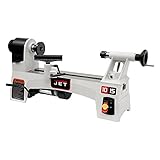

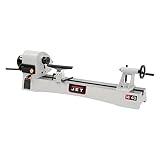
JET wood lathes compared
| Model | Turning capacity | Motor and speed control | Stand and shop fit | Best suited to |
|---|---|---|---|---|
| JET JWL-1015 | 10 in. swing; 15 in. between centers | 1/2 hp; six belt-driven speeds, approximately 500–3,975 RPM | Bench-top; needs a sturdy, securely anchored bench | Budget-conscious beginners, pens, handles, and short spindles |
| JET JWL-1221VS | 12 in. swing; 21 in. between centers | 1 hp; variable speed, approximately 60–3,600 RPM | Bench-top; optional floor stand is available | General-purpose small-shop turning, bowls, and spindles |
| JET JWL-1440VSK | 14 in. swing; 40 in. between centers | 1 hp; variable-speed electronic drive, approximately 40–3,200 RPM | Floor-standing; optional bed extension increases spindle capacity | Long spindles and larger projects without moving to a heavy production lathe |
| JET JWL-1640EVS | 16 in. swing; 40 in. between centers | 1-1/2 hp; variable-speed electronic drive, approximately 40–3,200 RPM | Floor-standing, heavy-duty footprint | Frequent turning, larger bowls, and work that benefits from added motor reserve |
Capacity and speed figures are the key planning numbers, not a promise that every blank can be turned safely at maximum size or maximum RPM. Check the current manual and product configuration for exact dimensions, included accessories, and electrical requirements.
Choose by the work you actually turn
For a first lathe or limited budget: JWL-1015
The JWL-1015 keeps the initial footprint and cost down, but its six belt-selected speeds mean stopping the machine and moving the belt to change speed. That is workable for a beginner learning spindle cuts, yet less convenient when a project needs several speeds or when you want to slow down repeatedly while refining a bowl. Its 10-inch swing also sets a firm limit on bowl diameter, with sensible clearance needed for an uneven blank.
Pick it for pens, tool handles, small candlesticks, and short spindle projects. If bowls are a major goal, the 1221VS is usually the more versatile starting point.
For one machine in a compact shop: JWL-1221VS
The 1221VS balances bench-top size with useful capacity. Its variable speed makes it easier to adjust for different stages of a bowl or spindle project without belt changes, and its 21-inch center distance accommodates many furniture parts and medium-length spindles. The low-speed range is useful for roughing an out-of-round bowl blank, but it does not remove the need to mount the blank securely and begin cautiously.
It is a strong fit if you want to turn both bowls and spindles but cannot dedicate a large floor area to a full-size machine. A bench or optional stand must be rigid: a light, flexible support can vibrate even when the lathe itself is capable.
For long spindles and more room: JWL-1440VSK
The 1440VSK trades a larger footprint for a 40-inch distance between centers and 14-inch swing. That extra bed length matters for table legs, chair parts, and other long spindle work. A bed extension can increase spindle capacity, but it does not increase swing: a longer workpiece fits lengthwise, while the maximum diameter remains governed by the lathe’s swing.
Consider it when long work is routine and you want variable speed. It is less compelling for a small shop where most projects are short and the machine would consume valuable floor space.
For frequent, larger turning: JWL-1640EVS
The 1640EVS adds a 16-inch swing and a 1-1/2 hp motor. That extra power provides more reserve under demanding cuts, but it is not permission to take heavy cuts on a poorly secured blank. This is the choice for turners who regularly handle larger stock, have room for a floor-standing lathe, and will make enough use of its capacity to justify its higher general market price.
Decision matrix: match the lathe to your shop
| Your situation | Best fit | Why | Trade-off |
|---|---|---|---|
| New turner; mostly small spindles; lowest entry cost matters | JWL-1015 | Compact bench-top machine with adequate capacity for small work | Manual belt changes; limited bowl diameter |
| Mixed bowls and spindles; limited floor space | JWL-1221VS | Variable speed and a useful middle ground in capacity | Bench and stand rigidity need attention |
| Regular long spindle work; dedicated floor space | JWL-1440VSK | 40-inch center distance and variable speed | Larger footprint; extension adds length, not swing |
| Experienced or frequent turner; larger blanks and heavier use | JWL-1640EVS | Largest swing and highest motor power among these options | More space, weight, and purchase cost |
Capacity, speed, and setup: details that affect ownership
Swing is not a recommended blank size. A 12-inch swing describes the nominal maximum diameter over the bed. An irregular blank at that size may strike the tool rest or other parts as it rotates. Leave clearance, inspect the blank for cracks and loose bark, and start at a low speed. For an off-center or unusually heavy blank, use an appropriate mounting method and follow the manufacturer’s safety guidance.
Variable speed is convenient, not a substitute for judgment. Slower speeds help control rough, unbalanced stock; higher speeds can suit a balanced, refined piece. The safe speed depends on blank diameter, balance, mounting, and condition. Keep the tool rest close to the work, stand out of the likely path when starting, and increase speed only when the piece runs smoothly.
Budget for a stable support and the turning essentials. A bench-top model mounted to a flimsy bench can chatter and walk. Bolt the lathe to a sturdy bench or suitable stand, level it, and check that the work clears the bed and rest through a full rotation before switching on. A faceplate or chuck, drive and live centers, turning tools, sharpening equipment, and eye and face protection can add meaningfully to the total setup cost.
Durability and maintenance realities
On a variable-speed lathe, the drive belt is a wear item; inspect it for cracking, glazing, or slipping and replace it when needed. Keep the bed and tool-rest surfaces clean of shavings and rust, and clear dust from vents so the motor and electronics can shed heat. Lubricate only where the manual specifies—oil on a surface intended for clamping can let a banjo or tailstock shift.
Common problems often begin with setup rather than a machine fault: a loose stand, a dirty or misaligned tool rest, a dull tool, or a blank mounted off-center. Before each session, check the mounting, tailstock, banjo, and tool-rest locks; rotate the work by hand to confirm clearance. These checks take little time and help prevent vibration, poor cuts, and avoidable wear.
Bottom line
Choose the JWL-1015 if you mainly want an affordable machine for small spindle projects. Choose the JWL-1221VS for the most flexible compact shop setup and mixed turning. Step up to the JWL-1440VSK for long spindles, or the JWL-1640EVS when larger capacity and frequent use justify a heavier, more expensive floor-standing lathe. In each case, match the blank to the lathe’s capacity and prioritize a rigid setup over buying extra capacity you rarely need.
0 Comments