What's inside
As an Amazon Associate I earn from qualifying purchases. This post may contain affiliate links at no extra cost to you.
If you have ever tried to edge-glue boards that looked flat until you clamped them, you know the frustration the best benchtop jointers are designed to solve. A jointer does two jobs no planer can: it flattens a face so you have a true reference surface, and it squares an edge so glue joints disappear and panels stay flat. On a benchtop machine, that means getting square, tearout-free results without dedicating half your shop to a floor-standing unit.
After running dozens of boards ranging from soft pine to figured maple across these compact machines, the differences become obvious quickly. Table flatness and fence rigidity matter more than marketing claims, spiral cutterheads are noticeably quieter and more forgiving on difficult grain, and dust collection can make or break everyday usability. The models below all fit on a bench, but they vary a lot in cut quality, setup time, and how long they hold an accurate fence setting under vibration.
As an Amazon Associate we earn from qualifying purchases at no extra cost to you.




Our Top Picks
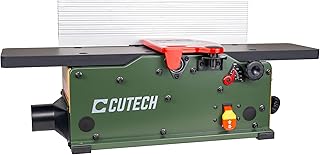
 Cutech 401120HI-IF 12-Inch Spiral Cutterhead Benchtop Jointer with12 inch w/ Cast Iron Fence34 x 23.75 x 13.25 inchesCheck on Amazon
 Cutech 40180HI 8-Inch Spiral Cutterhead Benchtop Jointer with8 inch34 x 19.75 x 13.25 InchesCheck on Amazon
 Cutech 40160HB 6-Inch Spiral Cutterhead Benchtop Jointer with6 inch30 x 18 x 14 inchesCheck on Amazon
 VEVOR Spiral Benchtop Jointer22.8 x 13 x 11.8 in22.83 x 12.99 x 11.81 inches21.16 poundsCheck on Amazon
Quick Picks
| Product | Best for | Price |
|---|---|---|
| WEN JT630H | Best Overall Balance | $273.83 |
| Cutech 401120HI-IF | Best Wide Capacity | $849.99 |
| Cutech 40180HI | Best Mid-Size Value | $549.99 |
| Cutech 40160HB | Best Compact Spiral | $319.99 |
| VEVOR Spiral Benchtop Jointer | Budget Spiral Entry | $192.9 |
| WEN JT833H | Best for Longer Boards | $463.79 |
| CRAFTSMAN CMEW020 | Best for Simple Setup | $329 |
| Generic 6-Inch Benchtop Jointer | Lowest Price Pick | $159.99 |
How We Picked
We prioritized cut quality and surface finish on both softwoods and harder, figured stock, fence stability when locked at square and at an angle, and table support for keeping boards flat through the cut without tipping. We also weighed ease of knife or insert changes, noise and vibration, dust port effectiveness, and the real-world footprint and weight for a small shop where the jointer lives on a bench and gets stored between uses.
The 8 Best Benchtop Jointers in 2026
WEN JT630H
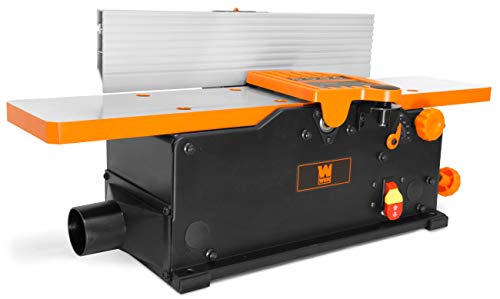
Rated 4.6/5 and priced at $273.83, the WEN JT630H is the do-everything pick for most home shops that need true edges and flat faces without a large, permanent machine. Its spiral cutterhead leaves a noticeably cleaner surface with less tearout than conventional straight knives, especially on grain that changes direction, and it runs quieter with less frequent maintenance. For furniture projects, cutting boards, and small panel glue-ups, this model hits a practical sweet spot between capacity, finish quality, and benchtop convenience.
- Pro: Spiral cutterhead delivers smoother finish and lower noise than straight-knife designs
- Pro: Strong overall value for regular hobby use without a steep price jump
- Con: Fence and tables require careful initial calibration to hold perfect square
Skip it if you routinely flatten wide slabs or need the extra width for large panels, where a wider-capacity machine will save you from multiple passes and creative workarounds.
Cutech 401120HI-IF
At $849.99 with a 4.7/5 rating, this Cutech is the premium benchtop choice for woodworkers who want maximum width and a serious cast iron platform in a portable form. The extra large fence area and substantial tables provide excellent support that helps prevent rocking and snipe on longer workpieces, while the spiral cutterhead with many inserts keeps the surface clean and insert rotation simple. It is built for makers who joint wide boards often and want a machine that feels closer to a floor model.
- Pro: Exceptionally stable cast iron tables and large fence inspire confidence on wide stock
- Pro: Spiral cutterhead with numerous inserts for very smooth cutting and easy maintenance
- Con: Highest price and heavier footprint in this roundup
Skip it if your work is mostly narrow stock and edge jointing, where the added width and weight will not add much practical benefit for the cost.
Cutech 40180HI
Priced at $549.99 and rated 4.5/5, the Cutech 40180HI sits in the middle as a versatile upgrade over entry-level six-inch machines. It offers noticeably more capacity for face jointing while retaining a benchtop footprint, and the spiral cutterhead keeps finish quality high with minimal fuss when an edge nicks. The long aluminum fence helps keep edges square over a longer reference length, which is a real advantage when you are prepping stock for glue-ups.
- Pro: Wider capacity than compact models without moving to the most expensive tier
- Pro: Spiral cutterhead with multiple inserts reduces tearout and simplifies upkeep
- Con: Still benefits from meticulous fence alignment out of the box
Skip it if you are tight on bench space and budget and primarily joint modest-width boards, where a smaller jointer will be easier to store and still get the job done.
Cutech 40160HB
The Cutech 40160HB at $319.99 earns its 4.8/5 rating by packing a spiral cutterhead into a lightweight, benchtop-friendly package. The coated aluminum tables keep weight down while still providing a smooth glide, and insert changes are quick, so you spend more time building and less time tuning. For apartment shops, garage setups, and makers who value clean results and easy ownership, it is an appealing blend of performance and portability.
- Pro: Highest user rating in this group with refined finish for the price
- Pro: Light, low-maintenance design with easy insert rotation
- Con: Smaller work surface offers less support for longer boards than larger models
Skip it if you regularly work with lengthy or heavy stock that needs extended table support to stay flat throughout the cut.
VEVOR Spiral Benchtop Jointer
Rated 3.4/5 and priced at $192.9, this VEVOR model aims to bring a spiral cutterhead to the lowest possible price point. It can produce a respectable edge for light-duty tasks and occasional project work, and the adjustable fence allows for basic bevel work. It is best viewed as an entry ramp for beginners who want to learn jointing fundamentals and understand what a true edge feels like before committing to a more refined machine.
- Pro: Most affordable spiral option in this lineup
- Pro: Adequate for light use and learning basic flattening and squaring
- Con: Lower overall refinement and consistency compared with higher-rated models
Skip it if you need reliable, repeatable square over many boards or work with figured wood where finish quality and fence rigidity are critical.
WEN JT833H
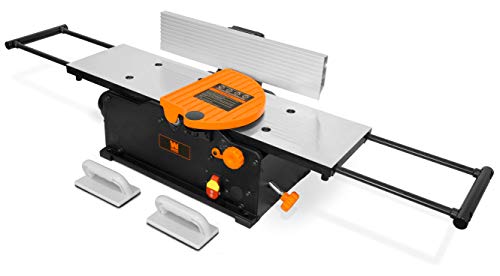
At $463.79 with a 4.4/5 rating, the WEN JT833H is designed for the common benchtop complaint of limited table length. The extendable table provides much better support at infeed and outfeed, which helps keep longer boards level and reduces tipping that can introduce taper or snipe. Combined with a spiral cutterhead for cleaner, quieter cuts, it makes a practical choice for woodworkers who often prep stock that is longer than a typical compact jointer comfortably supports.
- Pro: Extendable table improves support and accuracy on longer workpieces
- Pro: Spiral cutterhead offers smoother finish and reduced maintenance
- Con: Larger footprint when extended requires more bench space
Skip it if your projects are mostly small parts and short boards, where the extension feature adds size without much day-to-day advantage.
CRAFTSMAN CMEW020
Priced at $329 and rated 4.4/5, the CRAFTSMAN CMEW020 emphasizes straightforward operation and fast setup for busy home shops. It delivers a very high number of cuts per minute for a fine finish in fewer passes and keeps controls simple so you can get to square edges quickly. This is the pick for users who value intuitive adjustments and dependable results for everyday edge jointing and panel preparation over specialized features.
- Pro: Easy to set up and operate with familiar controls
- Pro: High cutting frequency helps produce a clean surface efficiently
- Con: Conventional knife system needs more involved sharpening or replacement than inserts
Skip it if you prefer the low-maintenance, quieter experience of a spiral insert head and want to avoid periodic knife servicing.
Generic 6-Inch Benchtop Jointer
At $159.99 with a 4.6/5 rating, this generic 6-inch jointer is the bare-bones, budget-friendly way to get flat faces and square edges on a bench. It offers adjustable depth and an adjustable fence through a wide angular range for basic jointing and bevel work, and its simple HSS knife setup is easy to understand. For beginners or occasional users who need functional jointing for small projects, crates, or shop jigs, it covers the essentials at the lowest cost in the group.
- Pro: Lowest price in the roundup with solid user satisfaction for the cost
- Pro: Simple, adjustable design that is approachable for first-time owners
- Con: Basic construction and conventional knives trail spiral models in finish and convenience
Skip it if you joint frequently or work with figured grain where a spiral head and more rigid fence will save time and improve results.
Buying Guide
Cutterhead Type and Surface Quality
Spiral and helical insert heads use small carbide inserts staggered along the head, so each takes a light shearing cut. That reduces tearout on tricky grain, lowers noise, and lets you rotate a single insert if you nick an edge instead of removing and resetting long knives. Straight knives can still cut well, but they require more precise alignment and periodic sharpening to maintain a fine finish. If you value easy maintenance and the cleanest surface with the least tuning, prioritize a spiral insert design.
Tables, Fence, and Real-World Accuracy
Flat, co-planar tables and a fence that locks dead square and stays there under vibration are what separate enjoyable jointers from frustrating ones. Look for solid table support that prevents tipping, a fence that slides smoothly and clamps without deflecting, and depth controls that move predictably. Cast iron adds mass and stability, while coated aluminum saves weight for portability. In practice, a rigid fence and longer effective table length do more for straight edges than any other specification.
Power, Dust Control, and Shop Fit
Benchtop jointers need enough power to maintain speed under load so cuts stay smooth and free of scalloping, but they also need to fit your space and electrical setup. Consider weight and footprint for storage, noise in a shared space, and how well the dust port matches your collection system, since jointers produce a steady stream of shavings that quickly cover a bench. A machine that is easy to move, easy to clean, and easy to keep set up accurately will get used far more often than a slightly more powerful one that is a chore to deploy.
Our Verdict
Our top pick is the WEN JT630H. At $273.83 with a 4.6/5 rating, it delivers the best overall balance of finish quality, ease of ownership, and price for most small shops, with a spiral head that keeps surfaces clean and maintenance low. For the tightest budget, choose the Generic 6-Inch Benchtop Jointer at $159.99; it handles basic flattening and squaring at the lowest cost with respectable user satisfaction. If you regularly work with wider or longer boards and want a more stationary feel on a bench, the Cutech 401120HI-IF at $849.99 is the conditional winner thanks to its expansive tables and fence.
FAQ
What size benchtop jointer do I need for furniture projects?
Most furniture makers do well with a compact benchtop for edge jointing and face flattening of modest-width boards, then planing to final thickness. If you often glue wide panels or flatten large faces, a wider model saves time and improves flatness by requiring fewer passes and less repositioning.
Is a spiral cutterhead worth it on a benchtop jointer?
For most buyers, yes. Insert heads cut more smoothly with less tearout, run quieter, and make maintenance as simple as rotating an insert. The advantage is most noticeable on figured or reversing grain and when you want to avoid full knife removal and recalibration.
Can a benchtop jointer replace a planer?
No. A jointer creates one flat face and one square edge as a reference; a planer makes the opposite face parallel and brings stock to thickness. They complement each other, and many woodworkers use both together for reliably square, flat, and dimensioned lumber.
How do I keep edges square and avoid snipe?
Start with clean, co-planar tables, lock the fence and verify square with a reliable square, and take light passes. Support the workpiece so it does not tip at infeed or outfeed, keep steady forward pressure over the outfeed table, and check square frequently as you work through a batch.

0 Comments