What's inside
As an Amazon Associate I earn from qualifying purchases. This post may contain affiliate links at no extra cost to you.
A blonde dining table can look light and natural without looking yellow, but the result depends more on the wood’s starting color and finish than on a stain labeled “natural.” For a clear, pale finish, choose a species with a light base color, modest color variation, and grain you like. Then test the full finishing schedule on offcuts: even a clear topcoat can deepen wood noticeably.
As an Amazon Associate we earn from qualifying purchases at no extra cost to you.

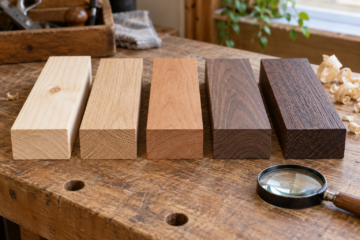
Best species at a glance
| Species | Typical look under a clear finish | Dining-table trade-off |
|---|---|---|
| White oak | Light tan to pale brown; pronounced grain | Durable and distinctive, but not the palest choice |
| Hard maple | Creamy white to pale amber; subtle grain | Hard and clean-looking, but can blotch with stain |
| European beech | Pale pinkish tan; fine, even grain | Good value, but can move with changes in humidity |
| Ash | Light cream to straw; open, bold grain | Bright and lively, but its grain can dominate a simple look |
| Birch | Pale cream to light tan; relatively fine grain | Often affordable, but color and stain absorption can vary |
White oak: the durable, grain-forward pick
White oak is a strong choice if you want a blonde table with visible grain rather than a nearly uniform surface. Its natural color ranges from light tan to brown, so a clear finish usually produces a warm, restrained look—not a white or nearly colorless one. Quarter-sawn boards may show distinctive ray fleck; plain-sawn boards have a more familiar cathedral pattern.
Oak is hard enough for everyday dining, and its open pores give the surface texture and character. The trade-off is that grain and board-to-board variation remain obvious. If you prefer a very pale, even tabletop, maple is a better starting point. Avoid assuming “white oak” means every board will match: compare the actual stock, ideally in the lighting where the table will sit.
Hard maple: pale and understated
Hard maple has a fine, low-contrast grain and a light cream base color. It suits a clean, modern table where the wood should read as pale and quiet. It is also hard and wear-resistant, though hardness alone does not prevent dents from heavy impacts or protect the surface from standing water and heat.
Maple can turn amber under some clear finishes, especially oil-based varnish. It can also absorb stain unevenly, creating dark patches called blotching. For a blonde result, test a water-based clear finish or a finish marketed as non-yellowing on scrap from the same boards. If you want a stained, uniform tone rather than the natural maple color, include a conditioner or washcoat in your sample tests; those can reduce blotching but may also make the color lighter or less crisp.
Beech, ash, and birch: useful alternatives
Beech has an even, fine texture and is often less expensive than premium maple or oak. It can look softly pink or tan rather than cool white, and it may shift color with exposure to light. Beech is a practical choice for a painted or lightly tinted table, or for a natural finish where its warm cast is acceptable. Keep the tabletop’s humidity reasonably stable; like other solid wood, it expands and contracts across its width.
Ash is pale, strong, and more visibly grained than maple. It can make a bright blonde table without the heavier look of oak, but its open grain is still prominent. Birch is another budget-conscious option with a light appearance, though boards may differ in tone and stain unevenly. For either species, buy enough matching material at once and arrange boards before assembly so the strongest color differences do not land together.
Choose the finish before you buy
A “clear” finish is not always colorless. Oil-based polyurethane and many traditional oil finishes add amber warmth; water-based finishes generally preserve a paler look, though some still add a slight cast. A hardwax oil can leave a natural, low-build appearance, but it may need more maintenance than a film finish on a busy dining table. For a harder-wearing clear coating, compare water-based polyurethane finishes and check the label for table or floor use, cure time, and food-contact guidance.
Do not judge the color from the can or a small store sample. Sand a scrap through the same grits planned for the table, apply every coat, and let it dry. A 5-by-8-inch sample is more useful than a coin-sized spot because it shows grain and color variation. If you want a paler appearance than bare wood provides, a white-pigmented washcoat or toner can help, but excess pigment may make pores look chalky and obscure the grain.
Prep and application details that prevent problems
Sand consistently, usually finishing around 150 or 180 grit for many film finishes; sanding much finer can reduce absorption and create an uneven stain result. Follow the finish maker’s instructions, because recommended grit depends on the product. Remove dust thoroughly, then apply the coating in thin, even coats. A typical water-based polyurethane schedule uses several coats, with light sanding between coats if the label calls for it. Rushing recoats or applying heavy coats can leave brush marks, bubbles, or a soft film.
Pay attention to the table’s underside and edges as well as the top. Sealing all surfaces helps limit uneven moisture exchange, but it does not stop seasonal movement. Attach the top with fasteners or hardware that allow it to move across its width; rigidly fixing a solid-wood top can cause cracks or split joinery. Let the finish cure for the stated period before regular use. “Dry to touch” does not mean resistant to hot plates, spills, or cleaning.
What to buy for a reliable result
For a pale, subtle table, start with hard maple and a tested water-based clear finish. For a more textured, durable look, choose white oak and accept its warmer tone. If cost matters most, beech or birch can be perfectly serviceable—just inspect the boards and test the finish first. Use a wood moisture meter if you are buying lumber for a solid-wood top; stock that is too wet for your indoor conditions can warp or open joints after construction.
When the target is a light blonde, the safest purchase is not a bottle labeled “blonde stain.” It is well-matched lumber, a finish that does not add unwanted amber, and a sample made with the same sanding and coating steps you will use on the table.
0 Comments